Category: 7 Line Extension

  • Real estate lobby embraces 7 plans as feds do not

    A rough sketch of the proposed 7 line extension to Secaucus. (Via The Wall Street Journal)

    In writing yesterday about the city’s nascent plan to extend the 7 train to Secaucus, New Jersey, I touched briefly on those who stand to benefit the most from the plan. As with the current iteration of the city-funded 7 line extension, real estate interests — in particular, those of Related who are in line to develop the Hudson Yards — have the most riding on this project. By connecting a new mixed-use center with both New Jersey and the popular 7 line, Related would be able to draw thousands of people to an area of the city that’s currently among the least transit-accessible in Manhattan.

    In fact, on Monday night, before the story broke in The Times, Stephen M. Ross, the CEO of Related, endorsed this project in a conversation with Secretary of Transportation Ray LaHood. “I think it’s a great idea and it could save a ton of money,” Ross said to The Times.

    The Real Estate Board of New York has also embraced the idea, and this influential group is now lobbying hard for fast action. “Every developer I’ve spoken to thinks it’s a terrific, simple idea,” REBNY President Steven Spinola said. “They all think it will be wonderful…“It sounds like a real solution [to the cross-Hudson capacity problems]. You’re able to provide the transportation needs, yet at a substantially lower cost.”

    I’ve written before about the way transit advocates need real estate interests but need to be wary of them, and that certainly applies here. You won’t see REBNY advocating for a Nostrand Ave. subway or the Triboro RX plan which will lead to improvements but not of the same potential that we see here.You will see them advocating for a 7 line extension when the benefits to their interests are obvious. They have the political clout though to be heard in Washington, City Hall and Albany, something with which advocates have not been overly successful lately.

    The real estate lobby isn’t the only one embracing this plan. Both the Daily News and New York Times editorial boards supported this project today. “The benefits,” says the News, “would include expanded bistate rail capacity, a potential easing in auto congestion and a spur to growth on the West Side and construction of a new No. 7 station at 42nd St. and 10th Ave.”

    The Times highlighted how this seems to be a natural extension of the 7 line. “What makes the Bloomberg concept intriguing is that much of the drilling for this subway tunnel is already being done in Manhattan,” the Gray Lady says. “For the other tunnel that was scrapped by Governor Christie, known as ARC, the biggest cost would have been for a new corridor deep under Manhattan’s Far West Side. ARC’s total cost was edging up to $11 billion before it was canceled. ‘ARC-lite,’ as some city officials are calling the Bloomberg tunnel, has an estimated cost of about $5.3 billion.”

    A rougher sketch of the proposed 7 line extension to Secaucus. (Via Subway to Secaucus)

    Now, while Bloomberg’s proposal has garnered headlines, it’s not the first time the idea of a subway to Secaucus has been floated. A few years ago, Ralph Braskett and Steve Lanset put forward their Subway to Secaucus proposal, and it appears that Bloomberg has drawn from it. Questions remain concerning funding. Will the feds pay for this subway extension?

    According to various transit advocates, if the feds do fund part of this project, it won’t be with ARC Tunnel money. “The $3 billion has disappeared,” the RPA’s Jeff Zupan said to the Daily News. “They’re not going to turn around and say, ‘okay, you have a better idea now, we’ll give you the money.’ It’s not going to happen.”

    Federal officials believe that the FTA will not work too hard to keep this money in the northeast because of anger over Christie’s decision-making process. Rather, it will go to other New Starts projects, and one Daily News source said that the odds are “slim to none” that the Secaucus subway will get ARC money.

    Mayor Bloomberg though remained hopefully that other money could find its way to this grand idea. “It’s very early,” he said, “but we’re certainly talking to Gov. Christie’s office, to Governor-elect Cuomo’s office, to the MTA, to Ray LaHood and his people.”

    It’s going to take a lot of talking to get this ambitious plan off the ground.

  • MTA just as shocked as the rest of us by 7-to-Secaucus plan

    When news broke late yesterday of the city’s very preliminary plans to extend the 7 train to Secaucus, New Jersey, everyone was taken by surprise including, it seems, MTA Chair and CEO Jay Walder. In remarks to the press after this morning’s MTA Board meeting, Walder said that Bloomberg officials told him of the plan only “hours” before The Times broke the story. For its part, the city said it had not yet involved MTA officials in its talks because, as Michael Grynbaum put it, “the idea remained in its infancy and that the discussions had not progressed to a point where other agencies would be consulted.”

    For his part, though, Walder, speaking as a transit technocrat, embraced the idea. He called it “very exciting” and expressed his belief that the transit system for the New York Metropolitan region must transcend state borders. “One of the things that it really says to us is that the region continues to look at the importance of public transportation to further the economic growth and the prosperity that we want to see,” he said.

    Still, we shouldn’t start counting down the days until the MTA readies a tunnel across the Hudson. In addition to the planning challenges, the authority stressed how the dollars for such a project just aren’t there, and the MTA won’t begin the process until other capital plans are realized first. “There is no money,” Walder said, “in our capital program for any megaprojects except the three we have under way.” Until the dollars materialize, this extension will remain a tantalizing idea on paper only.

  • ‘The next stop on this Secaucus-bound 7 is…’

    Could the 7 trains, seen here in Flushing, be bound for Secaucus, New Jersey? (7 trains galore by flickr user SpecialKRB)

    Fantasy subway maps have long been a passion of Internet railfans. Beyond imagining a city with a Second Ave. Subway that reaches from the Bronx to Brooklyn or a fully-realized IND Second System, I’ve seen maps with the Triboro RX line, various cross- and inter-borough routes and service shot past terminals in Queens to airports and neighborhoods underserved by the subway. Every now and then, someone proposed building out the 7 line to a cross-Hudson terminus in New Jersey, but that idea is generally concerned too fanciful and far-fetched to be a reality. Until now, that is.

    With the ARC Tunnel dead, federal dollars out there for the taking and the need to expand cross-Hudson River rail offerings still a pressing one, the city is working on a plan that would send the 7 line under the river to Secaucus, New Jersey, The Times reported this evening. This project would include money for a stop at West 41st St. and 10th Ave. and would extend the subway westward from 34th St. and 11th Ave. to Secaucus Junction in the Garden State where passengers could connect to and from New Jersey Transit. It would, as Charles Bagli and Nicholas Confessore wrote, “extend the New York City subway outside the city for the first time, giving New Jersey commuters direct access to Times Square, Grand Central Terminal and Queens, and to almost every line in the system.”

    Mayor Michael Bloomberg’s office acknowledged the idea but noted that it’s only a thought on paper. “Extending the 7 line to New Jersey could address many of the region’s transportation capacity issues at a fraction of the original tunnel’s cost, but the idea is still in its earliest stages,” spokesman Andrew Brent said “Like others, we’re looking at — and open to discussing — any creative, fiscally responsible alternatives.”

    Bagli and Confessore offered up more on the details, which stem from an internal memo produced by the Hudson Yards Development Corporation:

    Like the project scuttled by Mr. Christie, this proposed tunnel would expand a regional transportation system already operating at capacity and would double the number of trains traveling between the two states during peak hours. But it would do so at about half the cost, an estimated $5.3 billion, according to a closely guarded, four-page memorandum circulated by the city’s Hudson Yards Development Corporation.

    Unlike the old project, the new plan does not require costly condemnation proceedings or extensive tunneling in Manhattan, because the city is already building a No. 7 station at 34th Street and 11th Avenue, roughly one block from the waterfront. In July, a massive 110-ton tunnel boring machine completed drilling for the city’s $2.1 billion extension of the No. 7 line from Times Square to the new station.

    Still, the proposal faces a number of daunting political, financial and logistical hurdles in an era of diminishing public resources. Mr. Christie, Mayor Michael R. Bloomberg and Governor-elect Andrew M. Cuomo of New York would have to agree to make the tunnel a high priority and work in lock step to obtain the city, state and federal funds needed to make it happen.

    On a practical level, this project, which I’d almost label a pie in the sky, faces numerous hurdles. First is the matter of $5.3 billion. Bagli and Confessore note that it “no longer seems possible” for the city to secure the $3 billion in federal transportation money New Jersey sacrificed when Gov. Chris Christie canceled the ARC Tunnel. At the least, the city will have to compete with everyone else in American for the dollars.

    For this project to work for the city, New Jersey would have to kick in some money as well, but Christie seems intent on using the $3 billion he pledged to the ARC Tunnel for other state transportation projects already on the table. “The issue again will come down to what will Governor Christie say,” Jeffrey Zupan of the RPA said to The Times.

    Both New York and New Jersey would have to engage in an environmental impact study as well, but Bloomberg hopes to use those developed for the ARC project. Bloomberg has yet to present the plan to current Gov. David Paterson or Governor-elect Andrew Cuomo. Paterson is said to be “intrigued” by this idea, according to one aide. “Getting cars off the road, reducing congestion and providing another access point for commuters between New York and New Jersey is going to benefit the region from a job-creation and development standpoint,” Lawrence Schwartz said to The Times.

    On a certain level, I’m wary about this plan. It’s definitely thinking big, and the city needs to be thinking big. As far as transit is concerned, we stopped thinking big seventy years ago, and a direct subway connection to New Jersey would be a boon for the city. But other than the increased capacity an additional tunnel would bring, the subway isn’t the modality best suited to achieve that goal. The four-mile distance isn’t prohibitive for a subway, and as PATH has shown, it’s certainly possible to maintain a cross-Hudson rail line. A subway connection via Secaucus Junction doesn’t add the same value commuter rail tunnels with a multi-track terminal would.

    Cynically, I want to say that this project seems designed to further support the real estate interests working to develop the Hudson Yards. Already, New Jersey commuters have to take New Jersey Transit to reach the subway, and they can get the 7th or 8th Ave. lines at Penn Station. This plan would simply mean that they would still have to take NJ Transit to reach the subway and would have to suffer through additional stops and a potential transfer before reaching midtown. Without a true one-seat ride, the time-saving benefits of the ARC plan are lessened.

    Ultimately, I’d rather see the city pledge $5.3 billion to subway improvements in underserved areas within the five boroughs before it starts to look outside for expansions. Staten Island as well as areas of Queens and Brooklyn need subway routes, and the non-Manhattan connections between the outer boroughs need to be beefed up. As far as fantasy subway maps go, looking toward New Jersey would be last on my wishlist even if it’s first on the city’s.

    That said, I can’t discount the importance of thinking big. Plans like these just aren’t proposed any longer, and if the city can figure out a way to make it work economically while ensuring the feasibility of this plan from a transportation standpoint, by all means do it. Even if it the impact isn’t as deep as that of the ARC Tunnel would have been, a 7 line subway extension to Secaucus would do wonders for cross-Hudson travel.

    New York’s politicians have recognized that reality, and if they can build support, this idea could being to move forward. “This is a bold idea that must be given serious and immediate consideration,” Sen. Chuck Schumer said. “Building the ARC tunnel and extending the 7 line for a second stop are both critical to growing the New York economy for the coming decades, and I will fight to deliver any available federal funds to make that happen.”

  • Without a TIGER grant, 7 line supporters look to ARC funds

    In a last-gasp effort to save the 7 line extension’s 41st St. and 10th Ave. station, the city in June applied for a $3 million TIGER II grant. With that money, the MTA would have studied the feasibility of building a non-island shell station, but the federal government has denied that request. Once again, the absolutely necessary part of this expensive project is in jeopardy.

    Today, the Real Estate Board of New York, which had pledged $250,000 in matching funds to qualify for the TIGER II grant, has issued another call for funds for this station. As Crain’s New York reports, REBNY will now work to secure some of the money from the ARC Tunnel to fund the 10th Ave. station. “That money should be deployed in New York,” Mary Ann Tighe, REBNY’s chair, said of the stop that she believes would serve 100,000 commuters a day. On Monday, I issued a similar call, and it’s worth noting that because of the late date and the ongoing work, any station at 41st St. and 10th Ave. would now have to be constructed after the 7 line extension opens. Still, it isn’t too late, and the ARC money would do wonders for this flawed project.

    Yet, I can’t help but think, as I did in June, that REBNY is trying to shut the barn door after the horse has escaped. The planned 7 line stop at 10th Ave. and 41st St. needed their considerable support before the city and the MTA had to kill. Three years later, it’s a scramble for money that even the real estate lobby might not be able to win.

  • Musings on the need for planning ahead

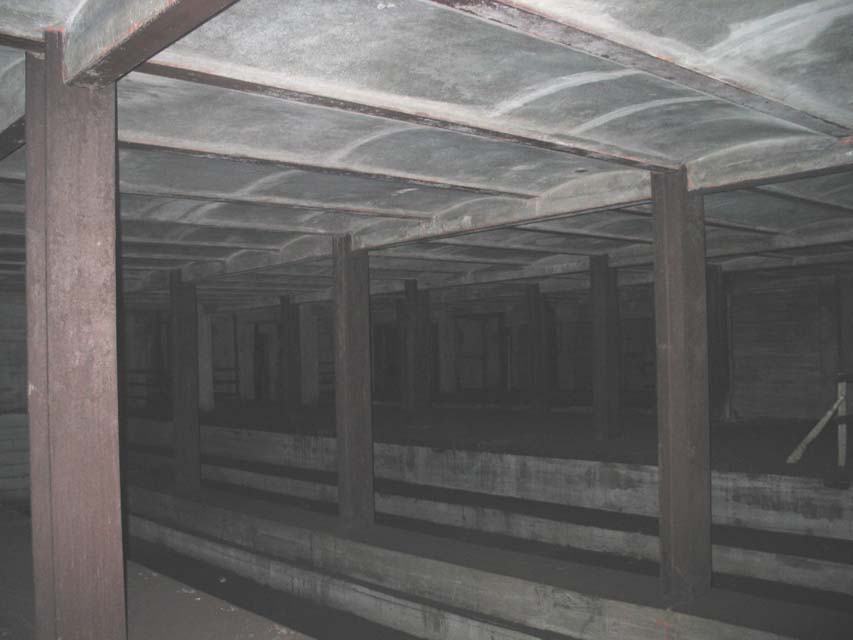
    Seemingly forward-looking at the time it was built, the station shell at South 4th Street now represents wasted money and opportunity. (Photo via Subway & Rail)

    When the route we now know and love as the G train was completed in 1937, it was supposed to be just one part of an expansive plan to change the face of subway travel into, out of and between Brooklyn and Queens. Twenty-four years in the making, the Crosstown line, part of the Municipal Subway system, connected population centers in the city’s two most populous boroughs, and it was just a small part of the IND Second System.

    As city planners constructed subway routes through Brooklyn and Queens, they provisioned other stations into their plans. Even though the funding wasn’t in place to build, say, the entire Utica Ave. subway, the Board of Transportation made sure that new stations that would eventually serve as transfer points were built as such. Thus, the IND Fulton St. stop at Utica Ave. (A/C) has a station shell that angles with Utica Ave., and the Broadway station along the G train has a six-track shell parallel to Williamsburg’s South 4 and Meserole Streets.

    The IND Second System, as I explored in depth last week, never materialized, and for the better part of 73 years, the South 4th St. station has sat unused and largely forgotten. Known only to railfans and New York City historians, the station and the subway expansion plans fell to the wayside, and all that remained was a station shell, empty, abandoned and barely acknowledged by the MTA. It took, of all things, a highly illegal and dangerous street art stunt to return the South 4th St. station to the city’s consciousness.

    Today, New York is engaged in its largest subway expansion effort since the IND system became a reality. Modest by the standards of the 1930s, Phase 1 of the Second Ave. Subway and the 7 Line Extension promise to improve access to underserved areas of Manhattan, but the provisioning isn’t nearly as robust as it once was. The Second Ave. Subway was once envisioned, unnecessarily so in the 1920s, as a six-track subway, but recent iterations have seen that total go from four to three to two. In this instance, while the Second Ave. Subway will be constructed to allow connections to the Bronx and Brooklyn, the MTA isn’t provisioning for anything along the route.

    The 7 line meanwhile through a similar problem. Although tail tracks would potentially allow a southern extension or a potential connection eastward, the sticking point for this capital project has been the station at 41st St. and 10th Ave. Originally, the extension was to consist of two stops, but rising costs have slowly cut back those plans. At one point, the city proposed building a shell station — much like the South 4th St. ghost — at 41st and 10th so either it or the MTA could fund proper construction when the economy improved. The MTA rejected this plan when the city refused to foot the bill for it, and now, the last hope for this stop rests on the shoulders of a few federal official trying to find the money for it.

    It is a gross oversight to skip even the provisioning for this station, and while the $800 million price tag is a legitimate concern, the city and MTA must figure out a way to include the ability to build it later. There is, though, one solution: The ARC Tunnel money is out there for the taking.

    We know New York City officials are jockeying to secure their share of the $3.3 billion New Jersey’s Gov. Chris Christie gave up when he canceled the tunnel, and the 7 line would be the perfect destination for it. This is a capital project that needs an infusion of dollars, and the omitted station wouldn’t soak up all of the federal funds. It wouldn’t improve interstate mobility, but it would right a wrong in New York City.

    In a recent short piece on the proper role of borrowing in infrastructure spending, Cap’n Transit briefly highlighted how poor spending can lead to 73-year-old station shells that go unused, but despite the labeling, the South 4th Street station doesn’t quite fit that bill. It was part of a larger plan that couldn’t get implemented because the money wasn’t there. Had the city tried to realize the IND plans after building the Broadway stop without that shell, it would have cost more and been more difficult to construct from an engineering standpoint.

    Today, we’re on the verge of making a different mistake. We aren’t borrowing or finding the money to build something — a station at 41st St. and 10th Ave. — that will indeed increase revenue. The ARC money is out there, and it’s not too late to rectify this problem. But as the construction continues along the West Side, time’s a-wastin’. It will be worse to have no station at all than it is to have a 73-year-old shell just sitting there.

  • A tale of two tunnel boring machines

    Actually, because the 7 line extension had the pleasure of two tunnel boring machines digging at once, this post should probably be called “A tale of three TBMs,” but the literary reference just isn’t the same. Anyway, I digress.

    This evening, I found myself walking south from 46th St. on 10th Ave. heading to meet some friends in the West Village. As I walked past the 41st St. area, I did an informal survey of the area and counted at least five buildings either brand new or under construction as well as countless other developments that were just a handful of years old. These were the buildings housing the residents who would stand to benefit with a station at 10th Ave. and 41st St. Maybe REBNY can deliver for them after all.

    Little did I know that, a few hours earlier, New York City officials had gathered underground near that very same spot to celebrate a milestone. The second of the two tunnel boring machines working its way from 11th Ave. and 34th St. to 41st St. west of 8th Ave. had broken through the tunnel wall. With the other TBM reaching its destination in mid-June, the boring for the 7 line extension is complete, and now the finishing work can begin.

    Shortly after 4 p.m. this afternoon, the TBM reached its destination, and Mayor Michael Bloomberg, MC-ing the ceremony because the city’s billions are funding the project, toasted the progress. “It will bring us one step closer to the moment about three years from now when the number 7 train will stop at Times Square and then continue on to the new 34th Street station on the Far West Side,” he said. “And that moment will be the culmination of all of our efforts to realize the full potential of the Far West Side and revitalize an area of the city with new business and new residents and parks and open spaces.” Despite these lofty goals, the second station for this $2.1 billion expansion remains in limbo.

    For the MTA, yesterday’s ceremony marked the end of a 13-month period of digging, and the MTA is ahead of the schedule. The boring, which was supposed to last 2-3 years, took six months due to cooperation between the MTA and Port Authority. With only the stations to construct and the ventilation infrastructure to build, the MTA and City are racing the clock. Will the 7 extension be open before Mayor Bloomberg’s third term is up?

    A shot of Second Ave. at 90th St. where a drill probe punctured the street. Photo courtesy of The Launch Box.

    Meanwhile, across town, the boring underneath Second Avenue has faced its own set of challenges. Progress, as we know, has not be swift, and a little over a week ago, crews ran into a bump in the road with a drill probe popped through the streets of Second Ave. Ben Heckscher over at The Launch Box wrote an extensive post on the incident. Here’s his retelling of the vital bits:

    A drill that was connected to the Second Avenue subway TBM went off course at about 3 a.m. [on July 8] and broke through the surface of 2nd Avenue at East 90th Street.

    No injuries were reported and luckily the drill did not pierce the 30-inch gas main, the 36-inch water main or any of Con Edison’s cables below the surface of Second Avenue in this area. If the drill had pierced a gas main, the consequences clearly could have been tremendous.

    During the TBM mining operation, which is taking place about 60 feet below street level, the sandhogs perform a process known as “probing” using a rock drill to determine ground conditions and water inflows ahead of the TBM. Apparently one of the probes that they drilled went in an unintended direction and ended up bursting out into the open air at East 90th Street.

    I spoke to Kevin Oritz at the MTA shortly after the incident, and Ortiz told me that the authority had asked the contractos to cease probe drilling while the authority investigates the accident. “We don’t anticipate this to have an impact on completing of the first run of the TBM before the end of the year,” he told me.

    Still, there are real and legitimate concerns at play. South of the Launch Box and north of the 86th St. station, the MTA has not relocated utilities, and city records do not paint an accurate portrait of the goings-on underground. As Heckscher pointed out, had the drill probe ruptured the gas line, the subsequent explosion would have been catastrophic. The Upper East Side is lucky indeed that the probe drill missed these vital arteries.

    And so slowly onward churn the TBMs underneath Second Ave. As the 7 line extension moves ahead on schedule, the SAS project lumbers forward with an unknown timeframe and drilling incidents that stymie progress.

  • To save a 7 station, an obvious redesign at 41st and 10th

    A few months ago, the planned 7 line station at 41st St. and 10th Ave. had been read its last rites. The city — picking up the tab for the entire $2.1 billion extension — did not want to pay the additional $500 million this station would cost, and although it would be a vital part to the future of the West Side, the MTA was no in position to fund it either. Today, though, Mayor Michael Bloomber, under pressure from the Real Estate Board of New York, announced a simple engineering solution that will keep the possibility of a station alive, the project on time and costs relatively under control.

    As The Wall Street Journal’s Michael Howard Saul reports, Bloomberg said he believes that plans for a station sometime in the future can be built into the project. He is now requesting federal funds to confirm the initial engineering reports, and when money is flowing again, either the MTA or the city can begin to right this wrong. “We need engineers to confirm that it’s viable, but we’re confident we’ve found a way to keep the prospect of a future Tenth Avenue station alive without delaying the current extension,” Bloomberg said.

    The city is now applying for $3 million in federal TIGER II grants that will confirm that a redesigned station could be built after the extension is completed and if sufficient funds become available. As Saul writes:

    Under the new design proposal, the new station would be built with two entrances and two separate platforms – one for eastbound and one for westbound trains. The MTA prefers now to build subways where passengers can enter at any point, no matter what direction they’re headed. But officials said the compromise preserves the option of the second station, allowing it to be built at later date without interrupting service.

    Basically, the original station schematics had called for an island station as the 7 line current enjoys at the other Manhattan stops. Instead, the MTA would design the stop at 41st and 10th so that the stations are on the outside of the tracks similar to, say, 50th St. along the 1 train. That way, construction on the station could proceed without disruption to the train line as is happening on the uptown tracks at Bleecker St. right now. The solution is so simple it’s astounding it had not been proposed before.

    With this initial victory in its pocket, REBNY officials say they will continue to work to identify funding sources for the station. A real estate tax would easily generate the $550 million needed to build it, but I doubt the lobbying organization would readily embrace that idea. “We recognize that funding for the full project is a goal we will need to work on collaboratively in the months ahead. And be assured that REBNY will continue toward that objective,” Mary Ann Tighe, REBNY’s CEO and chairman, said. “But without this action, and without this redesign, there would not even be hope that a station could be built. Now the residents and businesses located in this area, and those still to come to the Far West Side, will know that a station is still possible.”

    In thanking the politicians involved in this process, REBNY President Steve Spinola gave a nod toward the residents, many of whom do not actually want this station at 41st St. and 10th Ave. anyway. “This funding is an important first step in fulfilling the promise made to thousands of residents and businesses who moved to the Far West Side because they believed they would have convenient transportation built in the near future,” he said. “We owe it to the community to continue pushing for funding to make the station a reality.”

    Without commenting on the sheer obviousness of the engineering solution, in its statement, the MTA stressed a commitment toward wrapping up construction by the end of 2013. “”The MTA is fully supportive of the Mayor’s proposal to seek federal funding to study the viability of building out a Tenth Avenue station in the future,” the authority said. “While neither the City or MTA can fund the station due to financial constraints, we should not preclude the possibility of a station in the future. We will continue to work together to complete the extension of the 7 line on time and on budget.”

  • The Lincoln Tunnel, 7 line and NIMBYism

    For New Yorkers attached to their subway system, the area of midtown west of 8th Ave. often feels like undiscovered territories. Parts of 10th and 11th Ave. in the West 30s or 40s are a good 15-minute walk from the subway, and as the rest of Manhattan has seen a spike in real estate value over the last 15-20 years, the area around the Lincoln Tunnel and in Hells Kitchen has been slower to grow. There are still, the romantics say, some true neighborhoods left on this island after all.

    When the city and MTA announced plans to extend the 7 line west of Times Square to 11th Ave. and 34th St. with a station at 10th Ave. and 41st St., residents of the area reacted with something in between indifference and hatred. Despite living in a neighborhood that can feel marginalized and off the grid, these people weren’t holding their collective breath waiting for the train.

    In fact, when the city discarded its plans for the station at 41st St. and 10th Ave. due to cost overruns, the neighborhood issued nary a peep. Not until recently did the Real Estate Board of New York, a powerful professional association, throw its voice behind a call to include this station in the 7 extension plans, and even then, those who live on the Far West Side stayed out of the debate. The silence was deafening.

    At first, I didn’t understand why no one from Hells Kitchen seemed too concerned about the MTA’s plans. Those looking at the city on a macro level understood that New York was about to lose its best chance to bring subway service to an area woefully underserved by existing mass transit option. Any future investment would cost not the hundreds of millions the city claims a station at 10th Ave. would run them but in the billions. Provisioning for a station as the line is built would be far more economical than building one from scratch in the future.

    Recently, though, after a few conversations with residents and a piece this weekend in the Daily News, I’ve come to understand why few in the area are actively calling for the city to build a subway stop there. It is, pure and simply, NIMBYism at its finest. The article in question is a neighborhood profile of the area around the Lincoln Tunnel. According to the News’ Jason Sheftell, this area has seen an explosion in the number of luxury buildings going up, and correspondingly, rents in the area are on the rise. Young people are moving in, and the old guard long used to being left alone in a relatively seedy area is getting squeezed out. Bringing the subway west will only exacerbate this gentrification.

    One anonymous commenter on a post I wrote two weeks ago laid bare these concerns. While taking umbrage with my charge of NIMBYism, he said, “Families have lived in this area for generations and stayed here despite the rough times. Should they be forced out just to accommodate college kids who will move out anyway in less than five years?”

    This argument against a subway station in a neighborhood in need of transit is the very definition of NIMBYism. Residents view a subway as desirable, but adding something desirable to the neighborhood makes the area more expensive. Rents go up; property values go up; property taxes go up; and some people are priced out of the area all because a subway stop grows. The same thing, by the way, is bound to happen along the Upper East Side in a few years.

    But NIMBYism should not be an excuse for poor urban planning. On the grand scheme of the future of the city, the Far West Side will undergo a change no matter what. Whether we support Mayor Bloomberg’s blatant planning for the benefit of his friends in real estate, Related is going to build a transit-accessible mixed-use complex of residences and office space. The subway will run to 34th St. and 11th Ave., and the area will change. A lukewarm response from Hells Kitchen shouldn’t be read to mean that residents don’t want and the city shouldn’t build a subway there. The 7 should stop at 10th Ave. no matter what.

  • Break on through to the other side

    Despite controversy surrounding the plans for a station at 41st and 10th Ave., the 7 line extension is making fast progress along the West Side, and at the end of last week, amidst little fanfare, the tunnel boring machines hit a milestone. As the MTA posted on its website, the first of the TBMs has completed its 4661-foot journey to its receiving chamber 40 feet beneath street level at 42nd St. and just underneath the Port Authority Bus Terminal’s foundation. This spot is where the new tunnels for the 7 line will meet up with the preexisting tail tracks that now sit west of 7th Ave.

    According to the MTA, the second TBM will reach this chamber in July, and the crews will then back the machines up to the launch box at 26th St. and 11th Ave. The massive equipment will be disassembled and lifted out of the future subway, and crews will begin finishing the tunnels before working on station entrances, platforms and support facilities. Thanks to cooperation between the MTA and Port Authority, some of the tunneling work initially projected to take 2-3 years was completed in 18 months, and the extension is still scheduled to enter revenue service in December 2013. Now if only we could see the station at 10th Ave. and 41 St. become a reality.

    Photo of the TBM courtesy of New York City Transit.

  • A faint glimmer of hope at 10th Ave. and 41st St.

    It is the phantom subway station that just won’t fade away. It is the the phantom subway station that, for the sake of a neighborhood and New York City’s future, has to be built. And it is a phantom subway station that just might be inching one step closer to a return to reality.
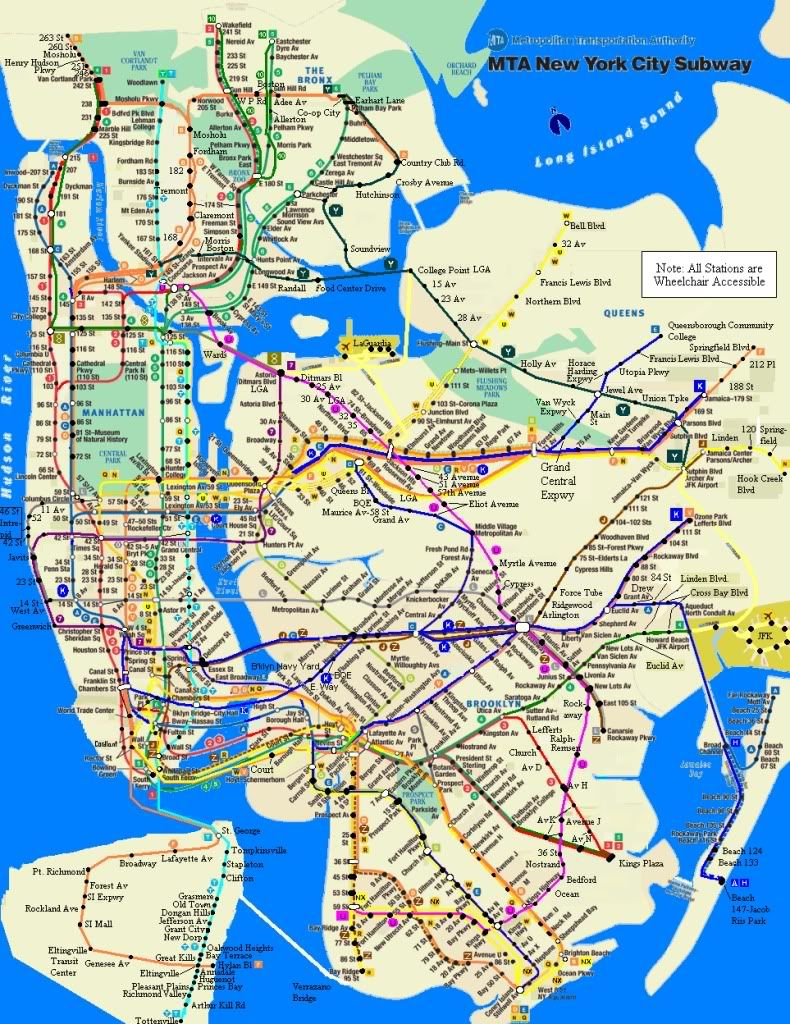
    I’m talking, of course, about the on-again, off-again station at 10th Ave. and 41st St. that will nearly make or break the way we judge the 7 line extension. To recap: The original plans for the extension called for a stop to serve Hell’s Kitchen and the developments near the Hudson River in the low 40s, but as cost overruns became steep, the city — which is funding the entire extension — dropped its plans to build this station. Only the new terminal at 34th and 11th Ave., the lynchpin to the Hudson Yards development, would see the light of day.

    First, the city promised to build a shell station at 41st and 10th Ave. so that the MTA could later build a full station, but when that became too expensive and the economy went south, those plans were scraped. At one point in 2007, then-Deputy Mayor Dan Doctoroff offered to go halfsies with the MTA, but the cash-starved authority with bigger capital fish to fry declined. Then, nearly three and a half years after rumors of the station’s demise first emerged, the Real Estate Board of New York, under new leadership, decided to launch a last-second effort to save the station at 10th Ave., and that is where we find ourselves in 2010.

    The news today is guardedly optimistic. Eliot Brown of The New York Observer rehashes recent history and finds that REBNY’s efforts could be paying off if only Mayor Bloomberg weren’t such an obstructionist. He reports:

    Now, REBNY feels it has a plan that could keep the station alive, but the Bloomberg administration rejects it as unfeasible. Still, the administration, which initially resisted entertaining the late-in-the-game effort, is itself examining other funding options.

    Steven Spinola, president of REBNY, said he had a consultant produce a report that recommended about $100 million in work to move utilities, an amount that could keep the option open for later funding to finish the station. The full cost of the station is estimated by the city to exceed $800 million.

    “What we’re looking to do is preserve the ability that the station will eventually be built,” he said. “Nobody ever really expected the station to be built immediately–$800 million was not ever going to just come from some add-on in a bill in Washington. But can we do something so that over the next five, six years, money can come in from Washington?” …

    A spokesman for the Bloomberg administration, Andrew Brent, dismissed Mr. Spinola’s plan as something that would disrupt the current project, which anticipates a line to 34th Street and 11th Avenue by 2013. “We’re not going to entertain any plans that add meaningful time or cost to the subway extension,” Mr. Brent said in a statement. “If a plan can be worked out that preserves the possibility of a station getting built in the future without delaying or adding cost to the project, we’re open to it. That remains a big if.”

    Bloomberg’s line of reasoning is utterly spurious. The city has gone this long without 7 service to the Hudson Yards area, and considering that real estate development won’t take off for years in that neighborhood, if New Yorkers have to suffer a delay of a year to ensure that something forward-looking is built at 41st and 10th, the subway-riding public would be better off for it.

    Vaguely, Spinola, whose organization didn’t realize for years that the station at 41st and 10th had been axed, ended with some words about the city’s trying to “find a solution.” He said, “At the moment, I think they are taking the concern seriously that the station will not get built unless they do something about it, and I think they are exploring the possibilities.” How comforting.