Category: Podcast

  • Podcast, Episode 12: Inside the history of the Second Ave. Subway with Philip Plotch, author of Last Subway

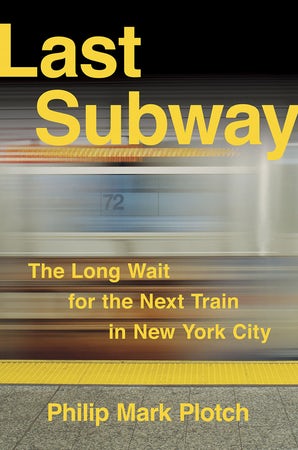
    Earlier this year, Phil Plotch, a one-time transit planner who is now a professor of political science at Saint Peter’s University in New Jersey, published the definitive account of the Second Ave. Subway. The book is called The Last Subway: The Long Wait for the Next Train in New York City, and it traces the tortured political history of the Second Ave. Subway and its various trials and travails. I’ve wanted to talk with Phil about his book and the Second Ave. Subway and finally had the chance to sit down with him this week.

    In the latest episode of my podcast, Phil and I discussed the sagas of the Second Ave. Subway, from its often-delayed origins in the early 20th century to its role in pushing the formation of the MTA to the Gov. Cuomo-inspired rush to completion. Is the three-stop extension of the Q train that made up Phase 1 of the project really New York City’s last subway? You’ll have to listen to find out.

    As always, you can find this episode at all the popular podcast spots — iTunes, Google Play, Spotify or Pocket Casts, to name a few. Or you can listen by clicking the “play” button below. If you like what you hear and have been enjoying the podcasts, please consider leaving a review on your iTunes.

    Thanks for listening, and a big thank you as well to Joe Jakubowski for sound engineering. The podcasts are great fun, but they take a lot of time and effort. I can keep doing them only through the generous contributions of my listeners so please consider joining the Second Ave. Sagas Patreon. Since this site runs entirely on Patreon contributions, your help keeps the proverbial engine going. You can find a copy of Last Subway online or at your local bookstore.
  • Podcast, Episode 11: Inside the MTA’s COVID-19 financial crisis with Nicole Gelinas

    The MTA, along with the rest of the world, is in crisis. As social distancing has become the norm in New York City and the service industry has disappeared within the span of a few weeks, the bottom has dropped out of the MTA’s once-rosy ridership projections. After the city witnessed sustained subway ridership growth for the first time in a few years, no one is riding as ridership has plummeted by about 60% earlier this week, and the numbers should look worse in a few days.

    Along with this ridership drop comes a huge loss in potential revenue. Already, the MTA is incurring massive extra costs in its attempt to clean subways, buses, commuter rail cars and stations to combat the spread of the coronavirus, and without riders, the revenues are gone. The agency is warning its bondholders of significant material events (a financial term for “very bad news”), and Pat Foye has asked the federal government for a direct $4 billion bailout.

    As MTA Chairman Pat Foye said on Wednesday when announcing the MTA’s plans to draw down its credit line, the agency has “encounter[ed] a fiscal cliff.” I’ll have more on the grim details once the situation stabilizes, but today, I have an emergency podcast. Joining me to discuss what this current pandemic means for the MTA’s budget is Nicole Gelinas of the Manhattan Institute. We spoke for about 25 minutes, and Nicole talked us through the dire fiscal straits the MTA is in.

    You can listen below or at any of the usual suspects: iTunes, Google Play, Spotify or Pocket Casts.

  • Podcast, Episode 10: Catching up on transit news with THE CITY’s Jose Martinez

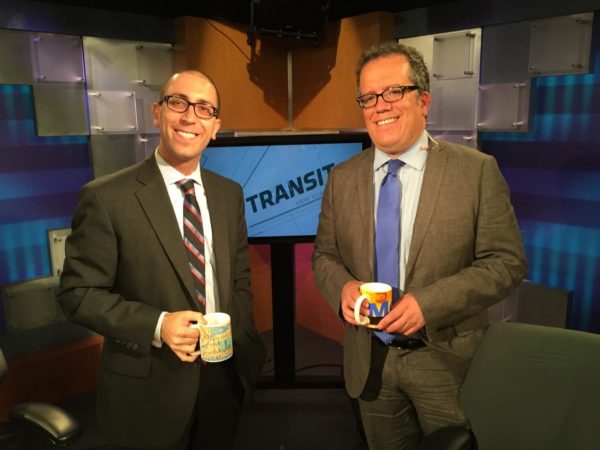
    Jose Martinez (right) and me during a 2015 taping of “In Transit.”

    It has, to put it mildly, been a whirlwind few months for transit news. Coronavirus and the MTA’s around-the-clock disinfectant work has dominated headlines, but since the start of 2020, we’ve had to contend with problems with the R179s, Andy Byford’s abrupt resignation and fears of federal interference in the congestion pricing roll-out. We don’t know the fate of the funding for the MTA’s capital plan, and the agency’s budget is hanging in the balance. It can all be a lot to keep up with, and for the 2020 debut of the Second Ave. Sagas podcast, I wanted to bring in a news veteran to help us understand it all.

    Joining me for this episode is Jose Martinez, senior reporter for THE CITY and the former NY1 transit beat reporter. Martinez, a popular Twitter presence, has been covering transit since 2013 and hosted the news magazine/interview show “In Transit” on NY1. He’s the perfect guest to catch us up on the news, and there certainly is a lot to cover. We talked about the ongoing response to the coronavirus and the MTA’s around-the-clock work to disinfect the system, Byford’s departure, transformation, and his time on the beat working for one of the city’s cutting-edge local news publications. The conversation went by in a flash, and I think you’ll enjoy this episode, despite the pall the news casts on the city these days.

    As of my writing this, the episode is already available via Apple’s Podcast app, and within the next few hours, you’ll be able to find this episode at all the popular podcast spots — iTunes, Google Play, Spotify or Pocket Casts, to name a few. Or you can listen by clicking the “play” button below. If you like what you hear and have been enjoying the podcasts, please consider leaving a review on your iTunes.

    Thanks for listening, and a big thank you as well to Joe Jakubowski for sound engineering. The podcasts are great fun, but they take a lot of time and effort. I can keep doing them only through the generous contributions of my listeners so please consider joining the Second Ave. Sagas Patreon. Since this site runs entirely on Patreon contributions, your help keeps the proverbial engine going. And be sure to check out Jose’s work at THE CITY and follow him on Twitter. I’ll be back soon with a Second Ave. subway-themed episode of the podcast, among others.

  • Second Ave. Sagas Podcast, Episode 9: Subway maps with Kickmap’s Eddie Jabbour

    As 2019 draws to end, I wanted to release one more podcast episode, and this week, you get to spend a half an hour with me and Kickmap creator Eddie Jabbour as we talk about subway map design. Jabbour’s appearance on the show grew out of an interactive feature on the current NYC subway map The Times published in early December. Ostensibly timed with the 40th anniversary of the map designed by Michael Hertz and Associates that replaced the controversial Vignelli diagram, the Times feature dove into some of the design quirks of the map. But it held back on both the praises that have made the Hertz map a four-decade success story and criticisms that have followed over the decades. That’s where the podcast comes in.

    Jabbour’s Kickmap has been around for the better part of two decades, and it began as a passion project. Jabbour, a brand designer who runs Kick Design in his professional life, is a Bay Ridge native and lifelong lover of trains. He combined his eye for design with his love for subways and built the Kickmap as a reimagined map for New York City. The advent of iPhones allowed him to convert it into a digital dynamic map more flexible than the current MTA offerings (and some might say, more visually appealing as well). In this podcast episode, we talk all things maps, both good and bad, and delve into Jabbour’s dream for an international design standard for subway maps.

    Now, don’t get me wrong — the episode isn’t only just criticism of the current MTA map. After all, the Hertz map and its current progeny have served as the longest-running subway map in NYC transit history so it must be doing something right. But Jabbour has plenty to say about about subway wayfinding and the way design could be better. Join us for a wide-ranging conversation on the elements of subway map design, what the MTA’s current map gets right and what it gets wrong, and which international city is the Holy Grail for designers looking to create great subway maps. (Hint: It’s in Japan.)

    You can find my conversation with Jabbour at all the popular podcast spots — iTunes, Google Play, Spotify or Pocket Casts, to name a few. Or you can listen by clicking the “play” button below. If you like what you hear and have been enjoying the podcasts, please consider leaving a review on your iTunes.

    As always, thank you for listening and thank you as well to Joe Jakubowski for sound engineering. I’ve been enjoying producing these podcasts but they take a lot of time and effort. I can keep doing them only through the generous contributions of my listeners so please consider joining the Second Ave. Sagas Patreon. Since this site runs entirely on Patreon contributions, your help keeps the proverbial engine going. And be sure to check out the Kickmap both at its own website or in a digital App Store near you.

    As a postscript, Hertz wrote a series of pieces I published in 2010 and 2011 about his subway map. You can read parts One, Two, Three and Four for more on that history.

  • Second Ave. Sagas Podcast, Episode 8: Better Buses Better Cities with TransitCenter’s Steven Higashide

    Buses are certainly having their moment these days. With the launch of the 14th St. Busway, we’ve seen a vision of a better New York City, one that prioritizes transit over private automobiles and makes it easier for people of every stripe to move around.

    But the success of 14th Street isn’t the only bus story in America. Across the country, transit advocates are winning the fight for better bus service, either through network redesigns that bolster ridership or investment in new routes dedicated to buses. To that enter, Steven Higashide, the Direct of Research at TransitCenter, recently published a new book entitled Better Buses Better Cities: How to Plan, Run and Win the Fight for Effective Transit. At 142 pages, it’s a quick read, but an insightful and meaningful one for anyone who cares about improving buses. Higashide profiles efforts around the country at fixing buses to make service frequent, useful and popular.

    This week, Higashide joined me on the podcast to talk about the lessons from his book gleaned from his travels around the country and the ways they can be applied to New York City. We talked, of course, about the new busway, but we also spoke about the bus network redesign Andy Byford is currently leading and the shortcomings in this project. We discussed fighting against the Arthur Schwartzs of the world and planning a bus network that can lead to faster service and higher ridership. Is this the dawning of the age of buses? Listen on to find out.

    You can find my conversation with Higashide at all the popular podcast spots — iTunes, Google Play, Spotify or Pocket Casts, to name a few. Or you can listen by clicking the “play” button below. If you like what you hear and have been enjoying the podcasts, please consider leaving a review on your iTunes.

    As always, thank you for listening and thanks as well to Joe Jakubowski for sound engineering. I’ve been enjoying producing these podcasts but they take a lot of time and effort. I can keep doing them only through the generous contributions of my listeners so please consider joining the Second Ave. Sagas Patreon. Since this site runs entirely on Patreon contributions, your help keeps the proverbial engine going. And be sure to check out Better Buses, Better Cities. It’s worth any transit advocate’s read.

  • Second Ave. Sagas Podcast, Episode 7: Board member Sarah Feinberg on the state of the MTA

    Former FRA Administrator and current MTA Board Sarah Feinberg spoke with me at length about all things transit.

    Sarah Feinberg, a recent Cuomo appointee to the MTA Board, isn’t quite like the Board members we’re used to around here. While most MTA Board members are long-time or even life-time New Yorkers who operate within the enclosed world of the MTA and its environs, Feinberg came to New York City only recently. She grew up in West Virginia, worked in San Francisco Washington D.C. before arriving in NYC after her stint as the Administrator of the Federal Railway Administration under President Barack Obama. To that end, she brings opinionated views and a more national perspective than the insular MTA often sees.

    Eight months into her stint on the MTA Board, Feinberg sat down with me for the latest episode of the Second Ave. Sagas podcast. We talked about her time in Washington and how dealing with a large bureaucracy in D.C. helps her understand the even-larger bureaucracy in New York City. We talked, of course, about Gov. Cuomo and his heavy hand on transit lately and the success of the 14th St. Busway. We dove into whether or not fare evasion is the same problem the MTA claims it to be. And we discussed how the agency needs to understand that the Americans with Disabilities Act — and accessible transit facilities — is the law and not a suggestion. I hope you’ll find this conversation a refreshing and honest glimpse into the way the MTA Board interacts with both the MTA and the governor, and I’ll highlight some bits and pieces from the podcast in the coming weeks.

    You can find my conversation with Feinberg at all the popular podcast spots — iTunes, Google Play, Spotify or Pocket Casts, to name a few. Or you can listen by clicking the “play” button below. If you like what you hear and have been enjoying the podcasts, please consider leaving a review on your iTunes.

    As always, thank you for listening and thanks as well to Joe Jakubowski for sound engineering. I’ve been enjoying producing these podcasts but they take a lot of time and effort. I can keep doing them only through the generous contributions of my listeners so please consider joining the Second Ave. Sagas Patreon. Since this site runs entirely on Patreon contributions, I can keep it going only with your help.

  • Second Ave. Sagas Podcast, Episode 6: Transportation advocacy with Doug Gordon

    I’m currently amidst a two-week trip through Japan, salivating over its rail systems, the expansive and vast Tokyo subway in all its permutations and Shinkansen rides through Honshu. It’s a fascinating and beautiful country with a rail system that far outpaces America’s, and the subway in Tokyo was fast and reliable (and complex). I’ll be back to my usual posting schedule in a week or so, but in the meantime, I have a new podcast for you.

    Before I left, I sat down with Doug Gordon for a long chat on transportation advocacy. You may know Doug as the voice behind the @BrooklynSpoke Twitter account, the occasional blogger at the site of the same name or as one of the co-hosts of the War on Cars podcast. We spoke about the overlap between transit advocacy and safe streets advocacy, once two largely disparate movements that have grown closer in the age of the internet. We talked a bit about the right over the 14th Street busway (a topic I recently covered for Curbed New York), and the lost opportunities of the de Blasio administration on reforming NYC streets.

    You can catch my conversation with Gordon via the player below and at all the popular podcast spots — iTunes, Google Play, Spotify, Pocket Casts or your favorite podcast app. If you like what you hear and have been enjoying the podcasts, please consider leaving a review on your iTunes.

    As always, thank you for listening and thanks as well to Joe Jakubowski for sound engineering. I’ve been enjoying producing these podcasts but they take a lot of time and effort. I can keep doing them only through the generous contributions of my listeners so please consider joining the Second Ave. Sagas Patreon. Since this site runs entirely on Patreon contributions, I can keep it going only with your help.

  • Second Ave. Sagas Podcast, Episode 5: OMNY with the MTA’s Al Putre

    This is the dawning of the age of OMNY and the end of the line for the MetroCard. As the MTA brings its new open-loop contactless tap-and-go fare payment system online, New Yorkers have seen readers pop up throughout the city, but most riders still have more questions than answers about this mysterious new system replacing the MetroCard.

    I wrote up an overview of OMNY when I covered the launch at the end of May, and for this episode of the Second Ave. Sagas podcast, we’re talking all things OMNY. Joining me for the conversation is the MTA’s own Al Putre. He is the executive director of the New Fare Payment Program and has been in charge of revenue collection at New York City Transit for decades. In this week’s podcast, Putre and I talk all about OMNY — what it is, what it can do, when we’ll get unlimited ride cards and what the privacy concerns may be — as I ask your questions. Give it a listen.

    You can learn even more about OMNY on the system’s official site, and you can catch my conversation with Putre via the player below at all the popular podcast spots — iTunes, Google Play, Spotify, Pocket Casts and your favorite app. If you like what you hear and have been enjoying the podcasts, please consider leaving a review on your iTunes.

    As always, thank you for listening and thanks as well to Joe Jakubowski for sound engineering. I’ve been enjoying producing these podcasts but they take a lot of time and effort. I can keep doing them only through the generous contributions of my listeners so please consider joining the Second Ave. Sagas Patreon. Since this site runs entirely on Patreon contributions, I can keep it going only with your help.

  • Second Ave. Sagas Podcast, Ep. 4: MTA reform with Rachael Fauss of Reinvent Albany

    Reinvent Albany’s call to reform MTA governance is the topic of this week’s podcast.

    Can the MTA be reformed from within without, as many New Yorkers wish to see, blowing everything up? That’s the question a new sweeping report from the good governance group Reinvent Albany seeks to answer.

    A month after budget season wrapped, the watchdog agency published “Open MTA: 50 Actions New York Can Take to Renew Public Trust in the Metropolitan Transportation Authority.” It’s a report that squarely lays the responsibility — and the blame — for the current state of the MTA on the shoulders of Gov. Andrew Cuomo and walks through the myriad ways the MTA has failed. From a Board with no real authority to opaque budgeting to a failure of legislative oversight to ethics concerns and conflicts of interest, the 150-page document lays out the case for MTA reforms through the lens of Cuomo’s control. Andrew Cuomo controls the MTA, and Andrew Cuomo will determine whether or not the MTA succeeds. Here, Reinvent Albany says, is the way to fix things.

    In a way, the report is a contrast to Corey Johnson’s municipal takeover plan, and the document is blunt in noting that blowing everything up — wresting control of an important state power — from Andrew Cuomo is unlikely to succeed. So let’s fix things from within.

    Since the report came out, I’ve pondered how best to cover it. After all, it’s not easy to distill a massive call for reform into a few hundred words. So for the fourth episode of the Second Ave. Sagas podcast, I sat down with Rachael Fauss, Reinvent Albany’s senior research analyst and lead author on the report, for a conversation on overhauling and fixing the MTA. We spent a lot of time discussing whether or not the MTA, under Andrew Cuomo is something that can be fixed. We delved into the way the MTA Board is more symbolic and used as a whipping post rather than a true policy instrument. We explored the need for the agency to implement better open data policies. And we examined how Joe Lhota’s multiple jobs and apparent conflicts of interest undercut public trust in the agency. It’s an in-depth talk about structural challenges and the ways to fix the MTA while recognizing that Cuomo will not willingly cede control.

    You can check out the Reinvent Albany’s full report right here, and you can catch my conversation with Fauss via the player below and at all the popular podcast spots — iTunes, Google Play, Spotify, Pocket Casts and your favorite app. If you like what you hear and have been enjoying the podcasts, please consider leaving a review on your iTunes.

    As always, thank you for listening and thanks as well to Joe Jakubowski for sound engineering. I’ve been enjoying producing these podcasts but they take a lot of time and effort. I can keep doing them only through the generous contributions of my listeners so please consider joining the Second Ave. Sagas Patreon. Since this site runs entirely on Patreon contributions, I can keep it going only with your help.

  • Second Ave. Sagas Podcast, Ep. 3: Aaron Gordon of ‘Signal Problems’

    It’s time for another new episode of the Second Ave. Sagas podcast, and I’m very excited about my guest this week. Joining me during his farewell tour for his Signal Problems newsletter for a long discussion on all things covering transit is Aaron Gordon, a familiar name in these parts.

    Gordon picked up the transit beat a few years ago with The Village Voice and launched “Signal Problems” as part of his ongoing coverage. He’s spent countless hours digging into faulty signal timers, the ongoing L train repair mess, and ferry ridership, among others. Now a writer with Jalopnik, Gordon is retiring his newsletter shortly, and the transit beat will be poorer for it.

    Gordon and I sat down for a long discussion over the weekend, kicking things off with a conversation on Andy Byford’s future, and we covered the slow-motion improvements as Byford works to improve the system while navigating a thorny governor. We also talked about covering transit, frustrations with the FOIL process and the experiences a transit beat writer can enjoy riding along with the speed limit test train. You can listen to this week’s episode via the player below and the popular spots — iTunes, Google Play, Spotify, Pocket Casts and your favorite podcast app. If you like what you hear and have been enjoying the podcasts, leave a review on your favorite podcast site.

    As always, thanks for listening and thanks as well to Joe Jakubowski for sound engineering. I can bring the podcasts to the public thanks to contributions from my readers so please consider joining the Second Ave. Sagas Patreon. As always, this site runs entirely on Patreon contributions, and I can keep it going with your help.