Category: MTA Economics

  • As fare hike loom, MTA doles out more for overtime

    The New York Post discovers that, yes, some MTA employees are paid. (Source: The New York Post)

    Ah, the fare hike. It’s that one time every few years when the MTA’s finances are scrutinized by everyone under the sun.

    With the public hearings starting today (register here), The New York Post takes a look at what the MTA is paying its employees. Rupert Murdoch’s paper has found a rather large amount of overtime landing in the pockets of those MTA workers.

    In an article detailing the escalating salaries of MTA workers, The Post has also discovered that the number of workers earning above $100,000 a year has risen as well. Bruce Golding reports:

    As the MTA fights for a fare hike, the number of agency workers who took home more than $100,000 last year jumped 37 percent – as the agency paid a total of $397 million in overtime…

    The number of MTA employees with base salaries exceeding $100,000 rose to 1,793 last year from 1,403 in 2005, a 28 percent jump. By comparison, the number of New York City workers with salaries over $100,000 rose only 6 percent during the same time.

    Overtime payments helped push the number of employees taking home more than $100,000 to 4,382 in 2006, up from 3,209 the year before – an increase of 37 percent. At the LIRR, overtime pay boosted 656 workers past $100,000 in earnings, compared with 205 who made that much in straight salaries. At Metro-North, the numbers were 240 through overtime and 226 from salaries.

    Now, I can’t fault workers for earning more than $100,000. While a lot of people on the Internet who write about the subways have a very low opinion of some subway workers and Flickr is chock full of pictures of MTA employees sleeping on the job, if their seniority and work ethic demand it, then these workers should be fairly compensated. While the article in The Post seems to be more concerned with the $100K figure than anything else, I’d like to focus on overtime.

    According to this article, the MTA doled out a whopping $397 million in overtime last year. Now, that $300 million sure does sound familiar. Ah, right, it’s the amount of money the MTA needs next year to avoid the fare hike, according to MTA CEO Elliot “Lee” Sander.

    I doubt it’s reasonable to expect the MTA to cut out all of that overtime, but I would have to believe that they could half the amount of money they pay out in overtime. Something in the organization culture of the MTA has led many, many employees to work overtime and expect pay for it.

    As the MTA’s finances come under the fare hike microscope for the next two months, the MTA should start to cut some of that fat. Evening saving a quarter of this overtime money — $100 million — brings the organization that much closer to avoiding a fare hike or, if the fare hike is inevitable, paying for more service upgrades. Let’s see it happen.

  • MTA fare hike proposal hits subway riders harder than drivers

    How did we miss this story for so many weeks? According to a report by Jeremy Olshan in The Post, the MTA’s fare hike leaves subway riders footing a higher percentage increase than drivers using the MTA Bridge and Tunnel tolls. In the era of the congestion fee and an increased call for traffic calming in New York, these findings are dismaying to say the least.

    Furthermore, the MTA is partially reiterating its claim that Metrocard vending machines are to blame. Since these machines can support only fare increases in multiples of $0.25, the MTA is limited in its ability to raise the fares across the board. While the city eagerly awaits the outcome of the congestion fee battle, this transgression will not stand, man.

    Olshan elaborates:

    Despite all the talk about congestion pricing and discouraging driving in favor of mass transit, motorists get off equally – and in many cases easier – under the MTA’s proposed fare hikes. The cash toll for bridges and tunnels would rise 11.1 percent, from $4.50 to $5, under the proposal, compared to the 12.5 percent subway hike from $2 to $2.25.

    Of course, only 25 percent of drivers and 15 percent of bus and subway riders pay the base fare. Using EZ-Pass, toll payers would shell out 6.25 percent more as the rate rises from $4 to $4.25, and a five-ride MetroCard would increase the price per ride by 13 to 20 percent.

    In addition to breaking what could become an important subplot in the fare hike debate — especially once those public hearings begins — Olshan tracked down some choice quotes for his piece as well.

    Paul Steely White, head of Transportation Alternatives: “We should be doing more to encourage people to take mass transit instead of driving. They need to not be ashamed to raise those tolls. They should sock it to motorists and give transit riders a break, because it’s the drivers who are contributing to pollution and global warming.”

    Andrew Albert, MTA board member: “There’s no question we should be encouraging transit usage first. I don’t know why you would favor motorists. If anything, they should be hit harder.”

    Jeremy Soffin, MTA spokesman: “The goal is to treat everyone equally and have the increase be as close as possible to 6.5 percent. It’s easier to accomplish that with tolls and EZ-Pass and on the commuter rails. The subway fare is more complicated.”

    Yikes. This is not a good situation for anyone. The MTA comes out looking bad, and subway riders are getting screwed while drivers, the scourge of many New Yorkers, are getting off easy.

    Right now, the easy solution should be the one the MTA is looking into: Raise the tolls on the roads the extent such that they don’t need to shaft subway riders. Drivers should be the ones footing the bill for public transportation considering that many people drive in this city when they don’t have to. A fare hike like that one would be a preemptive congestion fee.

    So how can we get this message to the MTA? Go to the public hearings and demand accountability. Find out why drivers are getting off with a lower percentage increase while subway riders are getting stuck with a higher bill. Nothing about this fare hike is set in stone, and if enough people band together, the proposals can change. It worked with the F express; maybe it can work with the fare hike too.

  • MTA tries to sneak in a higher fare hike

    So the fare hike. We’re talking about that confusing fare hike with the two-tiered fare structure, the supposed off-peak discounted and the upcoming public hearings designed to solicit rider opinion. Well, it ends up that the fare hike is not as straightforward — or as cheap — as was originally reported.

    Since the end of September, all of the fare hike coverage had focused on this off-peak proposal. By charging people $1.50 for off-peak rides, the MTA hopes some riders were eschew rush hour travel for less crowded times. It’s an artificial — but potentially effective — way of alleviating subway overcrowding. But now the bombshell: That $1.50 may just be a pipe dream. According to a report in The Daily News, that off-peak fare could end up being $1.75 instead of the originally reported figure of a $1.50.

    Take it away Pete Donohue:

    The MTA may jack up fares even higher than top staffers proposed in September, the authority revealed on Tuesday as it set hearing dates for riders to sound off.

    Public notices announcing next month’s hearings warn riders that Metropolitan Transportation Authority next year could impose a peak fare of $2.25 – without a discount option that could soften the blow for many rush-hour riders. The base fare is now $2. The notices also for the first time say an off-peak fare – proposed by top MTA staffers last month to be set at $1.50 – could actually cost $1.75.

    According to MTA spokesman Jeremy Soffin, these posters were designed to give riders a look at the wider range of options that the MTA board will face in December. The board has to figure out how to raise nearly $600 million in revenue over the next two years, and a $1.75 off-peak fare, which doesn’t represent much of a discount from the current buy-five-rides, get-six deal in place, is just one of many solutions.

    Furthermore, this $1.75 figure isn’t the only surprise on the poster (available here as a PDF). The other changes include reducing or eliminating the bonus on pay-per-ride Metrocards of $10 or more; increasing the cost of a 30-day unlimited card to $84 or $2 more than was originally announced; eliminating the one-day Fun Pass entirely; and increasing the minimum amount on one Metrocard to six dollars or one and a half round trips.

    While the MTA notes that these higher figures are, in the words of Soffin, “not our proposal,” it is dismaying to see even higher figures emerge on the official announcements of public hearings. Considering the fact that New York subway riders are facing a very substantial fare hike, the MTA should be as transparent as possible with its numbers over the next two months.

    We need full public accounting for the fare hike; we need to know how much the fares are going up; we need assurances that we’ll be better better and more reliable service. While I’m hoping for accountability, I fear the smoke and mirrors. These posters are not reassuring.

  • MTA, eyeing 2010 hike, blames the machines for the 2008 raise

    What’s in The Daily News? I’ll tell you what’s in The Daily News. A story about the MTA blaming the MetroCard Vending Machines for what otherwise would have been a smaller fare hike. That’s what in The Daily News.

    My apologies to all of those fans of Guys and Dolls out there, but seriously. The MTA is saying that a flaw in the way the MetroCard Vending Machines are programmed is one of the leading reasons why the 2008 fare hike is set to a quarter instead of just 10 cents. That, ladies and gentlemen, may be a first.

    Pete Donohue, transit writer for The Daily News, has more:

    The Metropolitan Transportation Authority acknowledged yesterday that one BIG reason it wants a 25-cent bus and subway hike is because its vending machines can dispense only dollar coins and quarters.

    MTA spokesman Jeremy Soffin defended the increase as fair and said upping it by a nickel or dime wouldn’t be enough. “The limitations of technology would make a $2.10 fare extremely costly to implement and would provide a much poorer quality of service,” Soffin said.

    Oof. This may go under that ever-special category of Things You Keep to Yourself. Subway guru and Straphanger lawyer Gene Russianoff was outraged for the lot of us. “It’s not acceptable for them to say, ‘The machines are making us do it,’” he said to Donohue. “What are they going to [do] if next time they think there should be a 35-cent hike? Round it off to 50 cents and make us pay?”

    In response to this spate of bad publicity, the MTA announced that they are looking at technological alternatives to the current vending machines. Considering that only 14 percent of subway riders pay in case, searching for something that doesn’t rip off everyone would probably be a good solution here. The MTA is also considering some sort of card for low-income subway riders, but the Authority refused to discuss any details whatsoever of those mysterious program. Maybe they should just step on it with those plans to adopt Smart Card technology.

    In other fare hike news — and I use that term loosely because anyone reading Second Ave. Sagas won’t be too surprised by this information — New York newspapers are making a big stink over the fact that the MTA has plans to raise the fares in 2010. For as long as the MTA has debated this upcoming fare hike, MTA CEO Elliot “Lee” Sander has repeated warned the public that the Authority prefers and would pursue two smaller fare hikes in 2008 and 2010 instead of one larger fare hike when the MTA’s financial picture became too dire.

    As the public becomes more aware of this looming fare hike and its long-term ramifications, people are going to get more annoyed at the MTA. Just you wait.

  • Federal Transit Administration kicking in $1.3B for the Second Ave. Subway

    The 8.5-mile Second Ave. Subway took one giant leap toward reality when the Federal Transit Administration announced its approval of a $1.3-billion grant for the construction of the new subway line. This money — promised to New York City by President Bush back in February — will be a huge boost to a project with finances that, up until now, could be described as shaky, at best.

    Right now, information on the grant approval is sketchy. NY1 reports that the the $1.3 billion will be added to the $1.5 billion already assigned to this project. This money is simply for the first stage of construction which encompasses the three stops at 96th St., 86th St. and 72nd St., as well as a connection via 63rd St. to the existing BMT lines down Broadway.

    amNew York’s Tracker blog has a statement from some of New York’s local politicos:

    The Federal Transit Administration has informed Congress that it will approve a full-funding grant agreement for the Second Avenue Subway, Rep. Carolyn Maloney, Governor Eliot Spitzer, and Assembly Speaker Sheldon Silver announced today. The New Yorkers hailed this crucial investment in New York City’s transportation system, which is expected to provide about $1.3 billion in federal funds to build the first leg of the subway project.

    The statement, as you can see, doesn’t shed any further light on what this grant means for the project. In April, I reported on a projected the $800-million gap in funding for the Second Ave. Subway. I believe that figure already included this grant which city officials all but considered theirs six months ago. This announcement today is really more symbolic than anything else.

    With various organizations pledging bits and pieces of the puzzle, I think the $800 million has been cut. Whatever the difference is now, it should be covered by the money drawn in by the congestion fee. That money is, after all, set to go to the Second Ave. Subway instead of the JFK Railink. I’ll do my best to clarify this money puzzle shortly.

    But no matter; this is great news for the city. The federal government is willing to toss some serious bucks our way to ensure the completion of a project that is vital for the future health of the city. If only we could always be so lucky.

  • Proposed MTA fare hike the worst kind of regressive tax

    Of all of the charges levied against Mayor Bloomberg’s congestion fee by the plan’s opponents, I am most entertained by those weakly arguing the congestion fee is a regressive tax designed to hit poor more than it affects the rich. Well, newsflash, folks: The poorer people aren’t the ones driving and paying for a car in New York City.
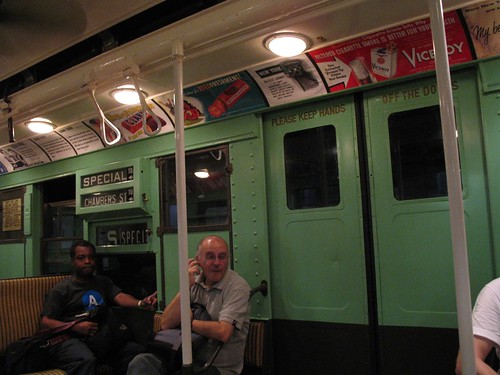
    To find an example, though, of a crippling regressive tax at work, look no further than today’s announcement by the MTA describing the potential fare hikes. The proposal, detailed here by William Neuman of The Times, involves jacking up the base fare and the prices on Unlimited Ride Metrocards, doing away with the buy-five-rides-get-six discount and instituting lower off-peak fares.

    William Neuman, in an earlier post at the Cityroom blog, has more:

    A person who buys a pay-per-ride MetroCard would be charged $2 to ride the subway or bus during the morning and evening peak periods. Travel during off-peak periods, including midday, would cost $1.50. The intention would be to encourage some riders to travel during off-peak hours, which could reduce crowding during the rush periods.

    If that proposal were adopted, the 7-day and 30-day unlimited-ride MetroCards would increase to 8 percent from 6.5 percent. A new 14-day unlimited ride MetroCard would be created, at a cost of $48. The authority would no longer offer 20 percent bonuses for purchases over $10.

    An alternate proposal would involve a more traditional fare increase. The base fare would increase to $2.25 from $2. The pay-per-ride MetroCard would continue to operate as it does today, with riders receiving a 20 percent bonus if they put at least $10 on the card. The cost of weekly and monthly unlimited ride passes would each go up 4 percent. And a new 14-day MetroCard would cost $45.

    Based on this information, the MTA, projected nearly a $1 billion surplus this year, is going to, as Straphanger Campaign lawyer Gene Russianoff noted, foist its desired money onto commuters instead of forcing the state or city to pick up a tab. This development comes after both the state and city comptrollers issued reports noting that common sense measures could result in the necessary financial allocations without the need for a fare increase.

    All of which brings me back to my original point: By charging people more for peak-hour rides, the MTA, if it opts to go with the peak/off-peak plan, will be instituting a regressive tax on everyone who rides the subways to and from work during rush hour. The MTA’s proposal, in an attempt to alleviate overcrowded rush hour subways, penalizes those who commute to work during the rush hour time slots and rewards those who use the subway outside of rush hour.

    But who are the people who must ride the subways during rush hour? And who are the people who can afford to ride the subways in off-peak hours? Generally, those people making the least are the ones riding during the peak hours. The 9-to-5ers with little job flexibility will have to shoulder the burden of the fare increases.

    Meanwhile, people beholden to no one — or few others — can take the subway at a more leisurely and cheaper hour. People who work themselves and set their own hours, people who are their own bosses, they can take the subways during the $1.50-fare periods. The people who are most able to afford the fare hike won’t be the ones suffering because of the fare hike.

    While even the plan simply to have an across-the-board fare hike is a regressive tax, the one with tiered fares is more egregious than the other. The only way to avoid a regressive tax when trying to raise more revenue would be to avoid a fare hike. But as SUBWAYblogger noted, these fare increases, one way or another, are going to be a reality. I just hope those sounding the alarm of the congestion fee as a regressive tax take up the mantle when it comes to opposing this subway fare hike too.

  • Rickety accounting mars nostalgia train rides, says Comptroller

    Subway buffs enjoy a ride on a Nostalgia Train. The Comptroller hates these. (Courtesy of flickr user bifteck)

    With Second Ave. Sagas firmly entrenched — or is that floating underwater? — during old subway car day, let’s venture over to the economics of maintaining the rolling stock of yore. Old train rides, according to the New York State Comptroller, aren’t economically-efficient. Oh, the horrors.

    The tireless Sewell Chan at The Times’ Cityroom blog reported last week on a New York State audit’s findings that the NYCT nostalgia train rides are a losing proposition for the MTA (Audit in PDF form here). But it’s not nearly as cut-and-dry as it sounds. Take it away, Sewell:

    A new audit by the office of State Comptroller Thomas P. DiNapoli has found that the M.T.A. did not adequately keep track of the money raised from the Nostalgia Train trips. Furthermore, the audit found that New York City Transit, the largest arm of the M.T.A., had to pay to restore and maintain the vintage train cars, but did not, in turn, benefit from the money raised from the train excursions. In other words, subway riders and taxpayers have been subsidizing the history-evoking train rides…

    The Nostalgia Train program earned revenue of $23,035 in 2004 and $12,110 in 2005, according to the audit, but the cost of the crews to run those trains was $31,566 in 2004 and $20,576 in 2005 — so the program operated at a net loss.

    Now, I know the MTA is rather strapped for cash right now. But as one comment on Cityroom aptly noted, how much do you think the audit costs?

    As much as I prode the MTA over its financial mishaps (student Metrocards anyone?), I will staunchly defend these nostalgia-laden train rides. And for its part, the MTA does an apt job defending itself. Chan notes:

    The M.T.A. responded to the audit with several points. It argued that the maintenance and repair costs associated with the Nostalgia Train excursions are “immaterial” when compared with the overall cost of maintaining the entire subway car fleet. It also noted that the Transit Museum is run for historical and educational purposes and is not expected to turn a profit.

    In reality, we’re talking about a deficit of $8,000. Considering that the MTA’s financial problems could run into the hundres of millions, arguing over less than $10,000 of money put toward an educational and historical purpose seems petty. The Comptroller’s office should stick to big picture items such as the looming fare hike.

    To be fair, the MTA should work on its accounting practices. What it implements at the micro level with the Transit Museum could serve as a model for the finances of the Authority and NYCT on the whole. But let’s not unnecessarily rain on the parades of those who enjoy these train rides. As Tom on Cityroom said, “Of the billions that the MTA spends, this was the biggest budgetary scandal you could find? Twenty grand is a rounding error in an agency this size. If it was used to renovate the director’s bathroom that would be a different story, but these trips clearly have value as a service to the many people interested in the city’s history.”

  • MTA urged to delay fare hike until mid-2008

    For the last few months, we’ve heard a litany of calls from politicians urging the MTA to hold off, or outright reject, the upcoming fare hike. The folks who hold the purse strings — the New York State Comptroller and the New York City Comptroller — got in on the act as well. Now, a supergroup of advocates has called on the MTA to hold off on implementing the hike until the middle of 2008.

    These advocates, led of course by the ever-present Gene Russianoff, have released a letter written to MTA CEO Elliot “Lee” Sander, urging him to wait until at least March 31, 2008, to proceed with the fare hike. The letter, available here as a PDF, lays out a compelling case for the delay. Take a look:

    As civic groups concerned with decent transit, we write to urge that if the MTA does adopt a fare increase for 2008, no final action be taken before March 31, 2008, at the earliest …

    Right now, the MTA plan calls for a decision on fares in December 2007, to go into effect in “early 2008.” But we urge that no final action on the fare should happen before March 31, 2008. That’s because two other key actions take effect on that date.

    First, this is the date by which the state legislature and New York City Council have to decide on the recommendations of the traffic congestion mitigation commission recently created by the state legislature. The commission will be considering Mayor Bloomberg’s congestion pricing proposal, which would include new transit funding.

    Second, on that same day, the MTA is required to submit its five-year, multi-billion dollar capital rebuilding plan, giving the public its detailed program for what repairs will be slated between 2008 and 2013. Our groups feel strongly that the whole range of transit funding — from operations to capital needs — should be considered as a whole, rather than piecemeal.

    This is a rock-solid rebuttal to what is beginning to look more and more like an unnecessary-for-now fare hike. Of course, the MTA is pushing back. In an article in today’s Daily News, Jeremy Soffin, MTA spokesman, spoke on the need for financial relief sooner rather than later. “Our financial plan puts the MTA back on sound financial footing while actually increasing service for our ridership,” he said. “Delaying its implementation will only lead to larger fare increases and unacceptable service cuts.”

    But if the city and state come through on the congestion pricing issue, won’t the MTA stand to benefit more by delaying the fare hike until every piece of the financial puzzle can be completed? I think so; Gene Russianoff thinks so; now we just have to hope the MTA thinks so too.

  • Senate sends some SAS-sy money the MTA’s way

    img_3665.jpg

    A view into the Second Ave. Subway construction staging ground at 2nd Ave. between 92nd and 91st Sts. (Courtesy of the fantastic photoblog The Launch box)

    It’s payback time for New York’s senior senator, and the Second Ave. Subway stands to benefit from Chuck Schumer’s handling of the DSCC in 2006.

    Once upon a time, on the very first day of Second Ave. Sagas, I wrote about how Schumer’s success during the mid-term elections would lead to subway pork for New York City. Now, the money’s coming home.

    On Friday, the United States Senate passed their appropriations bills for the upcoming fiscal year 2008. In that bill coming our way is $125 million earmarked for the Second Ave. Subway. Before we can start counting our money, the bill still has to go through the conference committee session. It’s really just a formality at this point.

    Also in the Transportation Appropriations Bill is $200 million for the East Side Access Project. It sure is good to have politicians who can deliver the pork.

    The two Senators — Schumer and one Hillary Clinton — issued their typical responses praising the projects. Schumer spoke about the necessity of the projects. Clinton extolled federal investment in these projects. “Now that the ground has been broken and the commitment is real for the Second Ave. subway, this kind of federal investment is critical to helping the city and state keep the project on track,” she said.

    While this federal infusion still leaves the MTA a few hundred million dollars short, the federal funds should cover the gap should congestion pricing become a reality. Phase 1 of that Second Ave. Subway is getting closer and closer to reality. Who woulda thunk it?

  • From the ‘I have eyes and ride the subway’ department: The subways are very popular

    transportationgraph.jpg

    An excerpt from the New York Metropolitan Transportation Council’s report.

    The subways are crowded. This much we know from riding the trains everyday and also from past stories about the MTA’s tooting its own popularity horn.

    Today, from a report issued by the New York Metropolitan Transportation Council, we learn that, yup, those subways are indeed still crowded. You don’t say?

    According to this grand survey of New York City transportation sources (PDF file here), New York City Transit ridership averaged 4,928,222 people a day during the first quarter of 2007. That figure represents a 3 percent increase over the same quarter in 2006.

    More impressive is the March total: 5,096,905. For the first time since the 1950s, as I’ve noted before, ridership has exceeded that 5-million-a-day mark. That means that well over half the population of the city swipes through the subway’s turnstiles each day. While I know that five million New Yorkers are not making one trip each on the subway every day, the numbers are comparable. And not matter how you slice or dice it, that’s a whole lotta people. So if the subways seem crowded, it’s because they are.

    To slam home this point with a sledgehammer, the NYMTC reports that 51 percent of New Yorkers using public transportation turn to those lines run by New York City Transit. In other words, the majority of the area’s public transportation trips now take place in the subways.

    With these crowded subways, of course, comes a familiar drum beat to those of you who are regular readers around here. The MTA has to find a way to meet the demands of a growing readership. They need to make sure they have enough working train cars to keep up with heavy transit loads. They have to make sure that areas of the city with growing populations are adequately serviced by mass transit.

    Now more than ever, this city depends upon the subways to run. Without a functioning and fully funded subway system, this city would see a very real economic downturn. Hopefully, this doomsday scenario won’t come to pass. For now, we should — outside of rush hour, at least — basque in the glow of our popular and efficient subway system.

    Click here for a nifty pie chart showing the breakdown of Average Weekday Passengers on NYC’s public transportation options.