Category: MTA Politics

  • State GOP leader speaks out against Hemmerdinger

    When last we visted with H. Dale Hemmerdinger, he had just been nominated for the MTA chair position. Signing off last night, I figured that his nomination would sail through the confirmation process. Well, color me wrong.

    The State GOP is threatening a thorough investigation into Gov. Eliot Spitzer’s appointee due to Hemmerdinger’s close ties with the Democratic party in New York. He and his wife are major Democratic donors and are buddies with the Spitzers.

    “Last week, Dale Hemmerdinger opened his home to host a big money fundraiser for Governor Spitzer. This week, the Governor is nominating him to head the MTA when his mass transit experience appears to be limited to suggesting fee increases on hard working New Yorkers,” State GOP Chairman Joseph N. Mondello said in a statement. “Governor Spitzer appears to have instituted a brazen ‘pay to play’ culture in Albany that is disappointing and shocking to the people of New York State.”

    Mondello noted that Hemmerdinger had been a lead fundraiser for the Spitzer campaign and wondered if the appointment served as political payback. He also questioned Hemmerdinger’s transportation experience, noting that Hemmerdinger’s lone run-in with public transit was as head of the MTA’s Citizens’ Budget Commission.

    This reeks, of course, of politics. Clearly, Spitzer would appoint an ally to head up an agency that he would like to act as a friendly body in the New York political arena, and Mondello knows that as well as anyone else. There is also no small amount of irony in a GOP leader criticizing the Democrats for engaging in “pay to play” politics in Albany. Pot, meet kettle.

    Furthermore, Hemmerdinger is the perfect person to head up the MTA as its chair. With CEO Elliot “Lee” Sander firmly entrenched as the transportation policy guru at the Authority, the MTA doesn’t need another transit wonk in a position of leadership. Rather, they need a successful businessman with financial acumen to guide the Authority through what promises to be a few tumultuous fiscal years.

    The Republicans will spoil for a fight. But it’s a waste of everyone’s time. Hemmerdinger is a great choice for the job; just approve him.

  • Hemmerdinger, NYC real estate mogul, nominated for MTA chair

    With current MTA chair Peter Kalikow on the way out, Gov. Eliot Spitzer has named his choice for replacement. H. Dale Hemmerdinger, a New York real estate mogul and one-time head of the MTA’s Citizen Budget Commission, will get the job, The Times’ new CityRoom blog reported this evening.

    Hemmerdinger, 62, is currently the head of the Hemmerdinger Corporation, the parent company of the ATCO family of real estate companies. Hemmerdinger, a 1967 graduate of NYU, is also a member of the university’s board of trustees and won an alumni association award from NYU in 2006.

    “Dale has been a champion of fiscal stability, intelligent long-term planning and management accountability while serving as CBC Chair and throughout his business career,” Governor Spitzer said in a statement. “His charge is to ensure that the MTA becomes known for those qualities as well.”

    According to Sewell Chan’s post on CityRoom, Hemmerdinger won’t enjoy the same power that Kalikow held as MTA chair. As Spitzer reorganized the MTA’s leadership structure, current CEO and Executive Director Elliot “Lee” Sander will hold the reins of power, but Hemmerdinger is expected to bring financial acumen to an agency that could be tottering on the brink of fiscal disaster.

    amNew York noted the influential Straphangers Campaign reaction to the appointment:

    Advocacy group the Straphangers Campaign promptly responded to the announcement, calling Hemmerdinger “a smart guy who cares about transit.”

    But they also voiced hesitation, saying that under Hemmerdinger, the budget commission recommended New Yorkers should pay more than the national average for transit.

    Hemmerdinger’s nomination has to clear the state Senate, but that is assumed to be a mere formality at that point. Nothing in his background suggests that this big Democratic donor will face a contentious approval.

    For the MTA’s part, Sander issued a statement praising Hemmerdinger. “I look forward to working with Dale and the entire M.T.A. board as we continue to tackle some tough challenges and implement a new vision for our transportation network,” he said. With two highly qualified transit advocates leading the MTA, we could be seeing the dawning of a new golden age for the rapidly-expanding New York City subway system.

  • MTA should address future problems today

    I (along with Catherine Dent from The Shield!) entered the subway at 96th St. this evening at around 9:30 p.m. From the Upper West Side to Park Slope, I rode on two fairly crowded trains. Considering it was late-ish on Memorial Day Monday, the trains were teeming with people.
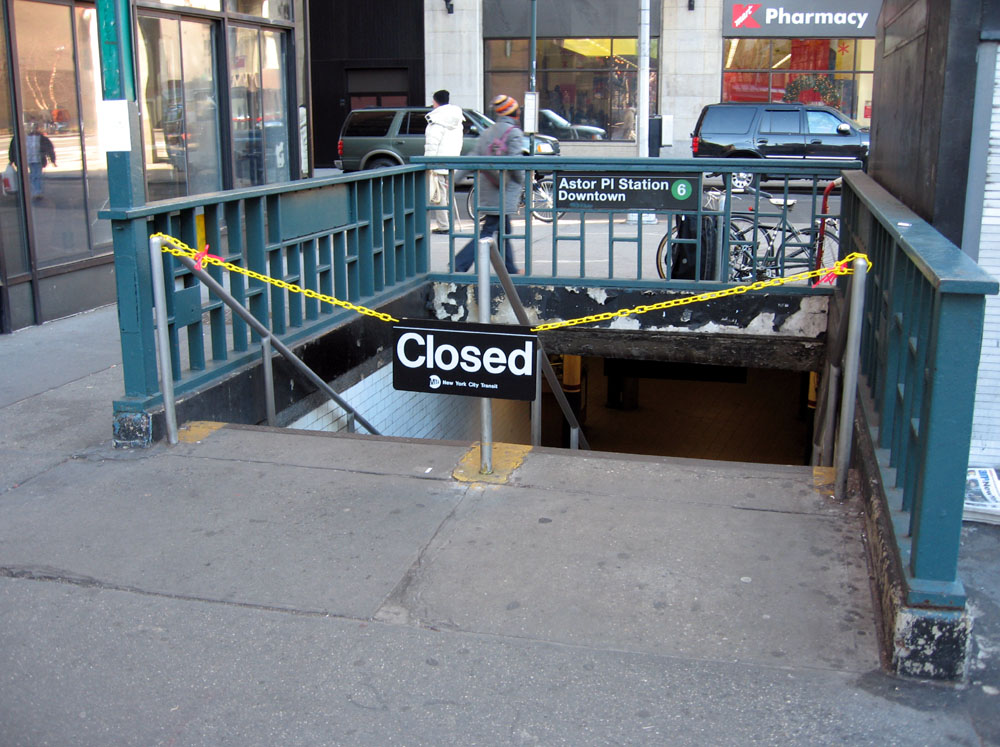
    This is, as New York City Transit president Howard Roberts noted on Friday, now an everyday occurrence. New York City is more crowded than ever with residents and tourists, and these people take the subway to get around. Ridership numbers should soon surpass record highs, and subways, crowded at all hours of the day, are beginning to bear an increasingly heavy load.

    Which brings us to an editorial in The Post that got lost over Memorial Day Weekend. In a rare moment of candor from New York’s favorite Murdoch-owned tabloid, The Post urged the MTA to get thinkin’ already on tomorrow’s problems. Let’s tackle them today, as the cliché goes.

    The Post took its cue from Roberts’ comments on Friday that maybe the subway system could use longer (and faster) trains to carry more people throughout the city it a quicker fashion. While two commenters on SAS and I both agreed that Roberts’ proposal sounds ludicrous, his main point is on the money. Over the next five, ten, twenty years, more and more people are going to be riding the subway. If you think the F line is crowded now, wait until Kensington and Borough Park fill up with even more people.

    The obvious solution to these problems revolve around running more trains. But some lines are at capacity. The IRT lines can’t handle more trains. Even the IND and BMT lines are mostly maxed out. The tunnels can only hold so many trains if the MTA wants to keep the trains moving at a steady pace. There’s nothing worse than waiting in a tunnel for the train ahead of you to clear out, and if more trains are added to most of the lines in the city, wait times would increase dramatically.

    While lines like the L will see more subways in three years, many lines are already at that peak of 26-30 trains per hour during rush hour. Roberts claims that extended subway platforms would cost less than building new lines, but I don’t buy it. Stations that are already too close together would have to close, and no one would like that. Furthermore, station extension projects involve excavation and renovation beyond anything we’ve seen in the subways in a long time.

    In my view, the solution to the city’s subway problem — or future problem — is to build a more comprehensive grid. We need more trains running from Brooklyn to Queens without crossing into Manhattan. We need more crosstown trains through Manhattan and more stops on the far East and West Sides.

    Opponents may question the cost and infrastructure needs for such an expansion, but I point to London and, more recently, Beijing as cities that have built new subway lines in built-up areas. The need was there; the money was there; the lines were completed.

    Considering the long and tortured history of the Second Ave. subway, a line that promises to be New York’s first new subway route in nearly eight decades, I’m not going to hold my breath waiting for the MTA to adopt my plan. But any discussion about the efficiency and overcrowding on the subway should start and end with new lines. If those in charge of the city are serious about maintaining its sustainability, new subway lines must be a part of this plan.

  • Transit strike, sketchy book-keeping mar Kalikow tenure

    The 2005 transit strike will forever mar Peter Kalikow’s MTA tenure. (Photo courtesy of flickr user NYC Comets)

    On Monday, we came to celebrate Peter Kalikow (with a little urging from the MTA’s press department). On Tuesday, we come to bury him.

    As Kalikow prepares to leave his post as chairman of the Metropolitan Transportation Authority, the papers are aglow with critical examinations of his tenure.

    While we may remember Kalikow for his push to extend the subway system along 2nd Ave. and his unwavering dedication to the 2005 Transportation Bond Act, we won’t soon be forgetting the 2005 transit strike or the sketchy ways in which the MTA went about raising the fare in 2003. The Times has more about the transit strike and the bitter animosity that have since arisen between the MTA and the Transit Workers Union:

    Gene Russianoff, the staff lawyer for the Straphangers Campaign, a transit rider advocacy group, said Mr. Kalikow sometimes hewed too closely to Mr. Pataki’s interests, allowing Albany politics to dictate policy. As an example, he cited the poor labor relations that characterized Mr. Kalikow’s years at the authority, especially after the strike that halted city bus and subway service for 60 hours in December 2005.

    “That was one of the black marks,” Mr. Russianoff said. “He ended up with probably what was the worst labor relations in the 25 years we’ve followed the system. It was, I think, purely Pataki politics that dictated what happened.”

    In my opinion, however, that transit strike pales in comparison with the economic circumstances surrounding the 2003 fare increase, a situation which the word “sketchy” defines perfectly. In 2003, the MTA raised the fares amidst cries from City Hall and Albany that the MTA has shifted around millions of dollars of surplus money to make it look like the fare hike was a necessity instead of a luxury.

    While the Straphangers Campaign and others bring the suit eventually lost on appeal, as Gene Russianoff notes in Metro, the end result has been favorable; the MTA now must maintain a higher level of transparency than ever before.

    So as Kalikow exits, sometimes, we’ll remember the way he spoke out against the lowball offer the Jets made for the Hudson Yards area and the way he’s tried to be more rider-friendly. At other times, as that $76 melts away every month, we’ll remember the fare hikes. It’s a tortured legacy for the man in charge of one of New York’s greatest assets, and his shoes will not be filled easily. But if the potential replacement took any lessons from the last six years, we’ll have an even better subway system come 2013.

  • Kalikow to resign once Spitzer names replacement

    The Peter Kalikow Resignation saga is finally drawing to a close. The outgoing MTA Chairman announced today that he would resign as soon as New York State Governor Eliot Spitzer names his retirement, The Times’ Empire Zone blog reported today.

    Kalikow, the chair since 2001, was appointed to a new six-year term last year, but he announced in November that he would step down this year. In March, Kalikow wasn’t quite ready to quit, but now the time is right. “I am a firm believer in setting aggressive goals, accomplishing those goals and then giving others the opportunity to both expand upon those initiatives and create new ones with fresh vision and new energy,” Kalikow said in a press release. “As both a longtime public servant and an avid supporter of term limits as a means to maintain healthy and effective government leadership, I believe the public will be best served by my decision.”

    This decision comes on the heels of the groundbreaking for the Second Ave. subway, one of Kalikow’s pet projects. The Republican appointee wanted to wait around for the start of this highly-anticipated project.

    Elliot “Lee” Sander, the MTA’s CEO, praised Kalikow’s willingness to fight for public transportation in New York City. “Peter Kalikow has made an invaluable contribution to the MTA, most notably fighting for the 2005 Bond Act and the capital dollars needed to begin building Second Avenue Subway and East Side Access,” Sander said. “Peter has been a great asset to me personally in my first few months on the job, and I wish him all the best.”

    As The Times notes, Kalikow had some words of wisdom for Sander and those who will carry on his work at the MTA. “Raise fares only as a last resort, but do not leave the fares artificially low, which will cause disinvestment in our system,” he said. Kalikow declined to comment on the necessity of a fare increase for 2008, saying “that’s now Lee’s problem.”

    After the jump: A list from the MTA of some of Kalikow’s key accomplishments.

    (more…)

  • In lawsuit, former MTA cops allege racial bias

    Bad news for the MTA. A group of current and former Metropolitan Transportation Authority police officers are suing the MTA. They allege what The New York Times said is “a deeply rooted culture of discrimination against black and Hispanic officers.”

    According to reports, the ten officers claim that minority officers are denied promotions and overtime work at a rate lower than that of white officers. Additionally, the suit claims that supervising officers often use racial slurs when addressing minority MTA police officers. The Times has more:

    Detective Lilian Alvarado, one of the plaintiffs, said at a news conference that she had decided to come forward after her daughter told her she wanted to become a police officer. Detective Alvarado, who is Hispanic, said she did not want her daughter to face the same discrimination she had faced. “It didn’t matter how long I worked or how hard,” Detective Alvarado said. “I was ostracized.”

    She was promoted to detective in 1994, 14 years after she joined the police force. The lawsuit said that many white officers were promoted in less than five years. It also said Detective Alvarado was denied the training necessary for rapid advancement.

    In its defense, the MTA released a statement to the press promoting its diverse workforce. The statement noted that inorities make up 32 percent of the MTA police officers. “We are completely committed to a workplace free of any kind of discrimination or harassment,” the statement said.

    But despite this token nod to diversity, the numbers sited in the lawsuit are stark in contrast. The aggrieved officers claim that 86 percent of sergeants, detective sergeants and lieutenants are white while 96 percent of those at a level of captain or higher are white.

    While some of the instances of discrimination mentioned in the suit occurred ten or even twenty years ago, I would bet that the MTA police force is no haven of racial equality and harmony. The MTA CEO Eliot “Lee” Sander is new to the job, but he now inherits the problems raised here. It’s up to him to address these concerns, even if the MTA spin doctors want to keep on proclaiming their “workplace free of discrimination or harassment.” Let’s see it happen.

  • Mayor Mike’s congestion tax plan sends more $$$ to mass transit

    congestion-pricing-plan-map-222.jpg

    The Mayor’s PLANYC2030 calls for an $8 congestion tax for cars enterting Manhattan’s Central Business District between 6 a.m. and 6 p.m. during the week.

    Woah, baby. If you think the Red Sox and Yankee fans have it out for each other, wait until the congestion fee foes start taking on the proponents of Mayor Bloomberg’s PLANYC2030. It’s going to get messy around here.

    (Side note to Yankee fans: Don’t despair. Despite the infuriating managerial style of Joe Torre, this weekend wasn’t terrible. There’s more at River Ave. Blues. So go there. Ok. Plug over.)

    On Sunday — Earth Day 2006 — Mayor Mike finally released the details of his plan to provide for a sustainable New York City by the year 2030. Heavy on the environmental aspects of creating a livable city and focusing on providing better public transportation for the Center of the Universe, Bloomberg’s plan will make or break Mayor Mike’s NYC legacy. And as with any comprehensive plan of this magnitude, it is rife with controversy.

    Over the next few weeks, I’ll explore the various aspects of Bloomberg’s plan as they relate to public transportation. With the Second Ave. Subway and dedicated bus express lanes key proponents of the transportation aspect to PLANYC2030, I’ll have a lot to say. Today, let’s look at the congestion fee. The New York Times reports on what will be a very controversial plan:

    The proposal that is sure to attract the most attention, and possibly objections, is one to impose the $8 fee on car drivers, and $21 for truck operators, to drive in Manhattan south of 86th Street. The mayor said congestion on the city’s streets is the source of many of the city’s health, environmental and economic problems. “We can’t talk about reducing air pollution without talking about congestion,” he said…

    The fee the mayor is proposing would only be imposed during the week, between 6 a.m. and 6 p.m.. And motorists driving the major highways along Manhattan’s east and west sides would not be fined, so it would be possible to go from Brooklyn to Harlem along Franklin D. Roosevelt Drive without entering the zone. The fee would be deducted from the tolls commuters already pay to come into Manhattan via the bridges or tunnels. There would be no toll booths, just a network of cameras that would capture license plate numbers and either charge a driver’s existing commuter account or generate a bill to be paid each time.

    According to Bloomberg’s estimates, this congestion plan would generate $400 million in revenue in its first year alone. This money would be invested into the transportation network that serves and surrounds the city. The MTA would receive money for additional lines and much-needed upgrades.

    Furthermore, as commuters are turned off from driving because of this high fee, more people will turn to the subways as alternate means of transportation, and the MTA should enjoy a financial benefit from the increased ridership as well.

    As an advocate of mass transit, I am, as I noted on Friday, fully in support of this plan. Fewer cars in Manhattan, fewer cars on the roads around New York, that all sounds perfect to me.

    But the debate will get nasty. Outer borough residents (wrongly) feel this will negatively impact their economies, and business owners won’t like the $21 truck charges which they will have to pick up. As part of the coverage of transportation in New York City, I’ll be following this debate as well. So stay tuned. It should be a good one.

  • In Their Own Words: The (fourth) Second Ave. groundbreaking ceremony

    Dignitaries head to a groundbreaking inside the tunnel for which ground was supposed to be broken. Or something like that. (Jeremy M. Lange for The New York Times).

    So is it still a groundbreaking ceremony on the fourth try? Should we celebrate and pat ourselves in the back? Well, of course, we should! This is New York. This city lives on glitz and self-congratulatory ceremonies.

    In other news, today was the groundbreaking ceremony for the fourth attempt at building the Second Ave. subway. If you haven’t already read about this here, here, here or here, well, then all of this is new to you. (If you’ve already read about it, just pretend, ok? Make me feel good. And check back later for some pictures of planned station entrances.)

    So on a rainy Thursday morning, a veritable Who’s Who of New York politics marched their way downstairs to a tunnel that has sat largely abandoned for thirty years to kick off what should be the first successful attempt to build the Second Ave. subway. The politicians patted each other on their respective backs and promised Big Things to Come for the residents of the East Side who will, in MTA time, soon be enjoying a new subway line.

    The MTA bigwigs certainly were proud of themselves. “This time it’s for real. At long last, we will build the Second Avenue Subway,” said MTA Executive Director and CEO Elliot “Lee” Sander. “Second Avenue is the most important mass transit project in the United States. It is critical to support the region’s economic growth and environmental health for the next generation.”

    “Today’s groundbreaking is a salute to the many people who have fought for the Second Avenue Subway over the years,” said at-some-point-outgoing MTA Chairman Peter S. Kalikow. “This day was hard to imagine ten or twenty years ago, but the start of this project highlights the rebirth of the region and the resilience of the great State and City of New York.”

    Never before have so many politicians said so much and yet so little. These quotations, as provided by the MTA’s press shop, illuminate the pageantry and shallowness behind a groundbreaking ceremony.

    (more…)

  • Unsurprisingly, Roberts tabbed for NYCT head

    In a move that shocks no one, MTA CEO Elliot “Lee” Sander named Howard Roberts the new head of New York City Transit. Roberts’ nomination became official after rumors, reported here on March 30, emerged that Sander was looking to pick his old boss for this position.

    “We interviewed many exceptional candidates from around the world and within the MTA family, but Howard’s experience, leadership and management style made him the clear choice,” Sander said in a statement prepared for the press. “I have seen Howard’s unique ability to lead people first hand and expect great things from NYC Transit under his leadership.”

    During the press conference announcing Roberts’ arrival, the new head of NYCT gave lip service to all the right issues, as amNY’s Chuck Bennett reported. “Safety and security absolutely have to come first,” Roberts said. “And then from a distance, I would really like to tackle both improving customer satisfaction with the system and the state of labor relations.”

    If you’re looking for more information on Roberts’ SEPTA and military background, look no further: I explored his history a few days ago. While some readers of Second Ave. Sagas voiced their skepticism over the Roberts, he has the blessings of the Straphangers campaign for now.

    Of course, only time will tell how Roberts fills the shoes left vacant nearly by Lawrence Reuter. Here’s to hoping the trains run on time today for Roberts’ first day in his new job.

  • So just who is Howard Roberts?

    Since I couldn’t find a picture of Howard Roberts, enjoy this neat photo of an old Redbird up on blocks. (Courtesy of Michael Pompili at NYCSubway.org)

    At the end of last week, I slipped in the item that MTA CEO Elliot “Lee” Sander” will nominate former MTA exec Howard Roberts as the next president of New York City Transit. At the time, I knew little about Roberts. Now I know some more.

    According to two stories in the New York Daily News, I know a bit about Roberts’ background and the controversy surrounding his initial departure from the MTA over twenty years ago. Let’s start with the controversy.

    In 1986, Roberts was in charge of the buses as an VP of NYCT when he was booted by then-MTA head David Gunn. According to the News, Roberts was dismissed because — get this — he actually got along with the transit workers. Pete Donohue has more:

    Carolyn Konheim, former head of the NYC Transit’s advisory committee wrote in a letter that she was “shattered” when Roberts was shown the door. She described him as the “the first person I knew at the Transit Authority to treat passengers like customers and to give us, their representatives, an enormous amount of respect and attention.”

    The president of Transport Workers Union Local 100 at the time, Sonny Hall, wrote to the Metropolitan Transportation Authority board to express his shock and disgust. He suggested Roberts was forced out because his management style included cooperation and consultation with workers as opposed to a more authoritarian approach.

    So lesson: If you work at the MTA, don’t try to cooperate and consult with the workers in an effort to make everyone’s lives easier. That only means that your performance is subpar, as reports have Roberts being told in 1986.

    Meanwhile, this departure didn’t stop Roberts from going on to a successful career elsewhere. As Pete Dononhue reports in this other article, Roberts was second in command of SEPTA, the Southeastern Pennsylvania Transportation Authority, for nearly 10 years where he also developed the reputation for getting along with the SEPTA employees.

    Some in Pennsylvania, however, felt that Roberts may have been too deferential to the labor unions. We’ll see how that plays out in New York where the transit workers are a strong force in city transportation politics.

    Additionally, Donohue reports, Roberts was a 20-year military vet; he retired as a colonel. He served as a VP of Citibank and holds a masters in Civil Engineering and Public Affairs from Princeton.

    So we have a highly qualified official who may get along too well with the unions. We certainly could do worse. Now if only someone could turn up with a picture of this guy…