When the MTA unveiled Subway Time on Friday, the app faced criticism as it was made available only for Apple’s iOS platform. But along with Subway Time came a public release of the data stream, and less a day after the MTA’s own unveiling, a private developer had released Subway Time for Android. The app, a little buggy but definitely usable, is available here at Google’s Play store.
The Journalcaught up with app designer Elad Katz who spoke about the quick creation of an Android version. “By the time we were at the cab,” Katz, who was on the way back from vacation, said, “we had decided that we’re going to do some reverse engineering and replicate the app on Android.” As the MTA’s app is, in Katz’s words, “basically a website that’s being displayed on the phone,” he said it was “easy to port over” to Android. And thus, the second real-time tracking app is born with many more to come.
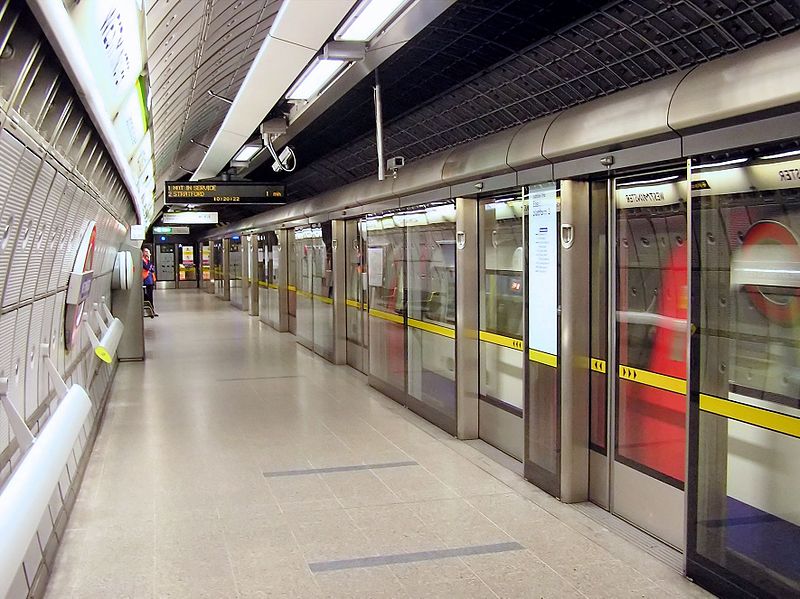
Recent accidents have renewed calls for platform edge doors in New York City.
For the second time this month, a gruesome death in the subway occurred when one rider pushed another into the tracks and into the path of an oncoming train. The latest incident happened at 40th St. along the 7 line, and the suspect, with a history of mental problems, said she was targeting Hindus and Muslims as revenge for the 9/11 attacks. After an early December incident was caught on camera, this weekend’s attack was no less disturbing.
After the horror of the incident fades away, the reaction to these deaths focuses around platform doors. In various other cities across the world (but not all of them), platform doors are a common sight. They keep people and debris off the tracks while providing the option to air condition underground platforms. With the MTA focusing on the number of people who were hit by trains — usually around 150 per year — the agency has seemingly brought this response on itself.
But should we be so focused on platform doors? Can we? Those are the two questions that require a rigorous answer before anyone moves forward with the idea. Already, though, forces are building. While some at the MTA have called the doors a non-starter and two capital projects — Second Ave. and the 7 line — have seen them axed from initial plans, a new faction within Transit will at least entertain the idea. “We’ll have to revisit it,” Transit President Tom Prendergast said to The Daily News this weekend. Pete Donohue had a bit more:
The MTA has had on-and-off discussions about placing protective barriers along at least some platform edges, as other cities like London and Paris have done. In 2010, the MTA released a Request for Information for a pilot program, but nothing ever came of it. A New York-based company called Crown Infrastructure submitted a response to install the doors for free, as long as it could collect revenue from LED video advertising on the barriers.
“We haven’t made a conscious decision to table it and not do it at all, but we haven’t made a decision to keep it going either,” Prendergast said. “It’s suspended animation.”
MTA officials also said in 2007 platform doors would be installed on the 7 train extension, and that they were considering doing the same for the new Second Ave. subway. While both projects are under construction, platform doors will not be installed, said an MTA spokesman Friday, calling them “cost-prohibitive.” It would cost an estimated $1.5 million to install sliding doors along two platform edges in a new station, and more to retrofit an existing station. The MTA has 468 station, although many are too narrow for doors.
In an official statement released to Ravi Somaiya of The Times, the MTA said: “Based on the MTA’s preliminary analysis, the challenge of installing platform edge barriers in the New York City subway system would be both expensive and extremely challenging given the varied station designs and differences in door positions among some subway car classes. But in light of recent tragic events, we will consider the options for testing such equipment on a limited basis. Of course, we remind customers of the overall safety of the subway system but urge them to stand well back from the platform edge and remain watchful of their surroundings.”
I’ve written on the aspect of costs before, and the equation remains similar. These accidents happen about once every 12.5 million passengers. Very few are caused by another’s push while many happen due to the carelessness of someone on the platform and others simply as accidents. The cost of the doors vs. the cost of saving a life is a delicate balancing act.
That’s the answer to “should we,” and the answer to “can we” is far more difficult. Outside of the factors mentioned in the MTA’s statement — station design, variable door placement on rolling stock models — there is one overarching problem. Platform edge doors generally benefit from automatic train operations systems to ensure the doors lineup properly. Not every platform door system needs ATO, but those with ATO work better and faster. The MTA is countless years, dollars and union fights away from an ATO solution.
So with politicians and the architect of the JFK AirTrain all angling for platform edge doors, Transit will take a look at the technology. I doubt we’ll see much movement over the next few years though as the organizational and financial challenges are too great to overcome for a systemwide implementation.
Headways at Grand Army Plaza are on full display through the new Subway Time app.
While the 2013 fare hikes may be the lasting memory New York City has of future mayoral candidate Joe Lhota, one of the outgoing MTA Chairman and CEO’s last acts came on Friday morning as he unveiled a beta release of the MTA’s new Subway Time app. I wrote about the app earlier this morning, and now that it’s available publicly, we can assess the good, the bad and the ugly of it.
“This is what generations of dreamers and futurists have waited for,” Lhota said. “The ability to get subway arrival time at street level is here. The days of rushing to a subway station only to find yourself waiting motionless in a state of uncertainty are coming to an end. Now, you can know from the comfort of your home or office whether to hasten to the station, or grab a cup of coffee as part of a leisurely walk.”
That all sounds good, but how does it work? First, a foray into the details: The app is currently available online for iOS devices via the iTunes App Store. The MTA has also released a desktop version as well as a live data feed. There is no Android version, but the MTA hopes developers will take the feed and build out their own apps.
And now the good: Subway riders along the 1, 2, 3, 4, 5 and 6 lines and those using the 42nd St. shuttle can access the same info available on countdown clocks from anywhere with an Internet connection. The L train info will be added within the next 6-12 months, and the 7 will follow in a few years. We’ll now know when to get to the station and how long the wait will be ahead of time.
The technological infrastructure is robust as well. Subway Time can handle 5000 requests per second as the data is hosted on a cloud-based system managed by Acquia. Such a platform will allow the MTA to ensure its data feed can meet demand. Acquia kept the MTA’s website afloat during Superstorm Sandy.
The bad though is fairly obvious. With only seven subway lines represented in this app, that still leaves 15 without real-time tracking data, and that data isn’t coming any time soon. To install Automatic Train Supervision along the A Division took the MTA over 10 years, a few false starts, and $228 million. Doing the same for the B Division shouldn’t take as long but will be quite costly.
The MTA says it has “long-term plans in place to upgrade these lines to ATS signaling,” and Joe Lhota, according to Capital New York, said it may be as little as three years before the rest of the system is on Subway Time. But it’s a matter of money, and right now the dollars just aren’t there. GPS-based data for outdoor sections may be available in the future, but for the foreseeable future, we’re left with only the A Division.
As an added bonus, the app offers a glimpse into headways though. For instance, a few minutes ago, I could see that trains along the Eastern Parkway IRT local were bunching badly. There were long gaps with no trains, and then a 2 and 3 would follow each other in quick succession. It’s good for transparency but bad for operational efficiencies.
Finally, we arrive at the ugly. Design has never been the MTA’s forte, and this app is no different. The interface isn’t optimized for the longer iPhone 5. Thus, not all train arrival information fits onto the screen without requiring an unnecessary scroll. Additionally, the app doesn’t enjoy iOS’ native momentum scrolling. It feels a bit awkwardly-constructed.
An app to be unveiled Friday by the MTA brings real-time subway location data to the smartphone-equipped masses.
An intriguing press advisory from the MTA came through my inbox on Thursday afternoon. Later this morning at 9 a.m., outgoing MTA Chairman and CEO Joseph Lhota will, the advisory said, make a “major announcement regarding improvements to service-related information the MTA provides to subway riders.” With just the right amount of intrigue, this release had me wondering about the info soon to be unveiled. I guessed that the information would involve a public release of the MTA’s real-time tracking of subways currently used only via the A Division countdown clocks.
Late on Thursday, I learned I was right. Via a Ted Mann scoop in The Wall Street Journal comes word that the MTA is set to release an app with real-time information on the location of seven subway lines. The early release will, as astute readers may have already guessed, include train arrival information for the 1, 2, 3, 4, 5 and 6 trains and the 42nd St. shuttle. The L will follow within the next year and the 7 once the Flushing CBTC installation is complete. It is a game-changer in the way New Yorkers use and relate to these subway lines.
Mann had the details:
The Metropolitan Transportation Authority expects to release on Friday its Subway Time app for passengers with iPhones and iPod Touch devices. Android and Windows versions of the app are in development and the agency is currently considering how to integrate the real-time arrival information on its existing website. The breakthrough, long awaited by many of the city’s straphangers, will allow at least some riders to plan their commute by the minute for the first time in the system’s 108-year history…
For the subway system’s 5.5 million daily riders, however, the launch of the new app also lays bare the ways aging infrastructure and a slow pace of investment have left the transit network far behind contemporaries in other cities. The new app will cover only about a third of the subway system, and agency officials acknowledged that it will likely take years of work and hundreds of millions of dollars in new investment before conveniences increasingly common elsewhere are standard in the Big Apple.
The rest, encompassing two-thirds of its total stations and roughly 60% of its daily ridership, continues to rely on signal technology dating to the middle of the 20th century or earlier. It will be years before those lines have signal systems that can generate the digital information that drives countdown clocks on platforms and apps on cellphones with live updates. “The technology it uses has remained little changed since a time before computers, microprocessors, wireless telephones or hand-held electronic devices,” said Thomas Prendergast, president of the MTA’s transit division. “It is a time-tested, fail-safe system that continues to flawlessly perform its vital intended function: preventing collisions. But it cannot offer us a digital feed.”
According to Mann’s report, the data for the new app will be stored in the cloud and not on MTA’s servers. Thus, demand — which I would imagine to be steep — won’t swamp the MTA’s website. Eventually, the MTA will open the data feed to third-party app developers as well. Pushing a policy of open data, the MTA has long believed that third party developers have the ability and expertise often not found at the transit agency to push useful and slick-looking apps to the public using available transit data.
For now, though, this is a Big Deal. As Mann details, the MTA is once again hardly a technological leader in this field. Various transit agencies across the U.S. and throughout the world have made real-time train location data available to riders, and the MTA’s implementation, as the excerpt above notes, leaves much of the subway system without countdown clocks and an app feed. Still, straphangers for many popular subway lines will now have the ability to know when their next train is coming at any time of the day.
For decades, New Yorkers have been left to the whims of the subway system. We enter the system hoping for the best and often expecting the worst. Now, for seven subway lines, it’s going to change. As Lhota said, “The days of rushing to a subway station only to find yourself waiting motionless in a state of uncertainty are coming to an end.” For riders at many subway stations, the uncertain wait will now forever be a thing of the past.
As we know, New York City buses are slow and unreliable. Delayed by the vagaries of surface traffic, the city’s buses rarely stay on schedule and inch along surface streets. Buses are underutilized and often looked down upon by even their own riders. Few advances in the way we treat buses represent lost opportunities to move New Yorkers quickly and efficiently.
Over the past few years, as bus-tracking technology has swept the globe, New York has slowly embraced it. An expensive pilot program along 34th St. brought proprietary technology and countdown clocks to the heavily-trafficked corridor, but when the MTA searched for a system-wide solution, the agency instead went with a distance-based tracking system and no countdown clocks. BusTime is an open-source solution with flexibility for growth and real cost savings over closed systems.
BusTime, of course, isn’t perfect. It requires the user to possess a smart phone or texting capabilities and actually know that the technology is in place. It is a distance-based system, and for a bus to travel 1.3 miles depends upon the route, the time of day and the traffic in front of it. New Yorkers like to know time in minutes, not miles. (For a succinct summary of the MTA’s failed countdown clock efforts, check out this Daily News overview.)
Now, though, some politicians and advocates aren’t happy. Noting how countdown clocks make subway waits more tolerable and empower riders, they want countdown clocks, and they wait them now. Earlier this week, Council Member Brad Lander announced a new initiative aimed at convincing the MTA to install countdown clocks on bus shelters. Lander is leading the way with a piece of legislation that “calls upon the Metropolitan Transportation Authority, the Department of Transportation, and Cemusa to work together to install bus arrival time displays in bus shelters using data from the MTA’s Bus Time technology.”
Streetsblog had more from the press conference:
With countdown clocks already available in many subway stations, Lander and advocates say bus riders deserve the same convenience, and that not everyone has access to a cell phone or the Internet before catching a bus…Lander’s office estimates that the counters cost between $4,000 and $6,000 to purchase and between $1,000 and $1,600 to maintain each year, based on figures from other cities with bus countdown clocks, including Washington, DC, Boston, Albany and Syracuse.
The MTA has argued that countdown clocks at bus stops provide marginal benefit to riders at relatively high costs, and is focused on rolling out its BusTime program citywide by the end of next year. By that time, Lander would like a plan for bringing countdown clocks to the city’s 3,300 bus shelters. The route to achieving that goal is murky; Lander introduced the resolution to start the discussion.
Lander said that, ideally, revenue from advertising on countdown screens would fund the installation and maintenance of the clocks. If advertising could not cover all costs, he suggested they could be borne in part by Business Improvement Districts, council member discretionary funds or other local partners interested in bringing clocks to their areas. Lander added that bus countdown clocks were a popular idea during the last round of participatory budgeting in his district.
I have a simple challenge for Brad Lander: He feels it will cost up to $20 million to install countdown clocks that can use the BusTime API to pull data (although reliably converting distance to time is another issue). He believes it will cost around $5.28 million for maintenance each year. Instead of passing a symbolic resolution urging a solution, simply find a way to pay for the clocks. The $20 million outlay is hardly a huge expense, but it’s one the MTA doesn’t want to and cannot fund right now. Lander could.
It’s easy to talk about countdown clocks, but there’s been a concerted and logical effort to adopt a tracking system for a reasonable amount of money that doesn’t use clocks. Ideally, timers would be prevalent, but they are less reliable than GPS-based distance measurements. Now, though, a group of politicians want transit improvements at a concrete cost. Deliver the funding, and the clocks could become a reality.
A tunnel plug could prevent flood damage in subway tunnels. (Graphic via NY Times)
Over the years, the MTA has struggled to keep its subway system water-free. When the Sandy storm surge inundated the system’s East River tunnels, the problem was laid bare for all to see. As most experts agree that the next storm is simply a matter of when and not if, the MTA will have to do something to address its vulnerable infrastructure, and that something might just be a giant plug.
The immediate history of the MTA’s water problems started a few years ago when a torrential summer storm led to massive flooding. This wasn’t the first time vulnerable areas suffered water damage, and the MTA decided to do something about it. Street-level grates were raised a few inches, and staircases were elevated as well. For normal storms, these measures alleviated the water problems, but for hurricane storm surges, the MTA’s temporary and permanent preventative initiatives were quickly overwhelmed.
We lose sight of what happened to the subways because the MTA was able to respond quickly to the problem. Some service was up and running within days, and nearly everything is back to normal. But the system suffered extensive exposure to salt water, and even outside of the fiscal costs of the clean-up, key equipment — signals, switches, track beds, wiring — will now have a short shelf lives. Protection remains key.
To that end, scientists with the Department of Homeland Security are working on developing a tunnel plug, and The Times went in depth into the project today. The key parts:
The idea is a simple one: rather than retrofitting tunnels with metal floodgates or other expensive structures, the project aims to use a relatively cheap inflatable plug to hold back floodwaters. In theory, it would be like blowing up a balloon inside a tube. But in practice, developing a plug that is strong, durable, quick to install and foolproof to deploy is a difficult engineering task, one made even more challenging because of the pliable, relatively lightweight materials required…
A subway tunnel is hardly a pristine environment; it is full of grease and grime — and, often, rats. “That’s something we’ve talked about,” Dr. Fortune said. “We’ve actually put Vectran samples in tunnels, to see if rats ate it. They didn’t.”
There are also obstructions like tracks, as well an electrified third rail, pipes and safety walkways, all of which could cause gaps between the plug and the tunnel walls. Most of the obstructions can be dealt with by modifying a short section of the tunnel to accommodate the plug, which is 32 feet long when inflated. Sharp corners can be curved, flush tracks of the type used at grade crossings can be installed, the third rail can be discontinued for a stretch, and pipes can be made to swing against the ceiling.
Those modifications will reduce potential gaps but not eliminate them. In the most recent test, when Dr. Barbero and a colleague, Eduardo M. Sosa, inspected the front of the plug, they discovered a two-inch gap in one corner. The procedure called for filling the plug with water to pressurize it further, and then introducing water behind it to simulate a flood. But a plumbing failure, unrelated to the plug, ended the test prematurely. It was repeated successfully several days later, Dr. Fortune said, and the plug held back all but a small amount of water.
Henry Fountain’s article explores the construction of the plug. It consists of three layers of durable yet flexible materials. It also explores placement: The plug is designed to fold into the sides of the tunnel and can be deployed remotely. The key questions though concern cost and effectiveness. One plug costs around $400,000, and the MTA, for instance, would need a considerable number of these plugs to adequately protect the porous tunnels.
Effectiveness though remains the biggest concern. The MTA’s tunnels are vulnerable at key access points, but plugging tunnels would simply displace water flow to other vulnerable areas. What success is accomplished if floodwaters destroy a train station but spare the tunnels? The MTA also, as The Times notes, must deal with water that enters through ventilation grates and various other entry points. The plugs can only do so much.
Short of sealing up the system, though, these plugs may be one of the more promising areas of progress. The clock is ticking, and the MTA doesn’t have time on its side. Can something like this be in place before the next flood arrives? If the money is there, a solution will be too.
Over the past few years, we’ve seen Transit begin the process of bringing real-time bus tracking to New York City. Eschewing an expensive, closed solution, the MTA instead went the open source route and has been developing BusTime, with its public API, in house for nearly two years. I explored the inner workings of the technology as it existed in February of 2011. Since then, a few routes in Brooklyn and Manhattan along with all of Staten Island have been added to BusTime, and the response has been overwhelmingly positive. Now, it’s nearing time for its Bronx debut.
Earlier this week, during testimony in front of the City Council, Craig Stewart, a Senior Corporate Management from Transit, said that the Bronx would, in fact, receive BusTime by the end of the month. “We are scheduled to fully deploy BusTime in the Bronx by the end of this month and to have it in all remaining boroughs by the end of 2013,” he said. “It is worth noting that customer feedback on the MTA Bus Time initiative has been overwhelmingly positive.” According to The Daily News, nearly 30 percent of Staten Island bus riders have used the service.
Available online via a mobile or full-featured browser and with the information accessible via text message as well, BusTime informs riders of how far away the next bus along the chosen route is. It’s a little less precise than a countdown clock with minutes, but bus travel time varies based on surface traffic. From my use of it in Brooklyn, it seems to take only a few refreshes to ascertain how long a wait will be and how distance translates into time. As the city-wide rollout continues, this technology should vastly improve the experience of traveling on — and waiting for — our buses. Now how about more dedicated lanes and a city-wide pre-board payment system?
Over the past few years, the MTA has engaged in a rapid about-face on its handling of technology. Despite the revolving door at the top of the agency’s executive chain, Lee Sander, Jay Walder and Joe Lhota have all embraced and pushed forward various technological efforts. From countdown clocks to real-time data streams to information dashboards and an embrace of apps, the MTA has moved, if not to the forefront, at least forward in the realm of transit technologies.
Yesterday, in an effort to exert some of its oversight influence over the MTA, the City Council’s Transportation Committee hauled in a few agency officials to take about technology. By and large, we know the story: The MTA has a series of technology initiatives that are moving forward, some faster than others. The countdown clocks, for instance, have arrived on the A Division lines but will take some time to appear on the lettered subway lines. Yet, the testimony, offered by Craig Stewart, a Senior Corporate Management from Transit, and the subsequent questioning offers an insight into some ongoing projects. I’m going to provide a few updates from the hearings, and right now, we start with the countdown clocks and the availability of real-time data.
Now that Transit has added countdown clocks to the numbered train lines, the authority is rolling in data, very little of which has been made public. That will change soon. As I first reported in May, Transit will soon release both their own train tracking app and an open API for the real-time data stream. While no date has been established for the release, things are moving quickly.
“The MTA is very close to being able to provide real-time train arrival data without having to go into the station,” head agency spokesman Adam Lisberg said to The Daily News. “We want everyone to access the countdown clocks on numbered lines just by looking at their phone.”
The news on countdown clocks for the B Division trains though — the lettered lines less the L train — is a bit hazier. In prepared testimony, Stewart had the following to say. The emphasis is mine.
With respect to the B Division (lettered lines), NYC Transit has completed work at 24 stations on the Canarsie L line. This system was commissioned in 2007 as a standalone system that interfaces with the Canarsie Communications Based Train Control (CBTC) system for train prediction information. The B Division has presented unique challenges due to its size and complexity when compared to the A Division. having 288 stations versus 156 on the A Division, 141 route miles versus 66 route miles on the A Division and 317 trains versus 203 peak trains on the A Division. Furthermore, the B Division does not have the Automatic Train Supervision (ATS) system, which provided a common platform that greatly facilitated the installation of Next Train Arrival Information on the A Division. Finally, most of the B Division is comprised of territory with four tracks and many interconnecting lines along its routes, making it impractical to replicate the approach taken for the A Division.
We have undertaken a few pilots in an effort to identify an interim measure for providing service information to B Division customers, including most recently, the use of electronic signage; however, those efforts have all fallen short in yielding the level and type of information we are seeking to provide our customers. Our ultimate goal is, of course, to develop similar capabilities for the B Division as exists currently on the A Division. However, it will take substantial investments to fully deploy the projected improvements in capability. To ease the delay, we are working on strategies to deploy functionality so that passenger benefits can be delivered as early as possible. This phased deployment will result in improvements that may not necessarily be across all areas. In order to begin providing benefits as quickly as possible, we have established an initial goal of providing the current B Division next train arrival information to customers by capturing dispatch/schedule information electronically.
NYC Transit will soon start design work under several projects to begin capturing train information across the B Division. Collecting train location information is a prerequisite step to providing real-time train arrival information and may take several years to accomplish. This design effort will also help us to determine the most viable options for implementation.
The MTA hopes to bring such countdown clocks to the B Division within 3-5 years, but that timeline is malleable. It depends upon funding and ease of implementation, two things with which the MTA has struggled over its history. Meanwhile, the agency will focus on providing train information via the new PA system, recently installed and upgraded in all B Division stations. It’s a baby step before taking the big and complicated technological leap.
Transit Wireless expects to extend its free wifi beyond September 7. (Photo by Benjamin Kabak on Instagram)
Over the last few years, we’ve seen straphangers come to embrace the MTA’s countdown clocks as a much-needed piece of transit technology. Having information on wait times leads to happier and more informed commuters, and the clamor to bring such technology to the lettered B Division subway lines has grown only louder. The countdown clocks aren’t the only pieces of travel-improving technology that have been warmly embraced by the city’s transit travelers, and two recent articles shed some light on other improvements.
First up, we have word out of Staten Island that Bus Time, the MTA’s in-house solution to real-time bus tracking, has proven popular. According to the MTA, nearly 33,000 bus riders on Staten Island — or a quarter of the borough’s riders — have checked in on the location of their bus, and the entire system has received over a million hits.
I’ve used it regularly along the B63’s route through Brooklyn, and while not having a time-based model takes some adjustment, I’ve been able to figure out approximately how long a wait would be based on distance. While such a calculation may vary from line to line, the system seems to be popular and both more flexible and less expensive than proprietary ones. The Bronx will get its deployment before the year is out.
Next, we have an udate on underground wifi. Straphangers waiting for trains and passing through wired stations have enjoyed the free service from Boingo and Google Offers as Transit Wireless continues to build out its subway cell and wifi network. The current Google sponsorship expires in September, but Transit Wireless says they plan on lining up similar deals for continued free service.
The company, meanwhile, says it’s still on track to bring 30 more stations online before the end of the year. “If you got a long commute, that could be as long as 30 minutes, that you are basically without any type of connectivity which some for people is like cutting off their arm,” Dawn Callahan, an official at Boingo, said. “So I think that this presents people a way for them to stay connected.”
As New York City Transit’s effort to replace the MetroCard with something a bit more modern slowly inches forward, Metro-North will be testing a smartphone-based paperless ticket system this summer. The railroad announced today a project in conjunction with Masabi that will allow its riders to user a smartphone app to buy tickets. Eventually, there will be no need for cash, frustrating lines at ticket machines or steep on-board surcharges for last-minute purchases.
“We are as excited to begin testing the next generation ticket selling technology as we were when we introduced ticket vending machines a quarter of a century ago,” Metro-North President Howard Permut said in a statement. “Our customers adapted quickly to TVMs and the machines became the preferred way to buy tickets. The latest test is intended to ensure that the newest technology will be equally easy to use, as well as secure and reliable.”
The initial pilot, however, is a strange one as Metro-North employees will act as guinea pigs. They’ll have the free app on their phones and will purchase the tickets — any type — for use. The e-tickets will show an image a conductor can then validate with a barcode scanner. The initial pilot will include a time measurement study to compare electronic purchases with on-board transactions and inspection efforts. The MTA will also keep an eye on anti-fraud measures before decided whether or not to expand this program to all riders.
I expect this to be a smooth and quick pilt. Masabi is a leader in the field in the U.K. with smartphone ticketing apps available for 13 rail agencies. The company is also assisted the MBTA in a smartphone ticketing project as well. The only drawback I see here is that the LIRR isn’t involved. Provincial agency turf lines know no bounds, it seems.