Archive for MetroCard

In April 2003, the MTA ended a 50-year era. For five decades, New Yorkers had to load up their wallets and pockets with tokens if they planned to spend a day out on the town, but on a mid-April day seven years ago, the agency ceded ground to the MetroCard and ceased token sales. It was a death nearly a decade in the making and seemed to represent the death knell for something straphangers had come to love and hate.

There’s only one hitch in this plan to phase out tokens: They won’t go away. In amNew York yesterday, Heather Haddon focused on life after death for the token, and this once-ubiquitous piece of New York life is still kicking. From refunds to jewelry, tokens live on.

By way of framing the story, Haddon spoke with Ward Wallau, head of a California-based company that turns tokens into collectibles. She writes:

Last year, straphangers turned in 27,000 tokens to NYC Transit, up 13 percent from the year before. Those who redeem the predominantly brass discs receive what they were worth when decommissioned, from 20 cents to $4 for express bus tokens.

About 12 million tokens are still out there, with some straphangers known to hoard the coins in the event of a fare hike. Last year, the MTA got back more than 1,000 of the 20-cent token, which haven’t been used since 1970, according to agency figures. “It’s something everybody had to use. It was like the, ‘I belong to New York City badge,’” said coin expert George Cuhaj.

Wallau has tapped into the MTA’s mountain of old tokens, which are stored in a Queens warehouse. Since 1991, he has bought the tokens in bulk at a 40 percent discount to turn into jewelry, with the MTA pocketing about $35,000 a year from the deal, a spokesman said.

I’m struck by the first item in Haddon’s piece. At what point does the statute of limitations on tokens expire? I’m surprised to hear that those of us who hoarded tokens can still turn them in for cash. It’s not surprising that in a bad economy, New Yorkers are trying to milk every last dollar out of the pieces of history left in shoe boxes around the city.

I find Wallau’s jewelry great for subway aficionados. The cuff links with the 1970s-era NYC tokens evoke a particular nostalgia. But this token-oriented renaissance made me reflect back on the death of the token. In March 2003, when the MTA announced the end of token sales, Richard Pérez-Peña of The Times offered up an obituary. Dead at 50, said The Times, the end came via “technology and economics.”

As Pérez-Peña noted though, it was not a surprising death. “The death of the token has been a planned, gradual demise, conceived in the 1980’s and set in motion in 1994,” he wrote, “when the first electronic turnstile was installed and the first MetroCard sold.”

The end was nigh on January 7, 1994 when the MTA introduced fare cards to riders at select stations along the East Side IRT and BMT Broadway lines. By April, transit officials were wrangling over future discounts, and New Yorkers were slow to accept the MetroCard. Not until May 1997 were every bus and subway station equipped with the new electronic fare technologies, and the last station to receive its MetroCard readers was Myrtle Ave. in Bushwick. Even then, the new fare payment system was marred by unpopularity and confusion. The more things change…

In 2003, as token booths became a thing of the past, only eight percent of all subway riders were paid for via those familiar bronze coins. Today, the MetroCard may be on the way out. Jay Walder wants to make the technologically-obsolete MetroCard a thing of the past and bring fare payment systems that allow for quicker entry and cheaper collection to the system. And yet, somehow, the token lives on, a reminder of a bygone era and a fashion statement for subway-loving New Yorkers.

Categories : MetroCard
Comments (16)

Since the MTA announced plans to cut the Student MetroCard program, I’ve written extensively about the various aspects to this threat. We’ve explored the politics of the cuts and the mathematics behind the impending death of free student rides. Last week, Assembly rep Richard Brodsky promised to fight for student funding, and today we learn just how much it will take to save the program.

According to an article in today’s Daily News, the MTA will need $214 million from the government to maintain free student MetroCards. This total covers the entire cost of the program in 2009 dollars to the MTA as shown in this graph and would represent a significant contribution to the MTA during an era in which the state and the city have both pulled back on subsidies to transit.

The News reports that the MTA will scrape the program if the city and state do not fund it in its entirety, and recent comments by MTA CEO and Chairman Jay Walder support that sentiment. “It’s my aspiration that children in this city should be able to ride free to go to school,” he said last week. “It’s up to the state and city to put together a funding package to allow that to happen.”

In Albany, Gov. David Paterson has said he will unveil a new budget with more money for student travel within the next two weeks. Can we really expect the cash-strapped state to find $208 million more than they pledged for 2010 for student travel? After all, just under two months ago, the state cut its student subsidies from $45 million to $6 million, and so far, the city has been awfully quiet on the student travel front.

In the end, I’m left with the same position I’ve held since the beginning. It is unpopular for the MTA to threaten free student transit, and it will create more ill will toward the embattled authority. But the political response to this move from the elected officials in Albany shows that the MTA played the right card. No one has been able to justify foisting the expense of student travel on the transit authority, and politicians are scrambling to find the dollars for it. I wouldn’t be surprised to see the state and city come up short, and when they do, the MTA will have to decide who should pay: students through a half-price fair or the rest of us through a series of inconvenient service cuts. I know what I’d choose. Do you?

Categories : MetroCard, Service Cuts
Comments (3)

The politicking surrounding the threatened cuts to the MTA’s student MetroCard program were in full swing yesterday as MTA CEO and Chairman Jay Walder made an appearance before Richard Brodsky’s Assembly Committee on Corporations, Authorities and Commissions. While Walder spoke about his aversion toward using stimulus funds to cover the MTA’s operating gap, Brodsky reassured the MTA head that he and the Assembly would work hard to find money for student rides.

“There is no reason in God’s Earth to make young kids pay the price of the MTA’s fiscal crisis,” Brodsky said. “I think parents should be hopeful if not confident that we’re going to solve this before next September.”

Of course, promises from Brodsky may not be enough. The MTA is threatening to end the student MetroCard program not because of the recent reduction in state subsidies from $45 million annually to just $6 million but because neither the state or city have upped their contributions to the program. At one point, as I’ve explained in the past, the city, state and MTA split the funding for student rides evenly with each body covering approximately a third of the costs. As school enrollment levels and the cost of free rides have increased, the state and city have never upped their contributions, and the MTA has been saddled with covering nearly $170 million of student rides per year.

“We’re going to deal with that in a timely way,” Brodsky said of the MTA’s threats to end free rides for the city’s students, “and we’re very confident there’s going to be a good outcome.” Brodsky, reports amNew York, said that he will be “pushing” to restore the state’s contributions to the student program.

Brodsky’s words, if we parse them, seem to indicate that, on the one hand, he will find a way to fund student travel but, on the other, he will “push” simply to restore the state’s $45 million grant, but the MTA needs more. The authority needs both New York City — as Christine Quinn noted earlier this week — and New York State to up its student subsidies significantly in order to safe the program.

The Metropolitan Transportation Authority is in the business of running a transit system. It isn’t in the business of providing free transportation for students because the city and state are too broke to do so and found a good scapegoat/transit out in the MTA’s largess. As Walder goes to Albany to lobby for money, he should make this reality quite clear to those who are listening.

Meanwhile, Brodsky noted that the state would not provide another funding plan — or in his words, a bailout — for the MTA. Every agency, he said, has to make “painful” cuts as funding is tight. Left unsaid is the quick fix for the city and the MTA. East River Bridge Tolls would solve many of the MTA’s current fiscal woes and would simply be good for New York City. Walder won’t lobby for those because to do so now would be political folly, but free bridges remain a reminder to the way state and city representatives view the MTA and our subways as second-rate transportation options when they are truly the economic drivers of the region.

Comments (16)

Over at amNew York today, Heather Haddon takes a look back at the decade that was in subway news. She hits on all the big stories from the debut of the V line in 2001 to the major ongoing construction projects along Second Ave. and the 7 line to the 9/11 impact on the subways to the transit strike and the MTA’s economic woes. Her number one story is of course the numerous fare hikes we’ve lived through this decade.

She writes:

The MTA’s mountain of debt finally caught up with it this decade. As new funding fell through in 2000 and revenue declined in the later part of the 2000’s, the agency turned to straphangers to bear part of the burden with four fare hikes, including back-to-back increases in 2008 and 2009. “The system is always starved for money. That’s not the right way to run a transit system,” said MTA board member Andrew Albert.

NYC Transit riders now pick up the tab for 43 percent of operating expenses, the second highest rate in the nation. Fares will increase again in 2011 and 2013.

The recent fare hikes are fresh in our minds, and as the MTA struggles to close a gap, the specter of future hikes loom. Even without the upcoming 2011 hike, the fares could become the latest casualty in the MTA’s fiscal crisis. But just how far have they come since January 1, 2000 when the decade dawned? Take a look:

Dates Base Discount 30-Day 14-Day 7-Day 1-Day
1/1/00-5/3/03 $1.50 10% min. $15 $63.00 NA $17.00 $4.00
5/3/03-2/21/05 $2.00 20% min. $10 $70.00 NA $17.00 $4.00
2/22/05-3/1/08 $2.00 20% min. $10 $76.00 NA $24.00 $7.00
3/2/08-6/27/09 $2.00 15% min. $7 $81.00 $47.00 $25.00 $7.50
6/28/09-?? $2.25 15% min. $8 $89.00 $51.50 $27.00 $8.25

What is notable about these fare increases is how the Unlimited Ride cards have far outstripped inflation. The 30-Day Unlimited card cost $63 in 2000; that’s the equivalent of $79 today. The $4 Fun Pass, a good deal in 2000 but nearly useless today, would cost just $5 now if the fares were adjusted only for inflation. Even the base fare — $1.50 in 2000 — would be just $1.88 if the MTA adjusted fares to count for inflation.

In the end, we know that the MTA has few choices when it comes to raising revenue. The authority can cut services or they can raise the fares. For the last ten years, the agency has avoided service cuts while boosting fares by around 40-55 percent. With the current service cuts threatening to slice and dice our transit network, we may be telling a different tale in ten years. Personally, I’d take the fare hikes over service cuts in any decade.

Categories : MetroCard
Comments (14)

As New York City students face the reality of life without a free MetroCard, most of the outrage has been directed at the MTA. How could the MTA desert the city’s children? How could they play politics with the city’s future? Doesn’t the authority know truancy rates will increase?

Over the past week, I’ve examined both the politics and the mathematics behind Student MetroCard cuts, and the picture is not a rosy one. The state, once a guarantor of the Student MetroCard program, now pays just $6 million in transportation subsidies for its students while the city hasn’t increased its funding past the $45 million mark in a decade and a half. The MTA, meanwhile, is saddled with $160 million in costs for the program.

For families, the pain will be acute. Based on my calculations, it will cost at least $687.60 for a family to send one child back and forth to school every year. Add some extracurricular stops, and the costs will rise to approximately $800 a year. As Sharon Otterman explored today in The Times, many families will struggle to find that money, and the city’s school choice program would suffer. “If I had to pay for the MetroCard, my mother would have preferred a school closer to me,” Alejandro Velazquez, a 15-year-old from the Bronx who travels 40 minutes to school each way, said. “There’s one right down the block from our house.”

I am guardedly optimistic though about the MTA’s position here. What is notable about Otterman’s article is her utter lack of sources who blame the MTA for pushing through these cuts. People are out there who are willing to point fingers, but journalists who are doing their jobs will not give them a platform. The state and city should bear the costs of transporting students, and journalists should know that.

In the end, it’s a tough situation for everyone. Urban areas are not legally required in New York State to provide free transportation to students, and the MTA in particular is under no mandate to give away transit to students while the millions of New Yorkers who rely on the transit network for to power the area’s economy wait longer for more crowded trains. While state officials may want the MTA to “find money” through other cuts that sustain student transit, the reality is that student transit is not the business of the MTA, and student transit is now acutely holding down the MTA from fulfilling its role.

“No other transit agency in the country subsidizes free or discounted student travel,” agency spokesman Kevin Ortiz, said. “Transporting students usually falls on the government body responsible for educating them.” Amen.

Categories : MetroCard, Service Cuts
Comments (4)

Let’s revisit the Student MetroCard argument for a few minutes. After the MTA Board voted this morning to cut free student transit — and, in fact, even before the vote — politicians were already slamming the agency for doing so. In a way, as I said yesterday, proposing cuts to the student transit discount was designed to get the attention of politicians, but at the same time, why should the MTA continue to subsidize free student transit? After all, the state isn’t really funding the program any longer either.

To understand the politics behind the student MetroCard cut, let’s jump back in time approximately 15 years when Rudy Giuliani was mayor. At the time, the city gave $700 million to the MTA, and according to a Times article, $125 million of that — or three times the current subsidy — went to student transit passes. Those figures were in the news because Mayor Giuliani was planning on cutting the subsidy to renegotiate a lesser contribution to the MTA from the city.

After much back-and-forth between the city, the state and the MTA, the three parties struck a deal on student transit in mid-1995. Each party would all contribute $45 million to the venture, and the funding would be split evenly. The $45 million is an important figure because, up until this year, that was still the level of city and state funding for the program. Despite assurances of at least equal funding as costs rose and on-again, off-again promises to fully subsidize student fares, the city and state simply hid their economic deficiencies in the MTA’s fragile books.

In 1996, the student passes again made headlines. This time, politicians were proposing a switch to student MetroCards. Prior to that year, students received only bus passes and could not use them on the subways. With the relatively new MetroCard technology, the MTA could offer better options for commuting services. At the time, the agency said it lost $5 million annually on the giveaways.

Two years later, the state assembly began a process that expanded student MetroCard eligibility to even more people. At the time, The Times said the program would cost an additional $45 million to administer. Only the MTA was saddled with costs as state and city contributions never increased above that $45 million level. As the ranks of the city’s children has swelled, the cost to administer this program has too, and it now costs the MTA upwards of $170 million a year to provide free rides, at the mandate of the city and state, to students.

Yet again, student MetroCards are on the chopping block, and it has again become a hot-button issue. Transit officials and city budget experts are noting the politics behind the move but also the absurdity of expecting the MTA to give away rides. “This is something the city and state should pay,” the Manhattan Institute’s Nicole Gelinas said to The Times. “It’s education spending, not transit spending. I think it is a pretty clever way to pressure the city and state to stop hiding their own budget problems in the MTA.”

MTA Board members concurred. “Who should have to pay for it are the people who provide the education, and that’s the state and the city,” Ira Greenberg, the Board’s LIRR Commuters Council representative, said today.

Looking again at the graphic atop this post, we can appreciate the absurdity behind those who criticize the MTA for a move the state itself just made to save money. Last month, New York State eliminated most of its funding for the student MetroCard subsidies. To balance its own budget, New York cut their contributions from $45 million to just $6 million. Although Gov. Paterson has promised to restore that money if the money for it rematerializes, why should the MTA be left picking up the tab? Any outrage should clearly be directed toward the elected officials who will not commit to funding student travel.

In the end, parents, as news outlets have found, will be quick to bash the MTA. It’s true that student MetroCard cuts are an easy to way to get attention, but the MTA should not have to cover for political shortfalls. “Nowhere else in the United States is the public transportation system responsible for the costs of transporting students to school,” MTA spokesman Aaron Donovan said. “In other municipalities throughout the country the local government will provide that transportation free of charge, and in most cases, provide a fleet of yellow buses.”

Categories : MetroCard, Service Cuts
Comments (30)

When an eleventh-hour Albany bailout package earlier this year ensured that the MTA would not need to institute its original Doomsday budget proposal, I ran something of a postmortem on the transit advocates’ roles in the debate. In a rather scathing piece that generated strong feelings on both sides of the divide, I questioned the Straphangers’ approach toward their advocacy campaign and wondered if they were truly taking advantage of their position as the city’s leading — and sometimes only — transit advocacy group.

Since then, the Campaign has seemingly taken a more vocal role in trying to educate the public. Gene Russianoff has been quick to point out that the payroll tax short fall is entirely Albany’s fault, and he has, for better or worse, proposed alternate ways the MTA could close its budget gap without cutting too many services.

But an e-mail I received yesterday made me raise an eyebrow or two. First, it starts out saying, “For the MTA, reviving these cuts would shred its credibility.” Of course, it’s not for another three paragraphs that the Straphangers accuse Albany of not doing its job. Perhaps the MTA does lose its credibility, but who should lose more credibility — the agency tasked with balancing its budget or the state legislature whose empty promises have left the authority nearly broke? I still believe the better strategy for a transit advocacy group is to educate and not to finger-point at the agency that has few options available to it.

It gets better though when the Straphangers bring math into the equation:

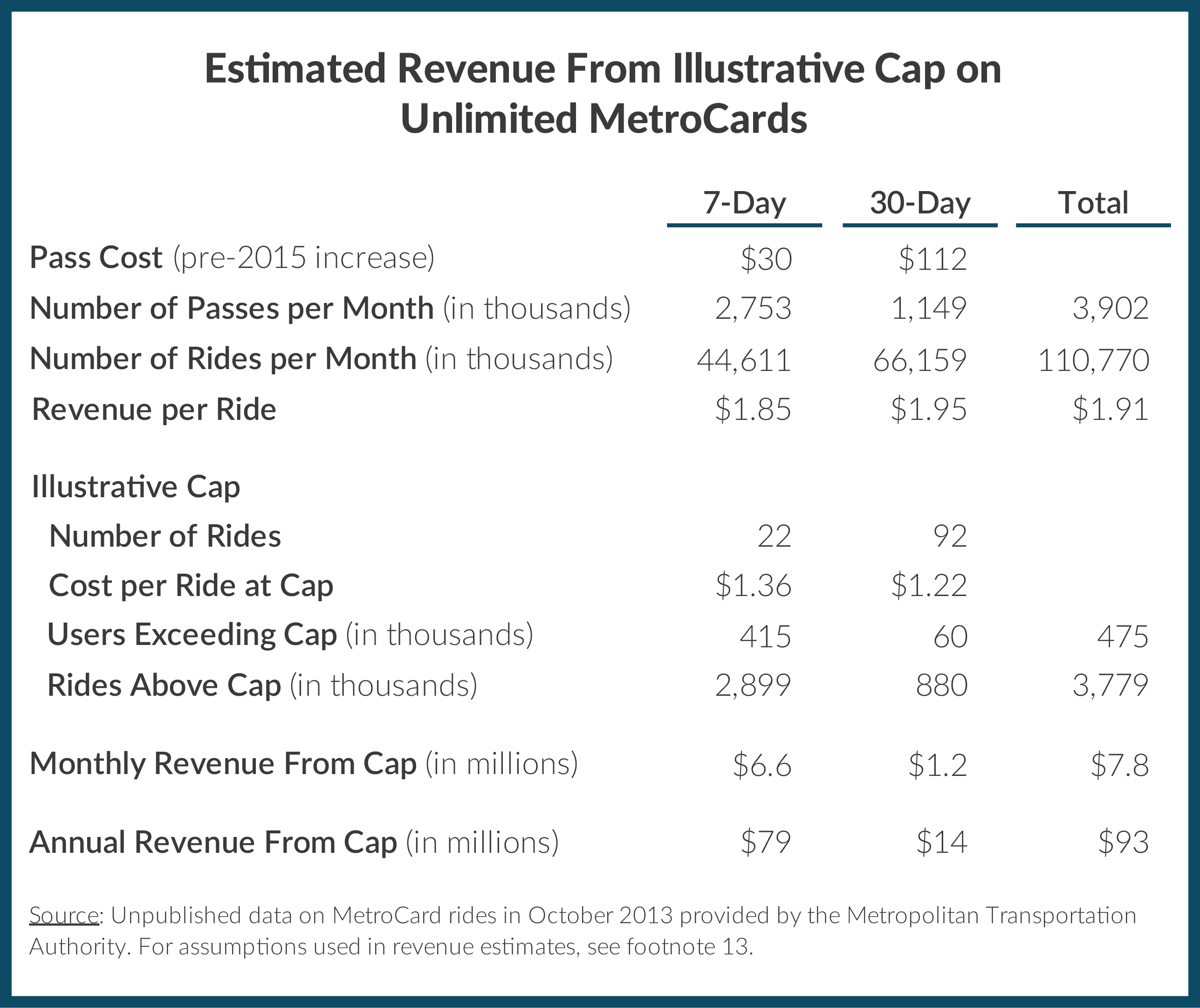
Riders have every right to be mad as hell ­– and parents furious. Ending full-fare and half-fare discounts for 550,000 students in New York would be a huge financial burden on families. For example, it would cost a parent at least $1,069 annually to pay to get their full-fare child to school (280 school days x $1.91 x 2. A $1.91 represents 15% off $2.25, the current base fare.) $1069 equal to the costs of a 30-day pass for an entire year!

Now, first, the Campaign’s math is simply wrong. I use a 30-day card every month, and the totally yearly cost to me is $1068. I might be picking a bone over one dollar, but it’s just sloppy multiplication. That’s not the real problem though; the real problem is one of simple common sense. If, as the Straphangers contend, it will actually cost less to buy 30-day passes for a year than it will to pay the full fare everyday for 280 school days, wouldn’t parents just, you know, buy 30-day passes for their school-bound children? So much would it actually cost to send two children to school for 280 days? Let’s find out.

One 2010-2011 school year calendar I’ve seen has school beginning on Monday, Sept. 13 after the Jewish holidays. Students are then in school through Dec. 17, return on Jan. 3, have a week off in both February and April and see the year wrap up around June 17. The fall semester, then, would cover three unlimited ride MetroCards plus five days of paying the full fare. The spring semester would require five unlimited ride MetroCards and another two-week MetroCard plus five days of the full fare. How’s the math look?

(8*$89)+$51.50+(10*$1.91*2)=$801.70

But there’s a further problem: There aren’t 280 school days in the calendar year. There are approximately 180 school days in New York City. The math for a full-fare ride for the actual school year looks like this:

180*$1.91*2=$687.60

No matter how you slice or dice, for many families, that figure will still look expensive. Some who use transit on the weekends will opt for the $800 approach; others may stick with the $687 figure. No matter the cost, it will be a burden to spend those additional hundreds of dollars on student transportation costs, and after enjoying free rides for years, parents will experience an element of sticker shock here.

But my main point is that the Straphangers should be presenting an honest expense figure here. It will cost between $687 and $800 to send one student to school for the entire school year, excluding summers. The public deserves to know that, and the Straphangers, a ridership advocacy group, should not be releasing widely inflated figure as they did yesterday.

studentmetrocards Faced with a budget gap of a few hundred million dollars, the MTA may be targeting a politically sensitive giveaway that is bound to get New Yorkers riled up over the looming service cuts. According to a report in the Daily News, the authority is considering eliminating student MetroCards as part of a multi-faceted approach to closing its new-found budget gap.

Amongst the TWU’s arbitration award, the payroll tax short fall and the state appropriations cut, the MTA may face a budget gap as large as $500 million this year, and the Student MetroCards have long been a sore subject for the agency. According to Pete Donohue, the authority doles out approximately 550,000 Student MetroCards each year that allow the city’s pupils to ride the rails for free. Once jointly fully funded by the city and state, both political bodies have cut back their student-based contributions to the MTA, and the agency runs annual deficits on this program.

In fact, two years ago, City Comptroller William Thompson reported on the student MetroCard funding programs. Because the city and state contribute just $90 million to a program that costs $161.5 million to administer, the agency effectively loses $71.5 million per year on Student MetroCards. To make matters worse, this has been the status quo for these student passes since the mid-1990s. Why should an authority tasked with balancing its budget dole out free rides when the city and state have long ago reneged on their pledges to fully fund student transit subsidies?

The Student MetroCard program is based solely on how far away a student lives from his or her school and not on need, and parents are up in arms over the rumored cuts to it. The comments three Daily News reporters dug up are as expected. Parents say they won’t be able to afford to send their children to school via public transit, and kids say some of their classmates simply won’t go to school because they would have way to get there. Education experts too worry about the loss of free transit.

“If you’re going to eliminate neighborhood high schools as the mayor has in most of the city, it’s absolutely critical to have free transportation for kids, especially because children are required by law to go to school,” Clara Hemphill, a New School education expert, said. “Some kids are traveling up to 90 minutes by public transportation. There’s absolutely no way to get there without the subway and bus.”

In a rather absurd column, Michael Daly goes after the MTA for this plan as well. He claims that smart kids may “risk arrest” by jumping turnstiles to get to school and that the city will lose federal education funding because the authority’s cuts to the MetroCard program will cause truancy rates to rise. With this charge, we might be nearing the point where someone has managed to blame the MTA for just about any potential problem in the city.

The reality, though, is far from simple. It’s true that, for an eight-month school year, 30-day unlimited ride MetroCards would cost families $712 per child, but the MTA could opt to go for a reduced rate for students. Even a $1 or 50-cent student ride would enable the MTA to capture additional revenue while eliminating a $70-million loss from the agency’s books.

Furthermore, the agency should not be expected to simply foot the bill when the city and state refuse to pony up for a program they originally promised to fund. The MTA provides student MetroCards at the request of New York’s politicians. It is under no legal obligation to do so, and it is well within its right to threaten to eliminate this program as a way to draw more attention to its fiscal plight and more funds for its severely strained coffers.

Cutting Student MetroCards and those three free rides a day will hurt. Families will be forced to pay more money to send their children to school, and others won’t be able to attend schools far from home. But the MTA has its back against the wall, and it is fighting back with all of its might. End the great student MetroCard swindle and that huge budget gap will look a little bit smaller.

Categories : MetroCard, Service Cuts
Comments (53)

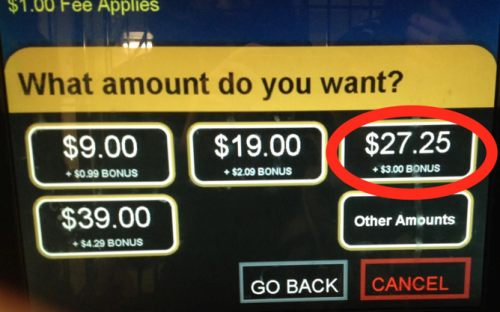
When the MTA raised fares earlier this year and continued the 15 percent pay-per-ride bonuses, the agency inadvertently created a crisis of mathematics among New York City’s straphangers. With a base fare of $2.25 and a volume discount, a rider has to buy 20 rides for $45 to earn a bonus of $6.75 that results in 23 rides for the price of the original 20. Yikes.

For the less mathematically inclined among us, this discount and the new fare brings the discounted pay-per-ride cost to $1.96. That’s an ugly uneven number, and apparently, many New Yorkers cannot be bothered to do this math. As the Daily News reported earlier this week, many subways are frustrated by the uneven amouns left on their MetroCards.

In a sense, the real problem is ignorance. Riders simply do not know that token booth clerks will combine leftover amounts on old cards. “I have a whole pile of them sitting in a jewelry box on top of my dresser,” Megan Hunt, 36, of Chelsea, said to the News. “There are at least 40 cards and some only have a nickel. I don’t know what to do with them, but I can’t throw them out.”

Although I’m usually critical of anecdotal news coverage, this frustration is part of a larger trend. As the News reported earlier this week, the MTA will recover $53.3 million in what they term fare media liability this year. That figure shatters last year’s record take of $40 million in unused fares.

As spokespeople at the MTA have told me, that figure counts only unused pay-per-ride money, and it is a significant figure at a time when the MTA is struggling for dollars. As straphangers toss out cards with small change, the nickels and dimes start to add up.

But on the other side of the equation are the unlimited ride cards. Recent numbers show that these cards are more than fully utilized by consumers. According to numbers supplied to me by Transit, the average number of swipes per MetroCard for the third quarter of 2009 is as follows:

Card Type Avg. Swipes Card Cost Cost Per Ride
30-Day 71.51 $88 $1.23
14-Day 39.02 $51.50 $1.32
7-Day 20.21 $27 $1.34

As we see, unlimited riders clearly get the most of their subway cards. The average user reduces the fare to nearly a dollar below the $2.25 mark and well clear of the $1.96 pay-per-ride discount. Because a large percent of straphangers are using some unlimited ride card, the average subway fare (for September) was $1.48 per ride. That’s downright cheap.

So why then is there such a discrepancy between the Unlimited Ride usage figures and the pay-per-ride leftover that has led to a $53 million recovery on behalf of the MTA? The MTA speculated that the fare media liability total was a result of the higher fares rather than the math involved in MetroCard transactions. More people are spending more money and are discarding a higher volume of cards.

But even with a base fare increase of 12.5 percent, the fare media liability is up over 30 percent over last year’s total. It’s my belief that New Yorkers in a hurry simply do not want to face the math involved in MetroCard calculations and do not know about the opportunity to have token booth clerks combine used cards. In the end, the MTA recovers some of the money they lose to the unlimited ride cards, and those people who don’t want to make the effort to solve a simple problem lose out. It is economic efficiency at its finest.

Categories : MetroCard
Comments (27)

MetroCardPoster

A collage of MetroCards with messages for everyone. (Click the image to enlarge.)

Since its introduction in 1993, the MetroCard has become a ubiquitous symbol of New York City. On the front, the familiar yellow-on-blue gave way to its current blue-on-yellow design. On the back, well, that’s a different story and one featured in the news today.

Recently, the MTA has begun to circulate MetroCards that say, simply, “optimism” on the back. The word is printed in the familiar Akzidenz-Grotesk font, the Helvetica precursor that permeates the Massimo Vignelli-designed MTA signage. It is a simple but complicated statement, and in today’s Times, Michael Grybaum delves into the philosophy behind MetroCard optimism. I’ll excerpt, but read the piece. It’s a prime example of excellent news-features writing.

On the back of seven million MetroCards distributed this fall is a single printed word: “optimism.” Composed in clean, bold, sans-serif letters, it floats in a sea of white just beneath the boilerplate fine print. Another seven million are on the way early next year.

At first glance, the word appears simple and unassuming, a non sequitur easily overlooked amid the blur of travel in the city. Even its creators acknowledge that many subway and bus riders may never see it.

But as unemployment in the city reaches a 16-year high, as corporations close and deficits mount, optimism has become a scarce commodity, aboveground and below. New York, it seems, could use a chance to restock…

Not all that the “optimism” project suggests is, well, optimistic. The word on the card can be read as an encouragement, a command, a taunt, an aspiration. “I like that people can digest it in any way they choose,” [artist Reed] Seifer, 36, said. “I accept all praise and criticism. I love artwork in which people perceive things beyond the intention of the artist.”

And so Grynbaum’s words got me thinking about the MetroCard. The Internet is a haven for old cards. Collector’s item MetroCards pop up on eBay on a daily basis, and there is even a site dedicated to collecting every MetroCard back the MTA has issued since 1994. The Winter Garden at the World Trade Center was among the first of the cards issued.

Over the years, numerous images have filled the cards. I have one from 2004 when the MTA celebrated 100 years of the subway system. This card has a picture of the first ride snapped on Oct. 27, 1904 at the now-abandoned City Hall Stop. I also have a few Green MetroCards from 2008. Otherwise, though, my collection of expired MetroCards feature mostly mundane warnings about subway safety. I remember the Subway Series cards from 1997 but no longer have any.

Of course, the oft-overlooked backs of the MetroCards aren’t used only for pithy statements and iconic images. As Grynbaum relates, the MTA sells the backs of these cards. (Spin City, anyone?) So far this year, the MTA has earned $165,000 from MetroCard ad sales, double the total from 2008. Yet, ads appear on just three percent of the 120 million MetroCards printed so far this year. Mostly, the backs of these cards remain firmly hidden, pressed up against credit cards and business cards buried in a wallet somewhere. Optimism, it seems, won’t always see the light of day.

Still, if just a few riders notice, it will be worth it to Christopher Boylan, the MTA official in charge of the “optimism” project. “God knows people want to feel good, they want to feel up, they want to feel positive,” he said to Grynbaum. “If I can make a couple of customers smile a day, that’s nice.”

Categories : MetroCard
Comments (6)