Archive for PANYNJ
Limited PATH service set to restart Tuesday morning
Posted by: | CommentsAlthough trains between Newark and the World Trade Center are still out of service, PATH trains will run from Midtown to Journal Square starting tomorrow morning at 5 a.m., the Port Authority announced this afternoon. PATH will run only a limited service with station stops at 33rd, 23rd and 14th Sts. in Manhattan and Newport, Grove St. and Journal Square in New Jersey, and trains will operate only from 5 a.m. to 10 p.m. Stations at 9th St. and Christopher St. in the West Village will not open due to concerns over capacity crowds.
For the first time in a few days, the Port Authority also revealed some details on the extent of damage sustained by the system. Hoboken Station suffered extensive damage to the signaling and train control equipment while floodwaters damaged substation equipment at both Newark and Journal Square. PATH engineers are working to restore additional service, but there is no timeline for such work.
Meanwhile, the WTC-Newark line seemed to bear the brunt of the floods as well. In a statement, PATH explained, “Exchange Place and World Trade Center stations both experienced an unprecedented amount of flooding, damaging multiple types of equipment, including those for signaling and train control. PATH engineers are repairing or replacing this equipment as quickly as safely possible. Hurricane Sandy caused more flooding in the tunnels than the terrorist attacks of 9/11.” It may still be a while yet for Exchange Place and Hoboken service to return to normal.
Christie: PATH may be out 7-10 days
Posted by: | Comments
A surveillance camera at Hoboken showed water rushing into the PATH system. (Photo via @PANYNJ)
PATH trains may be out for as much as 7-10 days, New Jersey Gov. Chris Christie announced at a press conference this morning. Noting that the system sustained “serious damage,” Christie explained that with salt water in the system, crews will have to drain, inspect and repair the PATH system.
Additionally, Christie said, there is “major damage on each and every one of New Jersey’s rail lines” and “large section of track were washed out.”The New Jersey governor anticipates that New Jersey Transit trains will be offline for a few days as well as the system sustained a lot of damage but thinks those trains may be back sooner than PATH. As always, I’ll update as news develops.
* * *
Update (3:02 p.m.): As more news has emerged from New Jersey, the situation for New Jersey Transit sounds dire. As the agency tweeted earlier today, “Early inspections this morning reveal that Sandy has devastated NJTransit’s operation & infrastructure.” Service will not returning any time soon.
Kate Hinds from Transportation Nation had more from NJ Transit officials. An agency spokesperson said the network had been “quite damaged, if not crippled.” “This is unprecedented damage,” Nancy Snyder said. Hoboken, Secaucus and Newark Penn Station were still underwater, and New Jersey Coast Line bridges had sustained serious damage as well. There is currently no timeline for the resumption of service.

New Jersey Transit’s Hoboken Terminal was flooded earlier today. (Photo via @NJ_Transit)
Port Authority to study PATH extension to Newark Airport
Posted by: | CommentsWith dreams of providing a one-seat ride from Lower Manhattan to Newark Airport, the Port Authority announced last week that it would study the feasibility of extending PATH train from its current terminus at Newark’s Penn Station to the nearby Liberty International Airport. The study will lead to updated cost estimates, ridership figures and construction timeframes.
“Mass transit options to our airports are essential to the future growth and economic vitality of our region,” Port Authority Chairman David Samson said in a statement. “We need another mass-transit link to Newark Liberty International Airport, which served nearly 34 million passengers last year, so this initiative is of utmost importance. We will move quickly to make it a reality.”
Off-the-cuff, the Port Authority estimates that such a project would include “more than $600 million in design and construction activity over the project’s life, while adding permanent jobs for the link’s operation.” Meanwhile, airport-bound travelers from Lower Manhattan and Brooklyn as well as other parts of New Jersey could have streamlined routes to the airport. A PATH extension and the Newark airport parking lots could also serve as a park-and-ride option for New Jersey commuters heading into Manhattan.
It’s unclear when such a study would be complete, how such an extension would be funded or when we can expect all of this. Still, it’s a worthwhile PATH extension that would have a major impact on the Newark Airport. I’ll follow along when and if this plan moves forward.
Tardy buses and an overtaxed Port Authority
Posted by: | CommentsIn today’s Wall Street Journal, Heather Haddon welcomes the unofficial end of summer with an article on everyone’s most infuriating transit topic: late buses. She delives into the New Jersey Transit data and finds that one out of nine buses departed Port Authority at least five minutes later than scheduled. It is an ongoing problem that has vexed transit planners but leads to one conclusion: New York City needs more space for buses.
Overall, NJ Transit buses are getting tardier. More than one in 10 NJ Transit buses—12%—left the Port Authority Bus Terminal more than five minutes late in the first six months of 2012, according to NJ Transit records viewed by The Wall Street Journal.
The numbers illustrate a continuing frustration for NJ Transit as bus ridership has grown: A system that brings nearly 100,000 commuters into New York City each day is running out of space in the world’s busiest bus terminal. “We’re bursting at the seams,” said Joyce Gallagher, NJ Transit’s vice president and general manager of bus operations. “We’re using every conceivable ounce of space that we can.”
NJ Transit defines a late departure as leaving five minutes late or more, but commuters say they often have to wait up to an hour for a bus with a seat, as the vehicles fill to capacity quickly. They then must fight through Lincoln Tunnel traffic, which averages about 120,000 vehicles a day, including 10,000 buses.
“The bus will come, but you are wrapped around in so many lines that you have to catch the third or fourth bus,” said Douglas Panchal, a 33-year-old Little Ferry, N.J., resident who works in the banking industry. He said he has waited nearly two hours for a bus.
The problem doesn’t look to improve any time soon. New Jersey Transit competes with long-haul buses, airport shuttles and a variety of other vehicles or space at the Port Authority Bus Terminal, and PA officials anticipate a spike in demand by nearly one third over the next 25 years. New Jersey Transit is searching for solutions, but the obvious one requires some amount of political planning.
Essentially, New York City and New Jersey need to rethink their trans-Hudson plans. Another rail tunnel would be ideal, but in the absence of that dream, the city needs to start pondering a new, larger bus terminal and lanes through the Lincoln Tunnel that are truly dedicated to buses. It isn’t sexy, and it doesn’t completely help wean us off fossil fuels. But as part of the transportation infrastructure, these improvements deserve a serious conversation before bus congestion and delays get much worse.
Amidst record ridership, some thoughts on PATH
Posted by: | Comments
The 1909 plans from the Hudson & Manhattan Railroad Compay would have seen trains reach Grand Central. (Photo via Penn Station Maps Library)
Every few weeks, I have to take a reverse commute on the PATH trains from the World Trade Center out to Jersey City. It’s a quick ride on a smooth and clean system, and I’m always floored by the rush of people leaving the station in Lower Manhattan. It can be tough to fight against the crowds flocking to work in the morning and for good reason too as PATH has announced record ridership for the first half of 2012.
From January 1 through June 30, PATH ridership was up four percent over the record levels set in 2011. Ridership during that time exceed 39 million, and the interstate subway is on pace to see an increase of eight percent over 2009. That’s some rapid growth in the face of over $1 billion of investment in rolling stock, the signal system and station modernizations.
“The PATH rail system is a critical component of the Port Authority’s interstate transportation network, and we have invested more than $1 billion to modernize PATH’s stations, trains and signal system to make sure it remains a preferred mode of travel between New Jersey and New York,” Port Authority Chairman David Samson said. “This continued record growth in ridership confirms our investment is working to attract millions of additional riders.”
According to PATH, those stations with the largest percentages of growth were Harrison and Christopher Street, with each topping a 10 percent jump. Even as 56 percent of all riders entered in the system’s New Jersey stations, 23rd St., 9th St. and the World Trade Center all saw growths of over five percent. Grove Street too enjoyed a 5.7 percent jump in ridership. Overall, ridership in New York City rose by five percent while ridership in New Jersey went up by three percent.
In the coming years, the Port Authority is working to accommodate 10-car trains on the WTC-to-Newark route and will improve the signal system to allow for more frequent service. And yet I want more. PATH has become an integral part of the commute from New Jersey to Manhattan, and it’s a system that should be better integrated into New York’s own interborough subway. Riders can use only pay-per-ride Metrocards on PATH, and transfers between the two systems are clunky.
Once upon a time, the Hudson & Manhattan Railroad Company had plans to expand their tunnels east from 9th Street to Astor Place and north from 33rd St. to Grand Central. Those stations and that routing never saw the light of day, and PATH, on the New York City side, has remained stagnant for decades. For now, it can extend its tentacles further afield into New Jersey as an expensive new station arises at the World Trade Center site. Maybe we should dream bigger with PATH.
Port Authority audit shines light on organizational flaws
Posted by: | Comments When I started writing Second Ave. Sagas, Peter Kalikow was in charge of the MTA. Since then, I’ve seen Lee Sander and Dale Hemmerdinger take the reins; I’ve seen Helena Williams succeed them on an interim basis; I’ve seen Jay Walder come and go; and now Joe Lhota sits atop the agency. Depending upon how you wish to count, that’s six folks in charge over the span of five years and three months. With that kind of turnover, it’s amazing anything at the MTA gets accomplished at all.
The Port Authority has it worse. It must answer to two state governors and has a complex leadership structure that has seen seven executive directors since 2001 and frequent turnover in the chairmanship position as well. It was tasked with rebuilding the World Trade Center, and it recently enacted steep fare hikes and toll increases in order to fund an ambitious capital plan. It is a deeply dysfunctional and non-transparent bureaucracy that can’t even answer simple FOIA requests in less than four months.
Yesterday, Navigant Consulting released an independent audit of the organization, and its critique was a scathing one. Their preliminary review revealed ” a challenged and dysfunctional organization suffering from a lack of consistent leadership, a siloed underlying bureaucracy, poorly coordinated capital planning processes, insufficient cost controls, and a lack of transparent and effective oversight of the World Trade Center program that has obscured full awareness of billions of dollars in exposure to the Port Authority.”
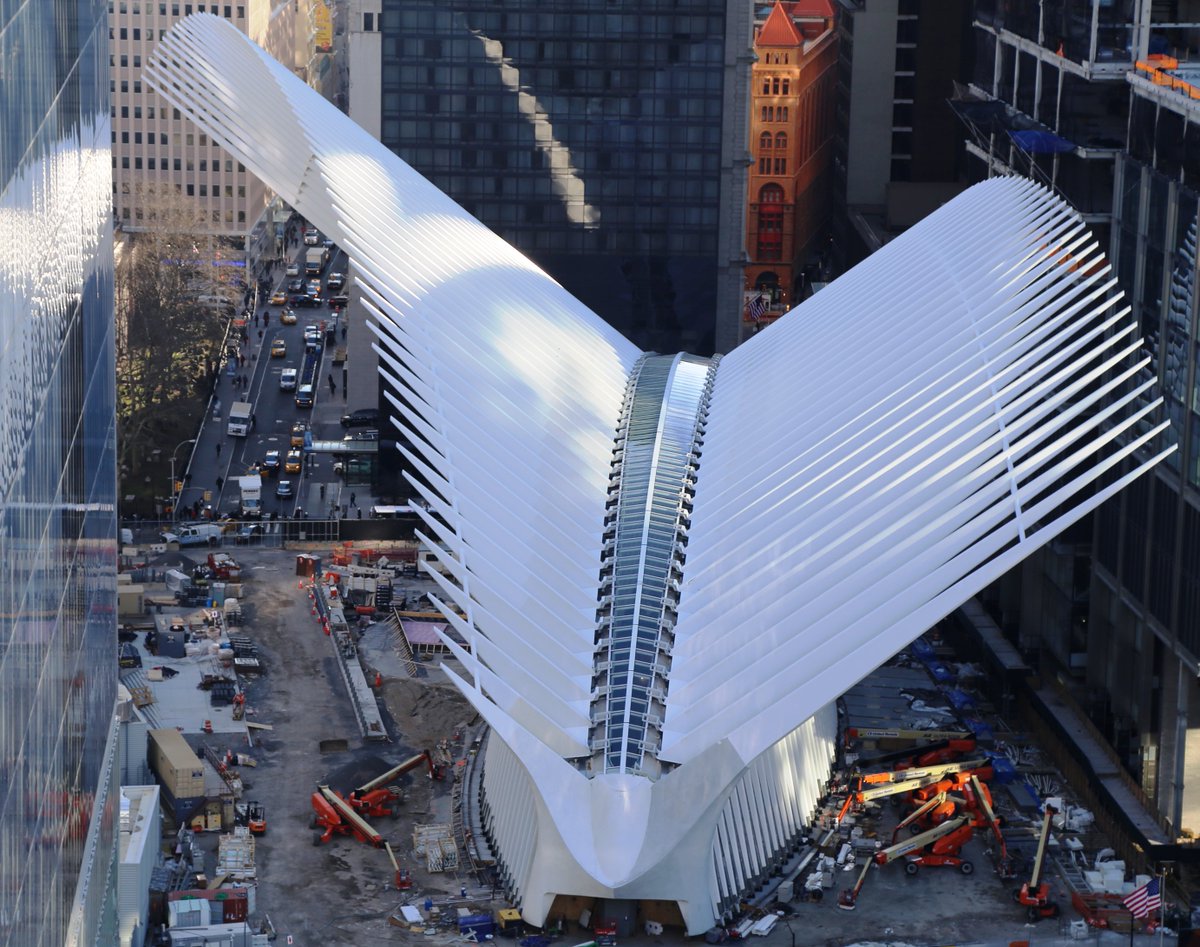
The headlines today are all focusing on the World Trade Center. The Port Authority must contribute $7.7 billion — and perhaps a few hundred million more — to rebuild the felled towers, and no one can offer a regular accounting for the project. For those of us who have seen the costs of the Calatrava PATH terminal jump by a few billion dollars, this revelation can hardly be much of a surprise.
The more alarming lesson from the audit though concerns the Port Authority’s capital plan. As the PA is now, Navigant charges, a major real estate developer and holding company, it may not have the money or capacity to realize its ambitious capital plan. Navigant is urging further examination of the plan and process.
For now, though, what I read in the audit — available here as a PDF — reminds me, in part, of the MTA a whole bunch of years ago. The organization is overflowing with unnecessary and redundant positions while workers are making far too much money for their jobs, and no one really understands the organizational structure within the authority. Patrick Foye, a former MTA Board member, is now in charge, and he’ll have to do what Jay Walder spent a few years doing at the MTA. Cutting costs and reorganizing will become key buzz words.
For their parts, the men in charge seem to recognize this reality. “The consultant’s preliminary review underscores the need for the Port Authority to refocus,” Foye, the Executive Director, said. “A poorly coordinated capital planning process, insufficient cost controls and a lack of transparent and effective oversight of the World Trade Center program that has obscured full awareness of billions of dollars in exposure to the Port Authority all played a role in getting us to where we are today. Further, having the World Trade Center as the focal point of the agency’s work over the last decade has led to mission drift from our core role. We have much work to do to fulfill the agency’s mission as the provider of critical transportation infrastructure needs for the region and as an engine for economic growth and job creation. I am fully committed to working with the Governors and with Chairman Samson, Vice Chairman Rechler and the full Board to get this agency back on track.”
That’s a mouthful of buzzwords, but it has to become a reality. We’re too dependent upon Port Authority infrastructure for the agency to falter. It must move beyond the World Trade Center. It must address our 21st Century needs. It must find some stability at the top. As the MTA seeks stable funding sources, the Port Authority must become leaner. Not doing so puts our transportation infrastructure at a great risk indeed.
For a more skeptical take on the audit and the Port Authority’s work at the WTC site, check out this piece by Steve Cuozzo. Like I am, Cuozzo is highly skeptical of the billions spent on the PATH hub, few of which are going toward actual transportation capacity improvements.
PATH reports record ridership for 2011
Posted by: | CommentsA walk west down Vesey St. from its intersection at Church St. can be a hazardous undertaking as a seemingly endless amount of people stream into Lower Manhattan from the PATH train terminal at the World Trade Center. If those crowds of people seem to be growing, that’s because PATH ridership is too. In fact, the agency announced this week that ridership is at an all-time high under the Port Authority as 76.6 million commuters took PATH trips in 2011.
The previous high had been 74.9 in 2008, and the 2011 jump in ridership amounted to a 3.6 percent increase over 2010. Port Authority officials credited an investment program amounting to over $1 billion in upgrades as a main driver behind the increase. Steep fare hikes in New Jersey likely played a role as well. “Our multi-billion-dollar commitment to transform PATH into a 21st century rail system has paid dividends,” Port Authority Chairman David Samson said. “More people are taking notice of what PATH has to offer and are choosing it as their preferred mode of travel between New York and New Jersey.”
With an entirely new fleet of rolling stock already on hand, the PATH system will soon enjoy more station renovations and a fully computerized signal system. The WTC-Newark line is also undergoing a transformation that will allow for 10-car sets, and of course, the Calatrava-designed hub in Lower Manhattan will open eventually as well. Now if only PATH and New York City Transit would integrate their fare payment mechanisms.
Calatrava’s $3.4 billion hub slowing down WTC progress
Posted by: | Comments
A $3.4 billion PATH station will serve as a symbol for poor infrastructure investment strategies.
Back in early October, when opined on the way we spend transportation dollars in New York City, I railed against the $3.4 billion price tag attached to the Calatrava-designed PATH hub at the World Trade Center. In the comments to that piece, Charles Komanoff urged me to find a cost breakdown of the design elements, and that week, I submitted a FOIA request to the Port Authority for that information. If we knew just how much the Port Authority is spending on design, we would have a better platform from which to view the project.
It’s now mid-January, and I’m still waiting on those numbers. I’ve heard from the PA a few times. First, they promised me my documents in November, then in December and now next week. It can’t be that hard to drum up an outline of the dollars being spent on construction of the steel porcupine vs. the dollars spent on improving passenger flow and transit capacity. But apparently, those aren’t figures the PA is too keen on releasing.
Today, in The Wall Street Journal, Eliot Brown provides us with a glimpse into the inner workings of the construction at the World Trade Center site, and it seems that the steel demands for Calatrava hub are slowing down the works and causing costs to spike. He reports:
Long beset by delays and cost overruns, construction at the World Trade Center site faces another potential snag: the financial struggles of the company responsible for erecting the massive steel skeletons of two towers and a $3.4 billion transportation hub. For months, the Port Authority of New York and New Jersey has been quietly advancing money to the contractor responsible for fabricating and putting up steel for the projects, which include One World Trade Center, according to people familiar with the matter.
The company, DCM Erectors, has more than $700 million worth of steel contracts at the site. The firm has told the Port Authority that it is facing cash-flow problems in part because of the project’s complexity, and also because of the amount of time it takes for the agency to approve extra costs…
The company’s troubles speak to some of the larger problems with the site’s redevelopment, which is running billions of dollars over original budget projections. The transportation hub alone has a price tag of $3.4 billion, up from an expected $2 billion in 2007. DCM’s woes stem largely from the station, which features giant steel arches that soar over a large train hall, and the 1,776-foot-tall One World Trade Center.
According to The Journal, DCM apparently “underestimated costs,” which goes without saying considering how the cost of the hub is up 70 percent over initial estimates and could climb even higher.
At this point in the process, no one will stop the Calatrava Hub or save the money. This is, however, a severely misguided project that is flushing transportation dollars down the drain. Between the Calatrava Hub and the Fulton Street Transit Center, various government agencies will have spent nearly $5 billion to deliver litle in the way of transportation capacity improvements. For that money, the feds could have guaranteed ARC Tunnel overruns or built another section and a half of the Second Ave. Subway. Misguided priorities indeed.
Patrick Foye, MTA Board member, to head Port Authority
Posted by: | Comments
Patrick Foye, a current MTA Board member and one-team downstate head of the Empire State Development Corporation, has been picked to run the Port Authority, Gov. Andrew Cuomo announced this morning. Koye is a lawyer who has worked for powerhouse law firm Skadden Arps and served as a Nassau County Deputy County Executive under Ed Mangano.
In announcing the appointment this afternoon, the New York Governor took another swipe at Ward. The two have been battling it out in the press since the outgoing Port Authority head slammed New York and New Jersey for playing politics with Port Authority budgets. “The Port Authority must meet its potential as a major economic engine that plans for the region and attracts business on an international scale,” Cuomo said. “We must also improve its operations and maximize the value out of every dollar spent so that it is financially responsible and respects the tax and toll payers.”
For transportation advocates, Foye’s choice sets a tone at the Port Authority that, at a time when concerns over Port Authority expenditures are running rampant, money management will trump development or growth. Foye, a lawyer with close ties to Long Island real estate industry, has worked in economic policy throughout his political career. A Spitzer nominee to the Empire State Development Corporation, he led the ESDC as it put forth controversial plans to redevelop the Javits Center and was instrumental in securing support and funding for the long-awaited Moynihan Station. The impact and expense of this new Amtrak depot are both hotly-contested issues.
Recently, Foye has served as one of Cuomo’s top economic advisers, and in a statement, he expressed his enthusiasm for the job. ““I am honored to be recommended for Executive Director of the Port Authority,” he said. “Under Governor Cuomo’s leadership, we have begun to re-energize New York’s economy and pave the way for job growth in the state. I thank Governor Cuomo for this opportunity and look forward to working closely with him and the Board of Directors at the Port Authority on maintaining and improving the New York metropolitan region’s vital transportation, infrastructure and economic development assets.”
At this same time, Cuomo announced today that he would be folding both the Lower Manhattan Development Corporation and Moynihan Station Development Corporation into the Port Authority. “Too many different agencies doing the same or closely related work makes little sense,” he said in a statement. “The Port Authority is best situated to oversee the development at Moynihan Station and the orderly wind down of the LMDC and these changes will consolidate responsibility within the Authority.” Foye’s work then on Moynihan Station will continue.
As a transportation wonk, Foye’s experience has come via his time on the MTA Board. He was appointed by Mangano in 2010 for a term that ends in 2015, and it is unclear how this appointment to the Port Authority will impact his Board seat. Fellow Board members praised his service though. “He’s delved into operating details of the system, communication issues with commuters and fare structure,” Mitch Pally said to Transportation Nation.
Although I’m hesitant to read too much into one appointment, Cuomo’s decision to name an economics adviser to the PA’s top spot portends a similar outcome for the MTA. It certainly strengthens the rumors that Joe Lhota will be nominated this week, and it showcases how Cuomo seems more focused on budgetary and management issues than with transportation and transit operations. Yet, on the other hand, the Port Authority is more akin to a traditional economic development agency than the MTA is, and in that sense, Foye’s background makes him a fairly solid candidate for the post.
Photos: Inside the TWA Flight Center
Posted by: | Comments
Former airline employees and urban historians were among those who descended upon the TWA Flight Center yesterday. (Photo by Benjamin Kabak)
With its vast network of underground tunnels and hidden infrastructure, New York seemingly possesses a city within a city. For every public plaza and popular park, there are a number of off-limits locations that capture our imagination. For years, the West Side Line held the top spot in that category, but since the High Line opened, attention has shifted to the TWA Flight Center, a sealed off relic of another era in aviation now owned by Jet Blue.
The Eero Saarinen-designed building, with its sweeping curves and glamorous reputation, reminds us of a time when flying was a luxury and not a headache. It has been immortalized in film and screen, and as Jet Blue and the Port Authority work to renovate the headhouse, it will one day soon be returned to use in a yet-to-be-determined function. This weekend, the space was open to the public as part of the Open House New York event.
I journeyed out to JFK Airport this weekend to catch a glimpse of the interior of this iconic building. There’s something about off-limits infrastructure that brings out urban explorers who want to know more about the history of their city. By and large, transportation infrastructure isn’t opened up during Open House NY due to liability and security concerns. (I know I’d pay and sign a release to see the station shell at South 4th Street.) This weekend, though, I had to chance to explore.
What follows is a slideshow of my photos from the event. In various states of renovation and disarray, the Saarinen headhouse is a sight to behold. For more on the past, present and future of this historic building, check out New Yorkology’s coverage of the event.