With current MTA chair Peter Kalikow on the way out, Gov. Eliot Spitzer has named his choice for replacement. H. Dale Hemmerdinger, a New York real estate mogul and one-time head of the MTA’s Citizen Budget Commission, will get the job, The Times’ new CityRoom blog reported this evening.

Hemmerdinger, 62, is currently the head of the Hemmerdinger Corporation, the parent company of the ATCO family of real estate companies. Hemmerdinger, a 1967 graduate of NYU, is also a member of the university’s board of trustees and won an alumni association award from NYU in 2006.

“Dale has been a champion of fiscal stability, intelligent long-term planning and management accountability while serving as CBC Chair and throughout his business career,” Governor Spitzer said in a statement. “His charge is to ensure that the MTA becomes known for those qualities as well.”

According to Sewell Chan’s post on CityRoom, Hemmerdinger won’t enjoy the same power that Kalikow held as MTA chair. As Spitzer reorganized the MTA’s leadership structure, current CEO and Executive Director Elliot “Lee” Sander will hold the reins of power, but Hemmerdinger is expected to bring financial acumen to an agency that could be tottering on the brink of fiscal disaster.

amNew York noted the influential Straphangers Campaign reaction to the appointment:

Advocacy group the Straphangers Campaign promptly responded to the announcement, calling Hemmerdinger “a smart guy who cares about transit.”

But they also voiced hesitation, saying that under Hemmerdinger, the budget commission recommended New Yorkers should pay more than the national average for transit.

Hemmerdinger’s nomination has to clear the state Senate, but that is assumed to be a mere formality at that point. Nothing in his background suggests that this big Democratic donor will face a contentious approval.

For the MTA’s part, Sander issued a statement praising Hemmerdinger. “I look forward to working with Dale and the entire M.T.A. board as we continue to tackle some tough challenges and implement a new vision for our transportation network,” he said. With two highly qualified transit advocates leading the MTA, we could be seeing the dawning of a new golden age for the rapidly-expanding New York City subway system.

Categories : MTA Politics
Comments (9)

Is that an armrest in your pocket or are you just happy to see me? (Photo by Michelle V. Agins/The New York Times)

Rest easy, commuters. Your pants are safe from the terror that are the armrests on commuter rail trains. The MTA has heard your cries, and they will fix the problem of the pants-eating armrests.

According to The New York Times, Metro-North and the L.I.R.R. plan to submit a request to the MTA board this month asking for a $3.59 million contract to purchase replacement armrests that won’t tear unsuspecting passengers’ pants. As William Neuman notes, that comes to about $70.50 an armrest. The armrest replacement project should be completed by the end of 2009 on L.I.R.R. cars and mid-2010 on Metro-North.

The Times notes the PR benefit of this move:

What the railroads are really buying is goodwill from riders. Together, the railroads have paid out more than $100,000 in claims to hundreds of riders whose clothing has been torn on the armrests. Interviews with riders suggest that hundreds or thousands more have damaged their clothes but never submitted a claim.

The old armrests are made of a rubbery material that seems to latch onto clothes and not let go. They are also long and tapered and are attached at an angle that allows them to slide unobserved into pants pockets as a rider sits down.

The new armrests are shorter, with a smoother finish, which, according to the board summary, “does not ‘grab’ clothing.”

While tailors around Penn Station and Grand Central Terminal lose out, commuters are sure to be thrilled with armrests that fill their pockets with loving caresses instead of tearing glances. Phew.

Comments (7)

Every week on Thursday, the MTA releases its press release of Weekend Service Changes. This week’s bulletin informs me that there will be changes on the following lines: 1234567ACDFGJNRW.

In other words, you’re good if you’re taking the E, L, M, Q, or Z. Yikes.

The worst victims of this service slowdown are those of you who live along the West Side IRT local line. The 1 train is having one helluva summer:

For five weekends in June and July, service on the 1 line will be suspended in lower Manhattan in order to allow Port Authority of New York & New Jersey to do excavation work on a portion of the exterior of the 1 line. This foundation work is necessary for the Authority’s World Trade Center rebuilding projects.

During the upcoming weekends, 1 trains will terminate at 14th Street. 2 and 3 trains will make all local stops between the 96th Street and Chambers Street stations. Shuttle buses will carry customers between the Chambers Street and South Ferry.

But wait! There’s more:

For three weekends, June 23-25, June 30-July 2 and July 7-9, there will also be several Upper Manhattan track projects affecting 1 service between the 168th Street and 242nd Street stations. MTA NYC Transit will be replacing track switches at Dyckman and 215th Streets and there will be a track chip-out and concrete pour at 181st Street.

During those three weekends, there will be no 1 train service between 168th Street and Van Cortlandt Park-242nd Street. Customers may transfer to the A train at 168th Street, ride to 207th Street and board a free shuttle bus serving stations between the 207th Street (A) station and Van Cortlandt Park-242nd Street in the Bronx. Customers wishing to go to 181st and 191st Streets along St. Nicholas Avenue may use the M3 bus route which will be supplemented through the midnight hours with shuttle bus service.

My advice: Walk. Good luck with that.

Full weekend service alerts are here.

Categories : Service Advisories
Comments (3)

The green 5 will soon open in Beijing, sending real estate values along its path skyward.

As the 2008 Olympics approach, the Chinese government is hard at work preparing Beijing for its international unveiling. Part of this cosmetic overhaul of a city on the brink of globalization a brand new subway line.

I’m fascinated by this new subway lines and the parallels we can draw between it and soon-to-be addition to New York City’s subway system. First, this new line covers about 7 more miles than the Second Ave. subway will cover. It will take China all of five years to complete it. While they are building a line through land that isn’t nearly as developed as Manhattan’s East Side, I think this says more about China’s labor practices than bureaucratic efficiency.

But the more interesting aspect to this project is the effect the new line is having on Beijing real estate. According to the article linked above in the English-language China Daily, real estate values are skyrocketing along the path of the subway:

Since Beijing subway’s Number 5 line project started in 2003, the prices of the houses along the route rose by 17.8 percent per year on average.

When Jia Yun Yuan, a property project in Changping District, at the north end of the No 5 subway line, opened in July 2003, its average housing price was only 3,700 yuan (US$485) per square meter. But now even the prices of second-hand houses have hit 7,300 yuan (US$957) per square meter. Also, at Song Jia Zhuang, at the south end of the yet-to-be-opened subway line, the prices of three buildings on sale are between 12,000 yuan (US$1,573) and 13,800 yuan (US$1,809) per square meter.

I got to thinking: Will this happen in New York? Over the last few months, I’ve talked to some of my friends in real estate. As speculation mounted that the Second Ave. subway would actually become a reality this time around, they all agreed that now would be the best time to invest in East Side apartments.

As it stands right now, people who live on York or East End Avenues have to trek a long way to reach the Lexington Ave. IRT stops. Even residents of 1st Ave. are hardly around the corner from the 4, 5 or 6 trains. With a new line snaking up 2nd Ave., all of those people living on the far East Side will suddenly find themselves blocks away from the subway instead of miles. These apartments will soon become even more desirable places to live.

So invest now, I say. If you’re thinking of buying an apartment on the Upper East Side where the first part of the Second Ave. subway is set to open in 2013, now is the time to seal the deal. Already, the typical market forces are pushing up the value of East Side apartments; as China, potentially our next big global competitor, has shown us, these numbers will only rise higher and higer as the Second Ave. subway nears completion.

Comments (8)

When Mayor Bloomberg first announced his congestion pricing plan on Earth Day, I came out in favor of it. I knew at the time that many New York politicians, beholden to auto and oil companies and car-addicted denizens of the outer boroughs, wouldn’t sign on to a plan even though that plan would help the city’s environment and the fiscal state of the Metropolitan Transportation Authority. That’s just too much common sense for the New York legislative bodies to stomach.

But Bloomberg enjoys the benefit of public support. When told of the benefits of the congestion pricing plan, a whopping 81 percent of New York residents support Bloomberg’s proposal. The New York State Assembly, however, led by Sheldon Silver (pictured at right), have different ideas, and these ideas are among the worst out there in terms of their impact on our beloved subway system.

Marcia Kramer, CBS’s lead political and investigative correspondent, covered the story today. She breaks down the other proposals set forth by the Assembly:

The first idea would involve dropping the price to ride the bus or subway during rush hour from $2 to 50 cents.

The second idea is to increase bridge and tunnel tolls to $6 between 6 a.m. and 10 a.m., as well as 3 p.m. through 7 p.m. Under that plan, tolls would be reduced to just $2 from 10 a.m. to 3 p.m.

These plans are disasters. Let’s start with the one at the top: Reducing the subway fare to $.50 at rush hour is a terrible mistake.

Right now, the MTA draws in on average $1.31 per ride for those who use the Unlimted MetroCard (45 percent), $1.67 per ride for those who use pay-per-ride (45 percent) and $2.00 per ride from the rest. So the average that the MTA takes in per ride is $1.54 more or less. Since ridership is highest at rush hour, the MTA obviously takes in more money at rush hour than it does at other times during the day.

As the point of the congestion fee is to discourage driving while taking in money to improve the city’s infrastructure, it doesn’t make any sense to cut the fare by, in effect, 67 percent at peak times. The MTA would have to triple its ridership just to meet its current fare revenues. And tripling the ridership, besides being impossible, would overwhelm the subway system well beyond the point of collapse.

The toll plan suffers from the same lack of foresight. Tolls are already pretty expensive; a bump to $6 wouldn’t do much. But the rebound — $2 between 10 a.m. and 3 p.m. — would simply push more people to drive when tolls are dirt cheap. I’m not even going to mention the even/odd license plate proposal. That solves no problems, and good luck enforcing it.

In the end, none of these proposals approach the subtlety and thoroughness of Mayor Bloomberg’s original idea. With Bloomberg’s $8-per-car or $21-per-truck plan, the millions the city projects to take in would go toward the MTA’s infrastructure. We would enjoy more frequent and reliable subway service, nicer stations and new subway lines fulfilling the promise of a system 100 years in the making. Additionally, with more people riding the subway each day at the current fares, the MTA’s coffers would continue to expand not only through congestion pricing revenue but through fares as well. It’s a win-win situation for the environment and our public transportation system.

With so many people supporting the congestion pricing, the New York Assembly should do the right thing and pass this legislation. Anything else would be a detrimental cope out that would affect the city for generations to come.

Categories : Congestion Fee
Comments (8)

fexpresstracks.jpg

Unused express tracks on Brooklyn’s Culver Line offer a tantalizing glimpse of what could be in Brooklyn. (Track map courtesy of NYC Subway)

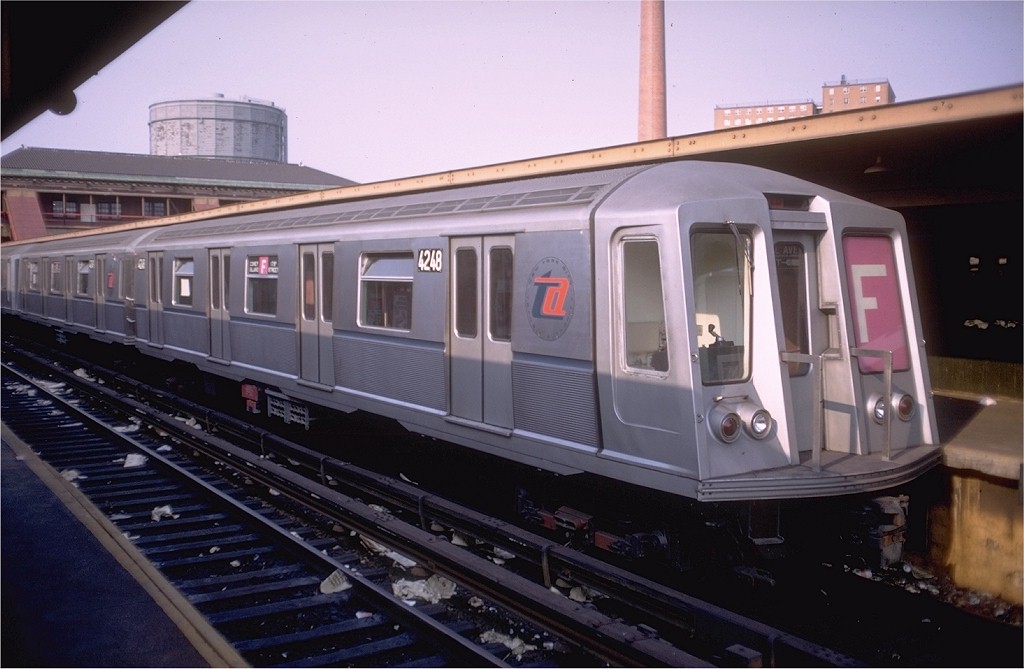
Ah, the F train, aptly named after the words coming out of its riders’ mouths in Brooklyn as another stuffed train pulls up to the 7th Ave. stop in Park Slope in the morning. Or maybe it is named after what people say as they wait and wait and wait for the train to show up at night.

The F line though hides a dirty little secret: The capabilities exist, track-wise, for express service through Brooklyn. Now, on the heels of my post yesterday about the G train, one Brooklyn resident (and blogger) has taken up the call to arms. Gary from Brooklyn Streets, Carroll Gardens has started a petition to call on the MTA to add express F train service in Brooklyn and extend the V train from 2nd Ave. in Manhattan to part (or all) of Brooklyn. (The petition, if that’s your thing, is here.)

Gary believes that if, as I do, the congestion fee will increase subway ridership, crowded lines such as the F will become even more packed with commuters. The MTA should therefore do all it can to alleviate the crush.

I can’t argue with that logic, and in fact, I know that some of you have repeatedly said they would also shoulder fare hikes if the money went to increased service in the system. I’m all on board for that plan, but I think the F express/V extension plan faces some hurdles.

Click here to read about those hurdles and more

Categories : Brooklyn, F Express Plan
Comments (15)

In a (not very) groundbreaking article in Sunday’s The City section, The New York Times took a look at something Greenpoint residents and savvy subway riders have long known: The G train never shows up.

Gosh. I had no idea. I certainly didn’t write about the G train when I graded the subways or talked about subway-line-themed condoms. And these two fine ladies certainly can tell you how reliable the G train is.

But hey, I should cut The Times some slack. The piece was, after all, one of those neighborhood articles in The City section, and it contained some good information:

For residents of Jackson Heights who enjoy the cuisines of Carroll Gardens, for example, or for Greenpointers who shop at the Queens Center mall in Elmhurst, the G can be a straight shot, no train changes needed.

That route, however, is available solely on nights and weekends, the only times the G is scheduled to travel the second half of its appointed route, from Long Island City to Forest Hills. And as of May 24, the 14-mile span became even less real. New York City Transit posted signs saying the line’s route will be abbreviated on weekends “until further notice” because of track work along the Queens Boulevard line, where the G makes the second half of its normal run.

That certainly is bad news for all two of the people who use the G to avoid Manhattan while traveling from Queens to Brooklyn. And while the members of Astorians aren’t too thrilled, it was generally quicker to take a train into Manhattan and then back out to Brooklyn than it is to take the G. This work just makes the G train (which may one day reach further into Brooklyn) all the more useless.

While straphangers search for alternate routes, I wanted to suggest a few more stories The Times could tackle in its effort to bring the obvious to the pages of The City section.

The F Train: It’s crowded. Especially at rush hour and in Park Slope. Also, it doesn’t run often enough and Brooklyn residents really, really, really want V service in Brooklyn and F trains to utilize the underused express tracks. If you live in Brooklyn, you can’t avoid this story.

The M Train: Who rides it? Where does it go? (Answers: No one and nowhere.)

The 7 Train: According to some, this train is “depressing.” It’s filled with “[kids] with purple hair next to some [guy] with AIDS right next to some dude who just got out of jail for the fourth time right next to some 20-year-old mom with four kids.” (Hat tip, John Rocker.)

The Shuttle: This train just goes back and forth, and one of its terminals is in Times Square which was named after the now-newspaperless Times Building. Did you know that, The New York Times?

The Second Ave. Subway: There isn’t one. Why not? (Of course, you could just find that answer right here.)

So there ya go, City Section: A few lesser-known well-known stories to go with your exposé on the G train, delivered with love from me to you.

Categories : MTA Absurdity
Comments (4)

Supposedly, the second time is the charm. Today, the MTA is going to find out if they procure that second time charm with the Hudson Yards area as they are set to issue a request for development proposals for the valuable land on the Far West Side.

The Authority wants $1 billion, and they should get it. But after months of speculation, the northern end of the High Line probably won’t survive the construction and development, according to a report in Crain’s Business Journal. Julie Satow at Crain’s has more:

Restoring the northern portion of the High Line, the elevated railway that runs along the rail yards on Manhattan’s West Side, will cost $117 million, according to a new report that is likely to embolden developers seeking to tear down the railway…

The cost of the High Line is crucial because it will lower the price developers are willing to bid for the right to develop the site and thus drive down the MTA’s proceeds…

The High Line will prevent the development of 13,000 square feet of retail space, resulting in $20 million of lost revenue, according to the report. It will also compromise retail space, storage and parking spots and cost a developer $26 million in lower rents. The cost of tearing down the High Line and replacing it with a raised park would be $38 million.

The MTA has said that it supports the presence of the High Line, but only if it does not drive down bids for the site by more than $25 million. Advocacy group Friends of the High Line has previously argued that the cost of maintaining the structure is under $1 million.

As construction crews work day in and day out on the southern part of this eventual park in the sky, the days are numbered for the northern part. As much as I am looking forward to the High Line Park’s unveiling, the economics make me believe that tearing down the northern part is for the best.

As I walked along 10th Ave. on Friday afternoon after work, my mind wandered to the future. I crossed the Hudson Yards area and tried to envision the development that will soon arrive. I envisioned the extended 7 line feeding Manhattan’s last frontier. While Lincoln Tunnel traffic — hopefully alleviated by the congestion fee — may turn many off from this neighborhood, it needs development. The area from Chelsea to the mid-40s is a dead zone.

If the cost of turning an empty pocket of Manhattan into a livable and usable area of the city is the dismantling of part of the High Line, then I shall simply bid this relic of another era good bye and appreciate the new park even more.

Categories : Hudson Yards
Comments (0)

The savvy subway riders know how to make those hard plastic seats a little more comfortable. (Courtesy of flickr user meganificent and a tip o’ the hat to Gothamist)

Sometimes, you have to wait a long time for the train. Sometimes, there are no seats. Union Square is low on seats on the IRT line; and Grand Central keeps their six seats hidden so the wooden benches don’t crowd the platforms during rush hour.

Sometimes, there’s a stinky dude creating a toxic cloud around the bench. And sometimes, they’re full. So, as you wait this weekend for trains that may or may not show up due to weekend service changes, bring your own chair like those straphangers – or is that couchsitters – did.

Trying to get to the Big Apple BBQ festival from Brooklyn? Don’t take the 4. It’s not running between Atlantic Ave. and Brooklyn Bridge. The same goes for those of you checking out Roger Clemens’ debut at Yankee Stadium this weekend.

And that notoriously unreliable G train is hardly running at all this weekend.

The rest of your weekend service advisories are here. I’ll catch you on Monday.

Categories : Service Advisories
Comments (0)

As Mayor Mike Bloomberg’s congestion fee plan gains traction and attention around the nation, news reports, such as this one featured in The Times today, act as though PLANYC2030 is reaching a tipping point.

While in the city, public transportation advocates and officials have thrown their support behind the plan, now, Gov. Eliot Spitzer is pledging to make the congestion fee a reality. In fact, even the Bush Administration is urging the state legislature to adopt the plan. The Times reports:

Mayor Michael R. Bloomberg’s plan to reduce traffic by charging people who drive into the busiest parts of Manhattan received significant support on Thursday as Gov. Eliot Spitzer endorsed the idea and the Bush administration indicated that New York stood to gain hundreds of millions of dollars if the plan were enacted…

Mr. Spitzer appeared alongside the United States transportation secretary, Mary E. Peters, who announced that New York City was one of nine finalists for a share of $1.1 billion in federal aid to fight urban traffic. Ms. Peters warned, however, that the city’s potential share could be endangered if the mayor’s plan did not have state approval by August.

None of this support, the articles notes, guarantees passage for the congestion fee, and State Assembly and Senate members will delve deep into their list of concerns being giving the go-ahead to this ambition traffic-curbing plan. But with the big guns aligning behind the legislation, we can start to consider the reality of a congestion fee in New York City.

According to Bloomberg, the plan could be in place within 18 months of approval. At that point, commuters will be charged hefty amounts to drive into the city’s central business district south of 86th St., and the money, Sewell Chan wrote on the Empire Zone blog, will help alleviate the MTA’s potential financial woes.

Now, all of this got me thinking: The MTA will have more money. But no one knows yet how that money will be spent. For the most part, everyone believes that windfall from the congestion fee will fund the Second Ave. subway, the 7 line extension and other capital construction projects designed to improve mass transit in the city.

But what about the increase in ridership sure to come as a result of the congestion fee? Earlier this week, The Queens Gazette noted that subway ridership numbers have increased along with the New York City economy. What is going to happen if, as the city draws in more money from the congestion fee, the economy improves and many commuters head to the subway to avoid the wallet-aches of driving?

As I see it, the MTA will face a crush of people once the fee is in place. The subways, already filled to capacity on many lines, will witness a dramatic increase in ridership, and I don’t think the MTA has the infrastructure in place to keep up. So while the city is trying to build the Second Ave. subway — a project for which I clearly am in favor — the Authority will have to find a way to modernize the system to allow for more frequent and more efficient trains.

And thus the congestion fee becomes a double-edged sword. As the city draws in more money from the fee, this money will end up invested in the subways. But at the same time, ridership and demands on the infrastructure will increase as well. While the federal government is now dangling the promise of money in front of the city and state, these funds probably won’t cover the amount the MTA needs to prepare the system for a record-shattering onslaught of straphangers.

The debates over the congestion fee this summer will focus around these issues of preparedness. Maybe this is the push the MTA needs to begin a serious overhaul of infrastructure that is 100 years old and signal technology that dates from the 1930s in most places. No matter what, it’s about time for an upgrade.

Categories : Congestion Fee
Comments (10)
Page 414 of 430« First...412413414415416...Last »