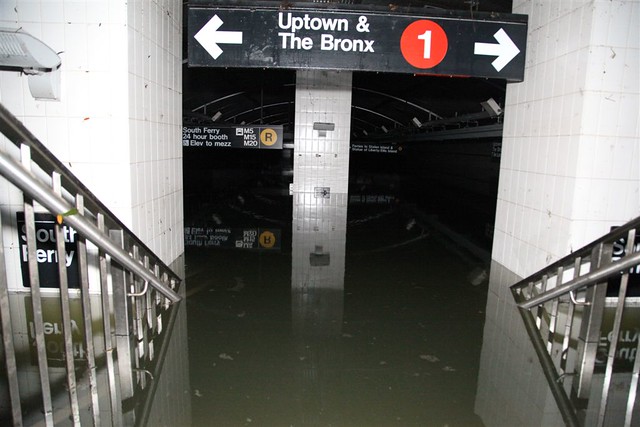
To most New Yorkers, the MTA’s budget is a thing of mystery. We’ve suffered through constant fare hikes and no corresponding increases in transit service. We’ve heard false tales of two sets of books repeated ad nauseam for nearly a decade. We hear about a capital budget, an operating budget and debt payments. And now the MTA is receiving another infusion of cash totaling billions of dollars for Sandy-related repairs. It’s enough to make anyone’s head spin.
Tonight — Wednesday — at the Transit Museum, as part of my ongoing “Problem Solvers” series, Straphangers Campaign attorney Gene Russianoff and I will get to unpacking some of the complicated and convoluted details surrounding the MTA’s budget structure. We’ll look at who pays for transit in New York City and who should pay for transit. We’ll look at where the money comes from and where it goes. And we’ll explore just why the MTA needs to raise fares every two years and why the MTA’s budget is always so fragile.
The party gets started at 6:30 p.m., and doors to the Transit Museum in Brooklyn open at 6. RSVP here, and come with questions. Gene and I will take comments from the audience as part of the discussion as well. See you there.
 I can’t say I’ve thought much about Student MetroCards in the years since the MTA threatened to do away with them entirely in late 2010, but something about that dust-up always struck me as wrong. As enrollment numbers in New York City public schools spiked at the end of the last decade, the MTA — and not the city or city — shouldered the increasing fare burden. Both the city and state have contributed $45 million a year each while the MTA’s contributions — once also around $45 million annually — have spiked to nearly $100 million. What was one an even funding agreement is anything but.