Tag: LaGuardia AirTrain

  • Laguardia AirTrain on ‘pause’ as Hochul gears up to pull the plug on Cuomo-era vanity project

    The Laguardia AirTrain, a pet project of Andrew Cuomo’s, is now on life support as the Port Authority begins a new review.

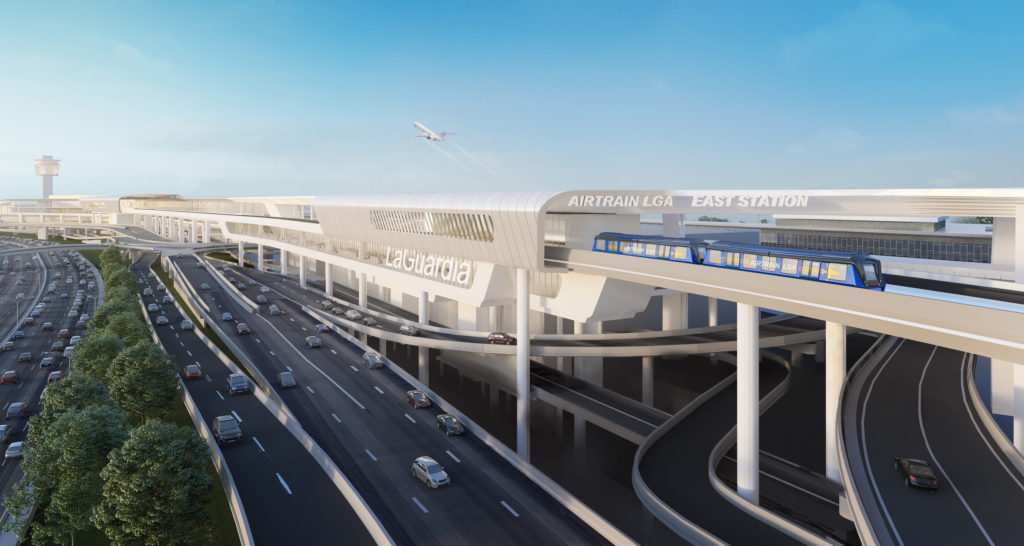
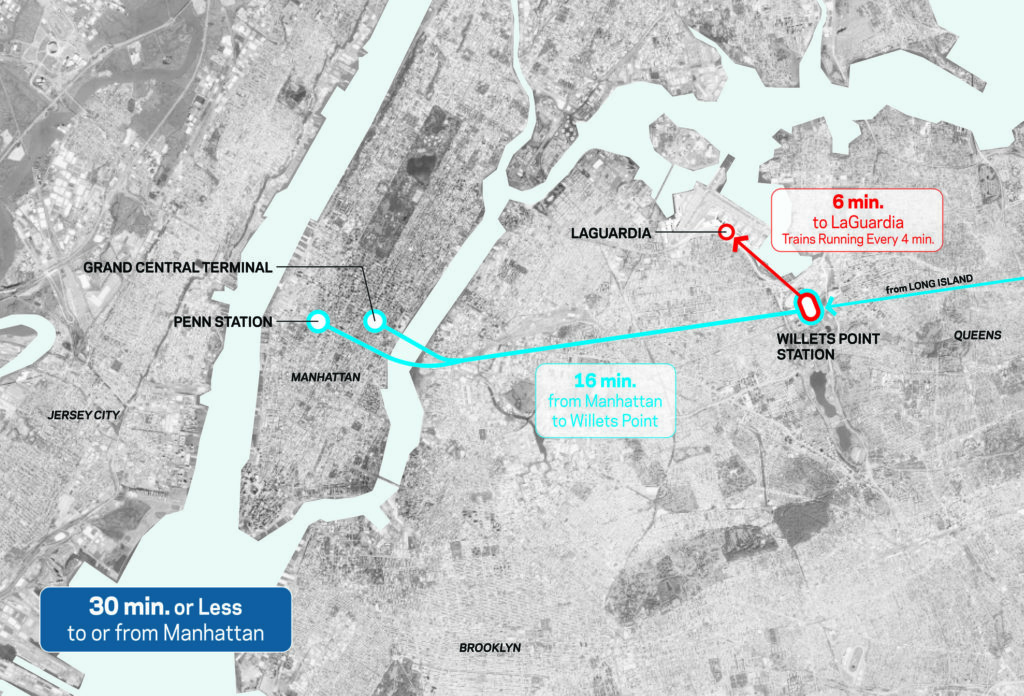
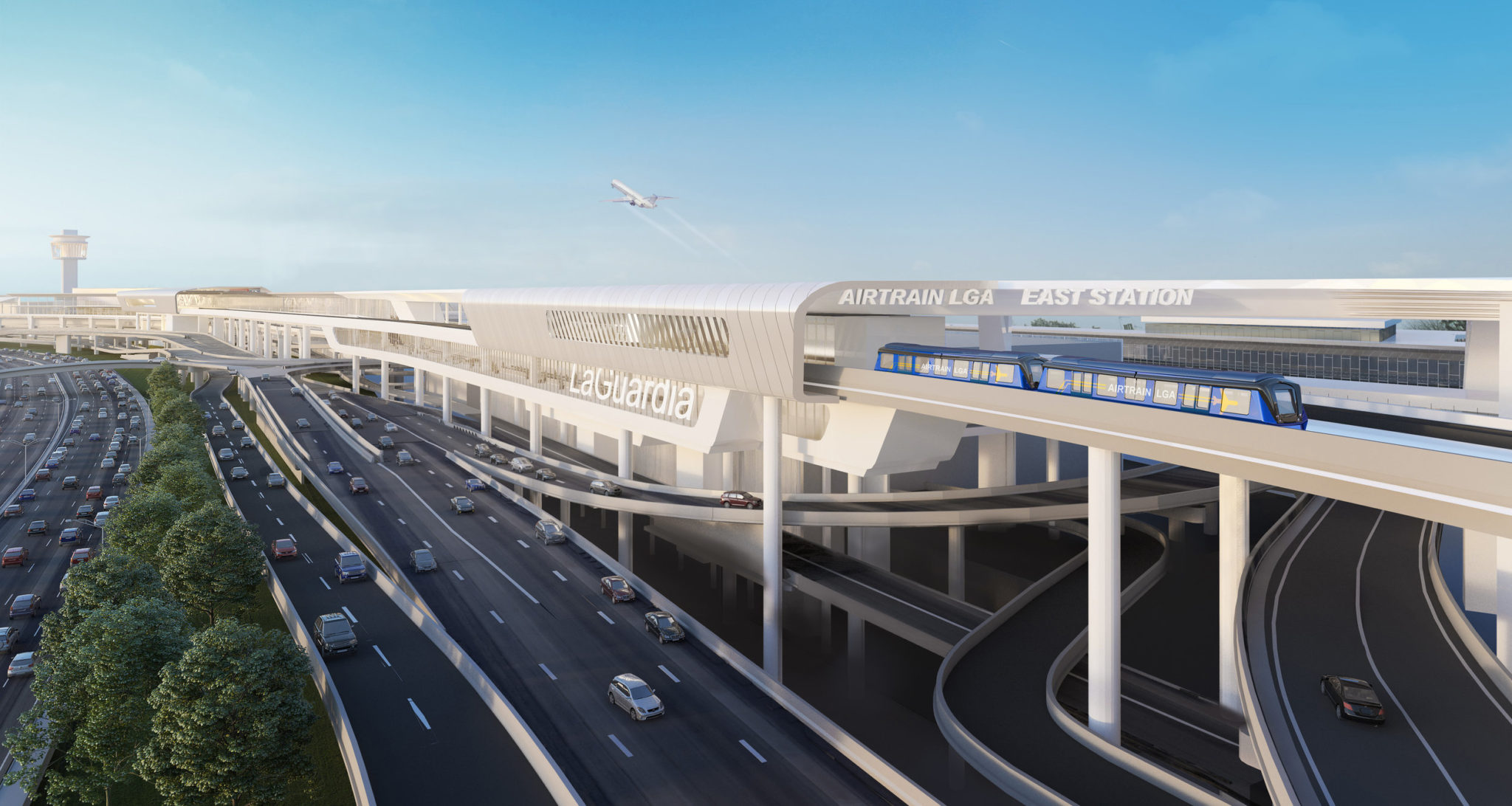
    The much-maligned Laguardia AirTrain may be on its last legs as the Port Authority has paused work on the project following an order by Governor Kathy Hochul to re-examine the plan. The decision doesn’t quite kill former Governor Andrew Cuomo’s crowning symbolism of his top-down, ‘me-first-and-only’ approach to transit planning, but facing lawsuits and criticism on all sides, the days are clearly numbered for the Willets Point-based backwards airtrain, as they should be.

    This week’s pause had been in the works since Hochul took over. Sensing blood in the water, a strange coalition of East Elmhurst residents, environmentalists and transit advocates as well as all local politicians had banded together to press the new governor to halt the old governor’s flawed project, and the new governor sort of obliged.

    Following seven weeks of lobbying by Queens politicians, Hochul announced, well, something on October 4. In a statement, she asked the Port Authority to look into “alternative mass transit solutions.” It wasn’t a pause, but it wasn’t a ringing endorsement of the AirTrain. She said:

    “New Yorkers deserve world-class transportation to world-class airports. I have asked the Port Authority to thoroughly examine alternative mass transit solutions for reducing car traffic and increasing connectivity to LaGuardia Airport. We must ensure that our transportation projects are bold, visionary, and serve the needs of New Yorkers. I remain committed to working expeditiously to rebuild our infrastructure for the 21st century and to create jobs – not just at LaGuardia, but at all of our airports and transit hubs across New York.”

    For a week or so, it wasn’t clear what Hochul’s ask meant. Was she canceling the AirTrain? Was she permitting it to move forward? Rick Cotton, head of the Port Authority, indicated that his agency planned to keep pushing forward on the AirTrain, and the project seemed to exist in a political limbo until the Port Authority released its own unattributed statement this week, just a few days before a deadline to respond to the Riverkeeper lawsuit, announcing the pause:

    “At Governor Hochul’s request, the Port Authority is undertaking a thorough review of potential alternative mass transit options to LaGuardia Airport. The agency will work in close consultation with independent experts and stakeholders, and will complete its work as expeditiously as possible, consistent with the need for the review to be thorough and rigorous. During the review, the Port Authority will pause further action with respect to the LaGuardia AirTrain project.”

    The AirTrain isn’t dead, but it’s pining for the Fjords. I’d be shocked if another minute of work happens to advance the Willets Point plan, and it seems the projects myriad opponents have won. Though what they’ve won remains to be seen, and the next few steps will determine if this is a real victory or just a Pyrrhic one.

    As readers of my site know, I will not mourn the death of the AirTrain. As I wrote back in 2015, it was a bad project from the start, one with murky origins no one could pinpoint. One day, the Governor showed up a meeting and demanded the Port Authority and MTA find a way to justify the Willets Point plan even as analysis showed that it would save few people any time at all. It wasn’t worth the original $500 million budget, a figure the Port Authority later admitted they made up to placate Cuomo, and it certainly isn’t worth the current $2.1 billion price tag. To justify the project, the Port Authority rigged the alternatives analysis and environment impact statements to heavily favor only Cuomo’s plan rather than more useful subway connections or a simpler dedicated bus lane. When Riverkeeper, Guardians of Flushing Bay and the Ditmars Boulevard Block Association sued over the obviously flawed environmental studies, the writing was on the wall.

    At the same time, numerous politicians used the void created by Cuomo’s resignation to finally speak out against the project. We can debate the political courage (or lack thereof) of waiting until Cuomo was out of office to jump, but once he left, jump they did. Those politicians who had been critics while Cuomo was still in power welcomed the new allies, but the upcoming fight over what’s next is a harder one that will fray the tenuous peace behind neighborhood groups that stray toward NIMBYism and transit advocates who want to see a real solution.

    So far, in fact, that’s all that we’ve won: The right to keep fighting. It took six years from conception until the AirTrain was nearly ready for ground-breaking, and that was with a strong-willed governor willing to strong-arm the project through. That’s one of the reasons why the RPA, for instance, pushed against canceling the AirTrain even while knowing about the project’s dubious transit value.

    Now, the governor will have to find a better plan and overcome skepticism in Queens. For example, New York State Senator Michael Gianaris objected to an extension of the N train back in the early 2000s while promoting the Willets Point plan then but now rightly objects to the Willets Point plan. He told Gotham Gazette’s Ben Max that he is open to the idea of a Laguardia subway extension over the Grand Central Parkway (skip to minute 42 of this podcast), but a plan that avoids temporary neighborhood disruptions won’t add subway access to residential and commercial areas without it. To me, that’s the wrong to right here.

    The best way forward involves a combination of outcomes. In the immediate future, providing a dedicated bus connection from Jackson Heights and a dedicated bus lane through Laguardia would pay dividends while political leaders lay the groundwork for a subway connection to the airport, one that improves access through East Elmhurst and connects Laguardia to the subway. It won’t be an easy fight, and it will require coalition-building and a governor willing to fight the NIMBYs who will emerge. But it’s the right way forward.

    I put canceling the AirTrain as number four on Hochul’s transit to do list, and she’s on the verge of doing it. But the second part is not letting this opportunity go to waste. If nothing comes of this other than six years of planning and no new plan for a better rail connection, all of this will have been for naught, and we’ll be in the same position we were two decades ago when the city scraped the N train extension, only this time we’ll have a nicer Laguardia no more accessible than it is today.

    It’s a fate Hochul says she wants to avoid. ““We will offer world-class mass transit opportunities to get from LaGuardia to the city. I’ll get that done,” the governor promised on Wednesday, “but I want to take some breathing room to assess what’s been done in the past, what ideas were rejected and how we ended up with AirTrain in the first place.”

    The next round of actions will speak louder than her words.
  • FAA increases PFC funding options for transit projects and LaGuardia Airport could benefit

    A policy shift from the FAA could help usher in a better plan than the Willets Point LaGuardia Airtrain.

    Could a shift in federal policy save New York City from the the misguided Willets Point LaGuardia AirTrain? Could Queens — and New York City — find a way to provide a rail link to LaGuardia while improving transit through Queens? It may still take a Hail Mary, or a new governor, to stop Andrew Cuomo’s favorite rail link, but the feds may have just thrown us a lifeline if someone is willing to take it.

    In a significant policy shift published one day after former Transportation Secretary Elaine Chao resigned during the waning days of the Trump Administration, the FAA has said that airport-based passenger charges can now be used for rail construction that doesn’t exclusively serve airports. It’s an arcane federal policy shift, one that happens with little fanfare on a regular basis, but one with the potential to upend for the better the way Americans travel to their airports.

    To understand this policy shift, allow me to conduct a brief history lesson. Many airport-based transit projects are funded through passenger facility charges (or PFCs) that the agency operating an airport can collect to fund a variety of airport-related infrastructure projects. These projects must be tailored to the airport itself, and in 2004, the FAA issued clarifying guidance that PFCs could be used for surface transportation projects only if they “exclusively serve airport traffic.” The FAA also determined that the facility in question “can experience no more than incidental use by nonairport users.”

    The interpretation of this limitation has been extremely narrow for nearly two decades, and it has led to a variety of overpriced and stunted airport transit projects. In essence, it forces airports to serve as terminals for rail lines or requires agencies to build proprietary systems that serve only airport customers. Rail lines cannot pass through airports, thus severely restricting planning. It is, as Aaron Gordon explained on Vice a few weeks ago, the origin of the United States’ crappy airport trains.

    The PFCs are one of the more underdiscussed elements of the LaGuardia AirTrain. While the Willets Point routing, the so-called backwards airtrain, is championed by the governor, always has been and always will be, it’s also one of the easier routes to fund because a proprietary airport-only system qualifies for PFCs under the 2004 guidance. The LaGuardia AirTrain would be most definitely a system that exclusively serves airport traffic. Even if the Governor had wanted to propose a transit extension through Queens, the spur would have to terminate at the airport, and the PFCs could cover only the airport-based part of the route. It’s not fatal to a better transit plan, but the Willets Point plan requires no compromise. It can be funded entirely through PFCs. And why spend state money on transit when you can just spend airport passenger dollars instead?

    But the times, they are a changin’, and the FAA just opened up a path to better airport-based transit planning. The new policy, available here as a PDF, has been in the works since 2016, but the past four years has hardly seen a federal administration friendly to transit. Now, though, the FAA has decided that rail projects should not be treated as road projects, and PFCs can be used to fund a variety of transit projects that serve airports and continue onward. It would allow, for instance, for PFCs to be used for an on-airport LIRR stop at JFK that continues east past the airport or a transit plan that includes LaGuardia as one of many stops, whether or not the airport is the terminal.

    The policy shift focuses on the “fundamental differences between railway systems and road systems.” The FAA has finally realized that while roads are part of a complex network of, pieces of which are funded at various levels of government, rail systems are not. “On-airport rail access projects, on the other hand, are planned, funded, constructed, operated, and used differently than on-airport road projects,” the new guidance notes. “By their nature, passenger rail and rail transit aggregate passenger traffic along fixed routes with a limited number of stops, each with their own justification and purpose. Users of road infrastructure have more flexibility and control in determining their route than users of rail, who are limited in their options. Non-airport users of rail are not taking advantage of the airport portions of a railway system by choice, but are likely to be passing through the airport because they cannot use the railway system to their destination without doing so. Thus, the distributed network of roads, as compared to the fixed path of rail, justifies the differentiated treatment that Congress has now ordained.”

    The FAA has also nodded to the reality of urban development in the 21st Century. While airports were once on the urban periphery, sprawl has subsumed them. “It may no longer make sense for a downtown railway or transit line to terminate at the airport, where there exists a pool of potential users beyond the airport,” the policy statement notes. What took them so long to figure this out anyway?

    Prior to the new FAA guidance, this transit routing was ineligible for any PFC funding.

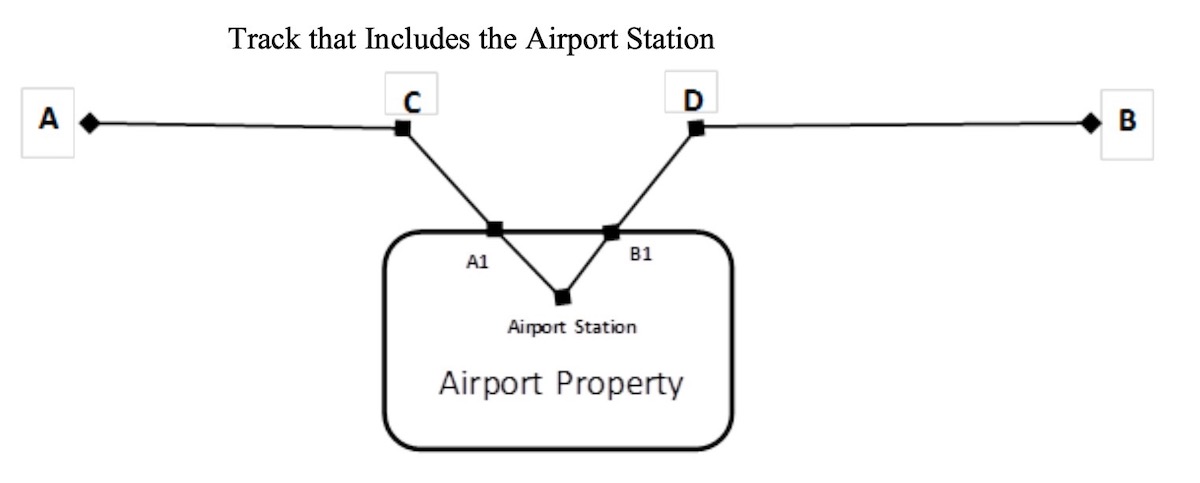
    The new policy allows for a complex funding equation for transit projects that feature a mix of airport and non-airport uses. Transit agencies can pro-rate the cost based on ridership projections; calculate the cost of a hypothetical stand-alone airport based people mover; or calculate the difference in cost between a route that bypasses an airport vs. the cost of a through-line configuration. While the FAA prefers proration, none of these are mandatory, and municipalities have discretion to apply the calculation they see fit. I’d imagine using the hypothetical cost of a proprietary people mover may be appealing too as those systems often require significant investment in rolling stock and technology that extending an existing transit line may not. The FAA did stress that the PFCs can be applied only to on-airport parts of the project so an N train extension, for example, would still require state funding for any stations outside of the airport.

    Interestingly, while improving airport access should be a goal for airlines whose employees need fast and reliable travel to work and whose passengers need the same, various airlines and their lobbying groups spoke out against the proposed change. Both Delta and the International Air Transport Association objected to airport fees being used for non-airport infrastructure. This is short-sighted and an incorrect reading of the FAA’s change, and these objections did not carry the day. As the FAA astutely noticed, additional rail capacity can “reduce roadway traffic congestion, thus making the airport more attractive to airline passengers, particularly in an area with multiple airports.”

    So can this policy shift save us from the misguided LaGuardia AirTrain? In one sense, despite my optimism, the answer is “no” due to politics. The heavy finger of the governor is weighing on the scale in favor of the Willets Point routing, and as a LGA terminal for an N train extension would have been eligible for PFC funding prior to this policy shift, not much has changed. But it should restart the conversation. An N train extension — or any other route that adds transit service to Queens — is far more useful for Queens residents and for airport travelers who want to head to Manhattan and not away from it. Thanks to the FAA, the Port Authority has the political and policy cover to shift its planning, and for the sake of the city, it should revisit a better transit link to LaGuardia.

  • How the Port Authority rigged its Alternative Analysis in favor of Cuomo’s AirTrain

    After years of lingering in limbo as costs increased fourfold, the Willets Point-based Laguardia Airtrain is rushing toward approval while community groups, transit activists and good governance watchdogs cry foul over a process heavily weighted to favor only Cuomo’s favored proposal even as evidence strongly supports better and more comprehensive transit solutions. Can this plan, a brainchild of Gov. Andrew Cuomo I have not-so-affectionately dubbed the Backwards Airtrain, be stopped?

    We’ll find out soon if anything can be done to take full advantage of this once-in-a-lifetime chance to improve transit access to Laguardia, but the process Cuomo wants is rushing along. Next week, the FAA and Port Authority are hosting a pair of public information sessions, and while they claim they haven’t selected a preferred alternative yet, the only option to which the government has given support is conveniently Cuomo’s. As Queens residents and transit activists alike realize chances to stop this $2 billion boondoggle are running out, the opposition has called on Cuomo to put the brakes on the AirTrain and plan it properly. For Streetsblog last week, I penned an op-ed questioning the transit value of this route and making the transit case for a better option.

    That piece and the neighborhood opposition seemed to have struck a nerve with someone in Albany or at the Port Authority, and the PA’s Executive Director responded with his own defense of the Cuomo AirTrain on Monday. I wanted to respond in depth to Cotton’s claims, but I also want to take a step back and conduct a deeper dive into the state of the Laguardia Airtrain than I was able to for the Streetsblog piece. So let’s go for a journey.

    The promised 30-minute travel time seems guaranteed only for those near a Manhattan LIRR hub.

    Previously on “Backwards AirTrain”…

    To recap how we’ve gotten here, the governor proposed the idea out of nowhere in 2015. As transit experts delved into his plan, a consensus emerged that the Willets Point route would save very few people any time at all, and with an initial price tag of $450 million, the no-build option appeared to be the best. After all, why sink half a billion dollars from a limited pot of transit funds into a line with no real benefits?

    Cuomo’s plan spurred on dreams of a revival of a true subway extension to the airport instead, but nothing really happened. After a 2016 release on the redevelopment of Laguardia including just one mention of the airtrain, I thought the plan transit vaporware on life support. By 2017, costs had more than doubled to $1 billion, but it kept chugging along. Cuomo wanted the train despite the cost and utility, and he was going to get his train.

    This past summer, costs doubled again, as the Port Authority budgeted over $2 billion for the Laguardia AirTrain before any alternatives analysis had been published. I called for the governor to cancel the project then, and I repeated that call in the Streetsblog piece last week. It is, of course, falling on deaf ears as the Port Authority and the FAA are pushing forward with the Willets Point proposal.

    Inside the LGA AirTrain Alternatives Screening

    Behind the scenes, the Port Authority has been hard at work attempting to justify Cuomo’s proposal while giving short shrift to options that improve transit through neighborhoods in Queens and to the airport. At some point since October of 2018, the Port Authority quietly released a series of comprehensive planning reports all available midway down their AirTrain page. I want to focus on key parts of the alternatives analysis, conducted in 2018 and available as a PDF. The FAA has recently adopted this analysis for a community presentation, and it appears to have definitively eliminated any other option other than the Backwards AirTrain despite what I believe is a flawed analysis.

    For the Alternatives Analysis, the Port Authority considered ferry service, improving bus service, extending the subway from Astoria or implementing an airtrain from Woodside in addition to Cuomo’s proposal. They assessed each along eight criteria, but I want to focus on two — Criteria 4 (Reduce the use of on-road vehicles to move passengers to, from, and within the Airport) and Criteria 8 (Design and construct a project that avoids substantial disruption to the neighborhoods where it is located). These were the two criteria used to bounce better bus service and subway or other airtrain routings preferred by transit experts.

    When it come to buses, the Port Authority essentially gave up. Noting that buses are subject to variable and unpredictable surface traffic conditions and relying on data from the current SBS Q70 implementation, the Port Authority determined that buses wouldn’t fulfill criteria 4. Other bus improvements and busways got the kibosh too:

    The conversion of general-purpose traffic lanes to restricted bus lanes would substantially reduce vehicular volume along this corridor and eliminate parking, which would negatively affect businesses and likely be opposed by local businesses and residents. Dedicated bus infrastructure on the BQE, GCP, or RFK Bridge would substantially reduce these roadways’ capacities for general traffic, exacerbating delays on these already congested roadways. It is also unlikely that dedicated lanes could be implemented on these highways without capital enhancements to manage traffic flow and safety. The other types of bus enhancements, such as signal priority, have limited utility without dedicated bus lanes.

    Considering all we know about improving bus service and getting people out of cars and into buses, the claim that buses wouldn’t fulfill Criteria 4 because the Port Authority doesn’t want to upset a few people doesn’t pass muster. The analysis seemed to be a convenient excuse to hand-wave away a low-cost solution to Laguardia traffic woes that could be implemented tomorrow and wouldn’t preclude building other high-capacity transit connections to the airport. But buses weren’t what Cuomo and the PA leadership wanted to accomplish.

    The Port Authority claims subway construction would be too disruptive, a claim not usually used to evaluate transit construction.

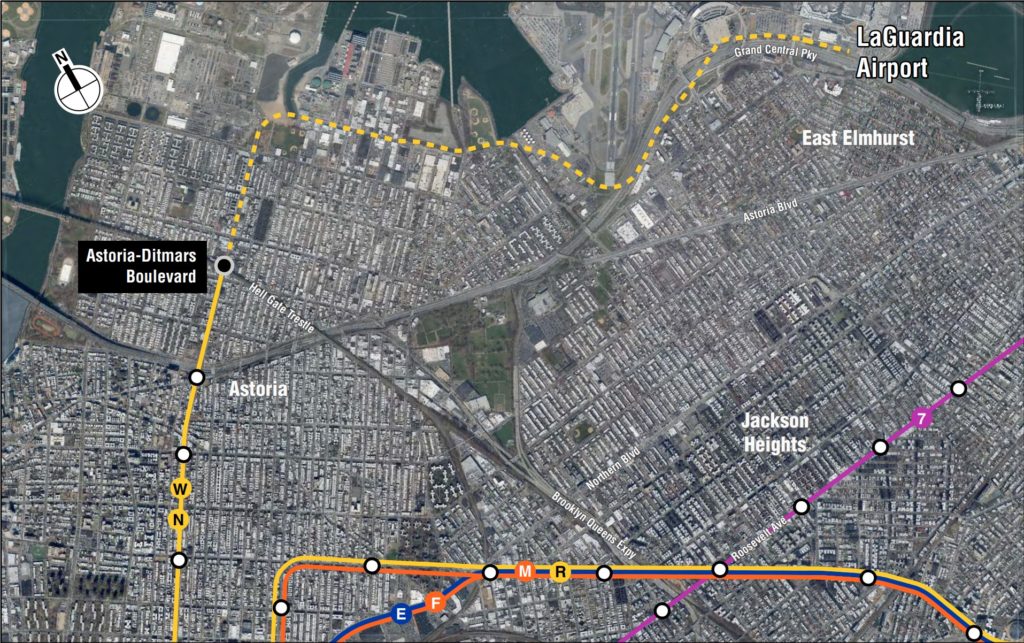
    Moving to rail, the report relied upon the MTA’s 1998 LaGuardia Airport Subway Access (LASA) Study, which determined that only three potential subway routes to the airport were feasible: an elevated branch line from the Astoria Boulevard station via the Grand Central Parkway; an elevated extension from Astoria–Ditmars Boulevard via 19th Avenue; and an extension from Astoria–Ditmars Boulevard via a tunnel beneath 19th Avenue.

    Here, Criteria 8 comes into play, and even without delving into the extensive analysis in the Port Authority’s document, you can see where this is going. The PA talks about “extensive, complex construction on the Astoria Line and within and directly adjacent to a residential neighborhood and the GCP.” It mentions that “heavy construction would occur over a long period of time, with activities such as pile driving, jack hammering, the placement of beams and ties, and welding.” And it discussions “large new ventilation structures (in many cases taller than the nearby development)” required for the tunneling option. None of these are new to the fabric of infrastructure in New York City, but each are cited as reasons to avoid pursuing a subway extension. In each case, the Port Authority determined the subway options did not meet Criteria 8, concluding “construction of this alternative would require extensive and lengthy disruption directly within and near a densely developed residential neighborhood.”

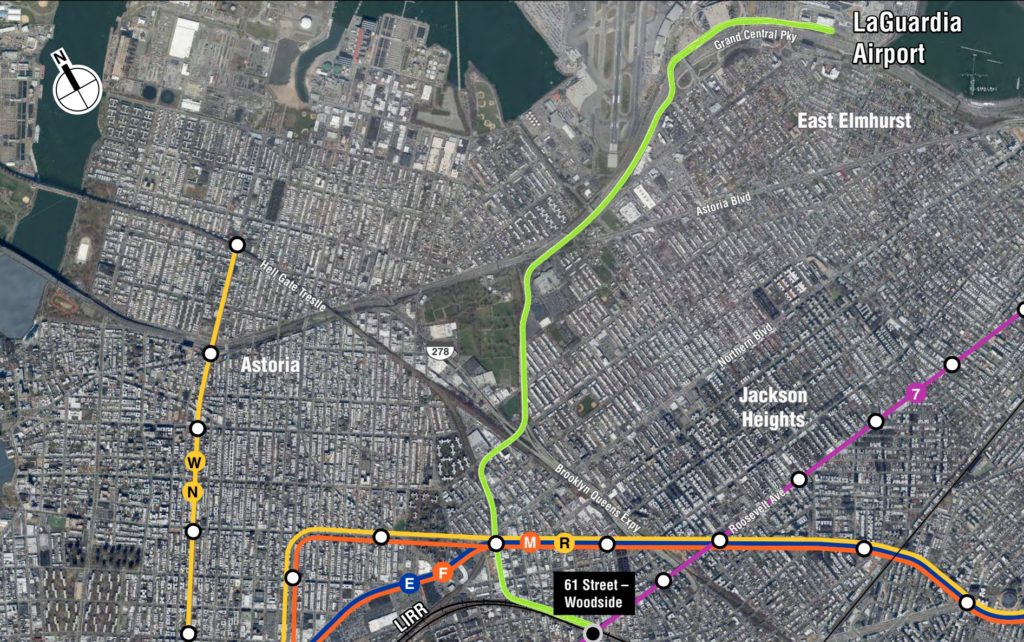
    A similar analysis bounced potential airtrains from Astoria and Woodside as well, with the Port Authority also bemoaning the need to purchase around 40 total residential and commercial properties for either option. Despite bringing most riders toward their destination (as opposed to away) and still providing connections to the subway and an LIRR station on the Main Line, the Port Authority against used claims of disruption to eliminate the Woodside AirTrain, a proposal that deserves far more consideration. Criteria 8 struck again, and it was a key part in the argument Rick Cotton made in his Streetsblog piece earlier this week. I don’t buy it (as a I explained in a Streetsblog rebuttal).

    ‘Avoiding disruption’ should not preclude a better transit outcome

    But why did the Port Authority decide that one of its goals was to “design and construct a project that avoids substantial disruption to the neighborhoods where it is located”? This isn’t a goal of any other transit project in the region. After all, the Second Ave. Subway tore up the Upper East Side, a neighborhood far denser than any between the subway and LaGuardia in Queens, and the Port Authority’s own World Trade Center site still fences off the Lower Manhattan neighborhood and street grid while disrupting over the years two states’ subway systems. Gov. Cuomo’s plan to use eminent domain to acquire properties to build Penn Station South won’t be disruption-free either, and the concern that eminent domain takings will “substantially alter the character of adjacent blocks” seems to apply only to LaGuardia options but not to a Penn Station expansion.

    Usually these are issues an agency mitigates when picking the highest and best transit option, when it came to the airport, avoiding disruption was suddenly grounds to follow a different path away from people, neighborhoods or thorny choices that strong leaders can make. Again, I ask why?

    And so let me answer my own question: Why? Because that way, the Port Authority could credibly (or incredibly) eliminate every other option that provides a better connection to existing transit and better transit for under-served neighborhoods while bolstering Cuomo’s proposal. From the day Cuomo announce the Willets Point AirTrain in 2015, it has always seemed as though the fix was in, and sources have long told me Cuomo presented this routing and essentially ordered the PA and MTA to make it work. The Alternatives Analysis and its prickly criteria bear that out.

    The Woodside AirTrain is a better proposal than Willets Point service, but the Port Authority claims construction would be too disruptive.

    Now that the FAA has essentially endorsed the PA’s work in its own Alternatives Analysis summary (pdf) while also adding gondolas and helicopters to the mix ahead of bus improvements, the Backwards AirTrain is on the precipice of reality. People will use it it and when it’s built (though the PA’s projections [pdf] of Year 1 ridership in excess of the JFK AirTrain’s current annual total defies belief).

    I’m not advocating for no transit to LaGuardia, but I’m advocating for doing it right. We’re making a mistake if we spend $2 billion on AirTrain that’s out of the way and projected to increase travel times for most airport-bound riders. Instead, the governor should use his considerable political capital to urge communities to prepare the disruption of construction of a true transit network that decreases travel times and adds ancillary benefits in the form of new subway stops through subway deserts. An extension of the N would be best, but a connection from Woodside would be a fine reality too. If only the governor saw it this way as well.