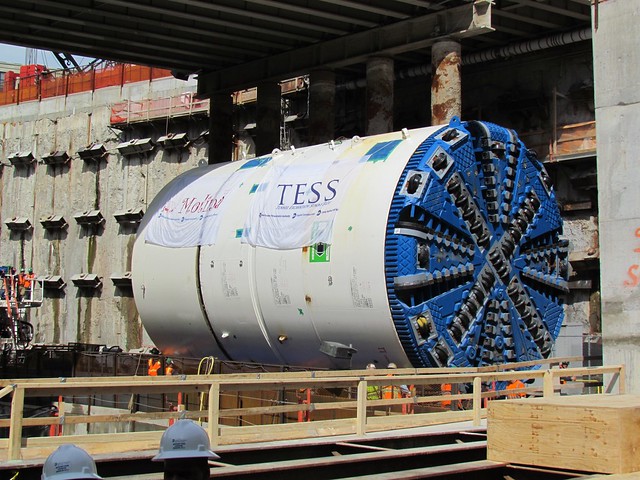
MTA officials and local politicians met underneath the Sunnyside Yard in Queens this afternoon to commemorate the launch of tunnel boring machines Tess and Molina. The two machines, named by sixth graders from I.S. 204 in Long Island City, will dig out four tunnels in Queens that connect the tracks of the LIRR Main Line with the tunnel underneath the East River and into Grand Central. Digging will be completed in October 2012, and MTA officials maintain that East Side Access is one pace to wrap up in 2016.
“One hundred years ago, the tunnels under Penn Station gave Long Islanders easy access to Manhattan, essentially giving birth to Long Island as we know it today and leading to enormous growth in the region,” MTA Chairman Jay Walder said thi smorning. “Today, East Side Access will build on this growth and transform this region in a similar way. Commuters throughout Long Island and Queens will have more service to Manhattan and shorter travel times to the East Side—making these communities even more attractive places to live, increasing housing values, and unlocking the next wave of economic development potential on Long Island.”
During the press event this afternoon, Michael Horodniceanu, head of MTA Capital Construction, and Walder spoke of the tunnel boring machines. The blue one that’s featured in my photos was named Tess by Sangida Bagum. It’s an acronym for Tunnel Excavation Sunny Side. Molina, the one digging below Tess, is a play on the word mole and was named by Mohammad Malik, Michael Morales, and Angel Peralta. Molina will actually begin tunneling first.
From a technical perspective, these TBMs are somewhat different from that working its way underneath Second Ave. These are, as Horodniceanu said, slurry TBMs. Because the ground is so soft and the water table is only 14 feet below the TBMs, these machines must remove soil and install interlocking concrete rings to create the tunnel as it proceeds. As Horodniceanu explained, the machines turn the soil into a slurry — a paste “thinner than pudding but thicker than shampoo.” Each machine has a 22-foot diameter cutterhead and, with 300 feet of trailing equipment, weigh 642 tons.
“We are building the largest transportation construction project in the country,” Horodniceanu said. “It’s an unbelievably complex undertaking which involves working in and around the busiest rail yard in the United States. I’m extremely proud of the level of teamwork all the staff and contractors are engaging in to make this project a reality.”
You can view all of my pictures from the event right here, and a slideshow follows after the jump. I should have some videos to post over the weekend.
Leave a Reply