Intrepid urban adventurers who set off in search of the South 4th Street subway station and the Underbelly Project art gallery are finding themselves greeted by a not-so-pleasant surprise. As Michael Grynbaum reports, around 20 people have been arrested for trespassing as they’ve set off in search of the hidden art project. The abandoned station sits directly underneath Brooklyn’s 90th Precinct station house, and as the MTA is trying to discourage illicit trespassing, a team of cops, including some of the plain-clothes variety, have been staking out the joint. So far, most of those caught have been charged with criminal trespassing while two received transit summonses. “This is not an art gallery; this is completely illegal,” one police officer said to The Times.
While the Underbelly Project curators claimed they destroyed the entrance point to the South 4th Street station, that claim is far from the truth. It is still physically possible to get up there, and those who have eluded the police found that the locals have tagged the art. For its part, the MTA reiterated its stance it will not be erasing anything on the walls, and the authority has already sealed off one of the site’s easier access points.
Amusingly enough, the authority also refused to confirm the location of the gallery to Grynbaum and The Times. “There are some bloggers who can pinpoint these places because they eat and sleep transit lore, but officially, no, we’re not confirming anything,” authority spokesperson Deirdre Parker said. It’s up there though behind chain-linked fences and well within the arm of the law.
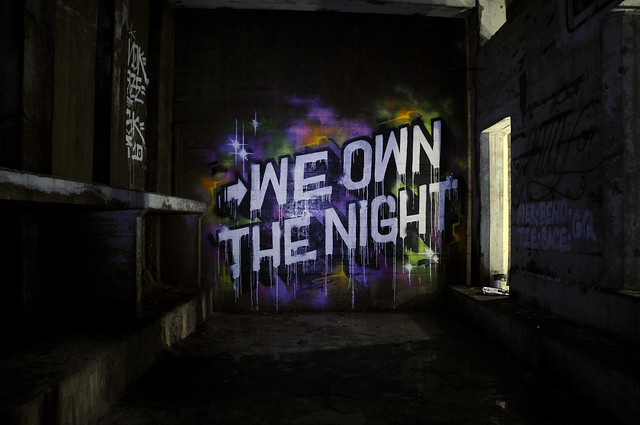
Workhorse's contribution to his Underbelly Project gallery has been defaced. (Photo via Bury Me in Brooklyn)
The Underbelly Project story hit the Internet like a wave on Sunday night, and as the story broke, it seemed clear that PAC and Workhose, the project’s curators, had told those who participated that they could talk about it on October 31. From a look at most of the pictures and some Exif data sleuthing, it appeared as though the photos taken by Luna Park and Vandalog were taken in late July and early August. It would only be a matter of time before the more adventurous and foolhardy among us tried to access the site.
Recently, some intrepid urban explorers have taken the initiative to find the South 4th Street station and photograph it today. Bury Me in Brooklyn posted what they found on an excursion to the site earlier this week, and it appears as though local taggers have defaced the art. While some of the pieces have remained graffiti-free, many have been tagged over (1, 2, 3, 4).
In the realm of the illegal, the high road doesn’t exist. As Cap’n Transit pointed out to me via Twitter, the debate focuses around a conundrum: “You put your vandalism on my artwork! No, I put my artwork on your vandalism! No! Yes! No!”
Yet, from the perspective of street art morals and artistic romanticism, the taggers shouldn’t have defaced the Underbelly Project. I’ve heard that locals were upset about the way PAC and Workhorse’s efforts drew both internationally famous street artists and such overt attention to what had been a relatively secret spot. Either way, it is a testament to the fleeting nature of this project, and while the MTA has no plans to erase it, time and other artists will take its toll.
Let me take this opportunity to remind my readers that is both illegal and highly dangerous to access the South 4th Street station and the Underbelly Project area. It’s trespassing in off-limits MTA property, and the authority has repeated stressed how violators will be caught and prosecuted. Don’t do it.
The Transit Museum conducts MTA-sanctioned tours of the abandoned City Hall stop for museum members. (Photo by Benjamin Kabak)
As a kid of New York growing up near Broadway on the Upper West Side, I knew about the 91st St. subway station, which closed 34 years before I was even born, long before I had a sense of the subway system as a whole. My parents told me how there used to be a 1 train stop — then the IRT local — on the same corner as my childhood apartment building. I knew that if you peered hard enough into the dark, you could see this graffiti-covered, trash-strewn relic of another era, and my parents told me that when the 96th St. station finally reached 94th St., the 200-foot stop was deemed unnecessary. It shut with little public fanfare.
That 91st St. station was always an oddity in the system. As Joseph Brennan described at his Abandoned Stations site, “A station at 91 St was provided solely to avoid a ten block stretch without stations. The neighboring stations were located at the wide crosstown streets 86 St and 96 St, which had no crosstown car or bus service in 1904, but which were considered to be likely candidates once the area became more developed. It was awkward because while ten blocks was a long distance, the resulting five blocks was closer than any interstation distance north of 33 St.”
Today, the 91st St. station exists as nothing special. Before 9/11, the Transit Museum conducted tours of the stop, and the photos show neglect and destruction appropriate for a station that hasn’t seen revenue service since the waning days of the Eisenhower Administration. There’s no need for this station, and so it, like many others, passes into the forgotten realm of New York City subway history.
Earlier this week, that history exploded onto the front pages of The New York Times when the Underbelly Project, my latest subway obsession, became public. Not technically located in an abandoned station, the street art gallery inaccessible to anyone but the select and the daring inhabits a shell station built off of the IND Crosstown’s Broadway stop that has been waiting for trains to pass through it since the early 1930s. The subway, though, will never come to the South 4th St. station, once the six-track centerpiece for the grand plan we now call the IND Second System. Instead, a massive display of street art that has truly and utterly captured my imagination now lives there, and the MTA says that, while it will work to shore of this abandoned station’s security, it won’t erase the art.
Revok and Ceaze's contribution to the Underbelly Project gallery. (Photo by flickr user Vandalog)
Why, I wonder, am I so drawn to this story? The answer I believe lies in the mystery of the station, nostalgia for an era of old when now-abandoned subway stations were open and the sweet romance of the way the city used to plan on a grand scale. By and large, the city’s abandoned subway stations are few and far between. For a public transit system with 468 active stations, New York City’s system has few hidden spots. The City Hall stop, visible to those who ride the 6 train around the loop and enjoy the perks of Transit Museum membership, is probably the most famous, but others — the 18th St. station on the East Side IRT, the Myrtle Ave. stop-turned-Masstransiscope just north of DeKalb Ave., the entire unnecessary Worth St. stop — are out there.
The abandoned subway stops and unused lower levels — 42nd St. and 8th Ave., Bergen St. and 9th Ave. in Brooklyn — and antique walls remind us of the city’s past. The subway’s planners made mistakes. They built too many stops that couldn’t handle the appropriate number of riders a few years or decades after opening. They put stations too close together and constructed bi-level stops where they weren’t needed. In a few select spots around the city in the 1930s, they even built station shells for subway routes that never materialized. Each and every vacant spot is a reminder of a bygone era in the city’s transit history.
This week, it will become harder for the urban adventurers to find these hidden gems. The MTA and the NYPD are working to ensure that access to the abandoned and forgotten stations isn’t as easy as it was for the two years while street artists toiled away at the Underbelly Project work. Hidden access points will be sealed, fences will be mended. Yet, these stations are out there, decaying reminders of another age. History may not remember them, but those of us who know and appreciate transit history will. With their work this week, the Underbelly Project and its slate of artists made sure that many more of us now know that history.
When news leaked of the Underbelly Project gallery at an abandoned subway station somewhere in New York, I assumed that the MTA would quickly identify the site and shut down porous access. It took of us intrigued by and obsessed with abandoned stations just a quick glance to identify the gallery site as the South 4th Street station, and today, I was able to confirm that the art is indeed in this IND Second System shell station. The MTA figured it out too and pledged better security.
I asked the authority about their official response to the so-called exhibition, and it was as you might expect. “NYC Transit is working with the NYPD in the investigation and follow-up on this matter,” MTA spokesman Aaron Donovan said. “Further inspections will be made to this and other similar locations throughout the system to better secure these areas. We remind the public that any such incursions into unauthorized areas of the transit system is considered trespassing and is punishable by law not to mention, dark and dangerous.”
Meanwhile, I learned this morning as well that an MTA work crew went into the old South 4th Street station to explore the site. They were spotted entering the shell at the northbound end of the Broadway stop on the G train, and Donovan told me that the authority’s crews are working to identify potential access points and to seal up these abandoned areas. “New York City Transit staff were on site today to assess the station’s security and make some adjustments to make it more secure,” Donovan said.
As the video above from Jason Eppink — the artist behind this summer’s Spoiler Alert signs and a 2008 subway chair installation — shows, it is indeed dark and dangerous, and it appears as though at least one site access point requires walking along or through subway tracks. More scenes from the makeshift gallery have reached the Internet as well. Wall Kandy offers up a blog post and a flickr photo gallery. These photos are from July 30-August 1, and I have to wonder what time and other graffiti artists have done to the project in the intervening three months.
We won’t, it seems, learn that answer from the MTA. Although an MTA crew got to explore a long lost part of a planned subway expansion, I doubt they took pictures. Still, eve as the MTA works to secure the site and prevent unwanted access to dangerous areas and dark corners, the authority is tantalizingly leaving the art in place. “We have,” Donovan told me, “no intention of painting over or removing the artwork.”
After a jump, one of my favorite pieces of the street art from the Underbelly Project.(more…)
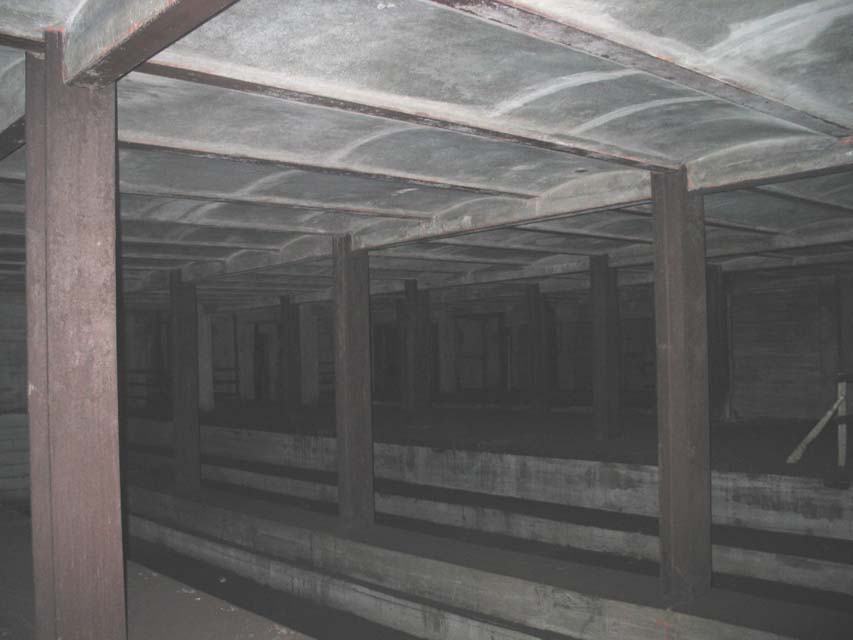
A six-track ghost station sits above the G train stop at Broadway in South Williamsburg. (Photo via Subway & Rail)
When news of the Underbelly Project’s subway station art show hit the Internet this weekend, subway lovers scrambled to adduce the site and quickly settled upon the South 4th Street subway shell. This is a six-track, IND station in South Williamsburg hidden from the public but identical to the station seen in the photos presented to the public by the Underbelly Project. To the uninitiated, this stop may sound like a phantom subway station. Isn’t the only 4th Street station at West 4th in Manhattan? What is this South 4th Street station? Where is it? And where do the trains that once serviced it go?
The answers — especially to the last question — are tricky. The South 4th Street subway station isn’t anything quite like the city’s other abandoned stations. It’s never seen revenue service before, and in fact, it doesn’t even have a rail track running through it. It exists in fragments — poured concrete, unfinished stairwells, no lighting, no through tunnels — and is a remnant of an era of larger plans. In a sense, it’s not an abandoned station because no trains ever served it nor could they. Rather, it is an abandoned dream.
The South 4th Street was to be a major transfer and connection point for the IND Second System. The shell was built into the ceiling of the Broadway stop on the IND Crosstown — a so-called provision statement — before the city even knew if funding for the remainder of the line would ever materialize. When World War II and the subsequent advent of the automobile age put a grinding halt to subway expansion, the South 4th Street shell remained just that. It is a testament to another era, behind false walls and closed-off staircases, and today, it apparently housings one of the largest street art exhibitions in New York City.
Today, a six-track station seems unimaginably wasteful. The MTA is building the Second Ave. Subway with only two tracks due to budgetary constraints, and the only other stations and tunnels with six tracks — Hoyt-Schermerhorn comes to mind — never make use of the full array of options. The two outer tracks at Hoyt-Schermerhorn lead into the Court St. stop which we know today as the Transit Museum. It too was part of the grandeur of the Second System and a planned Brooklyn extension for the 1930s edition of the Second Ave. Subway.
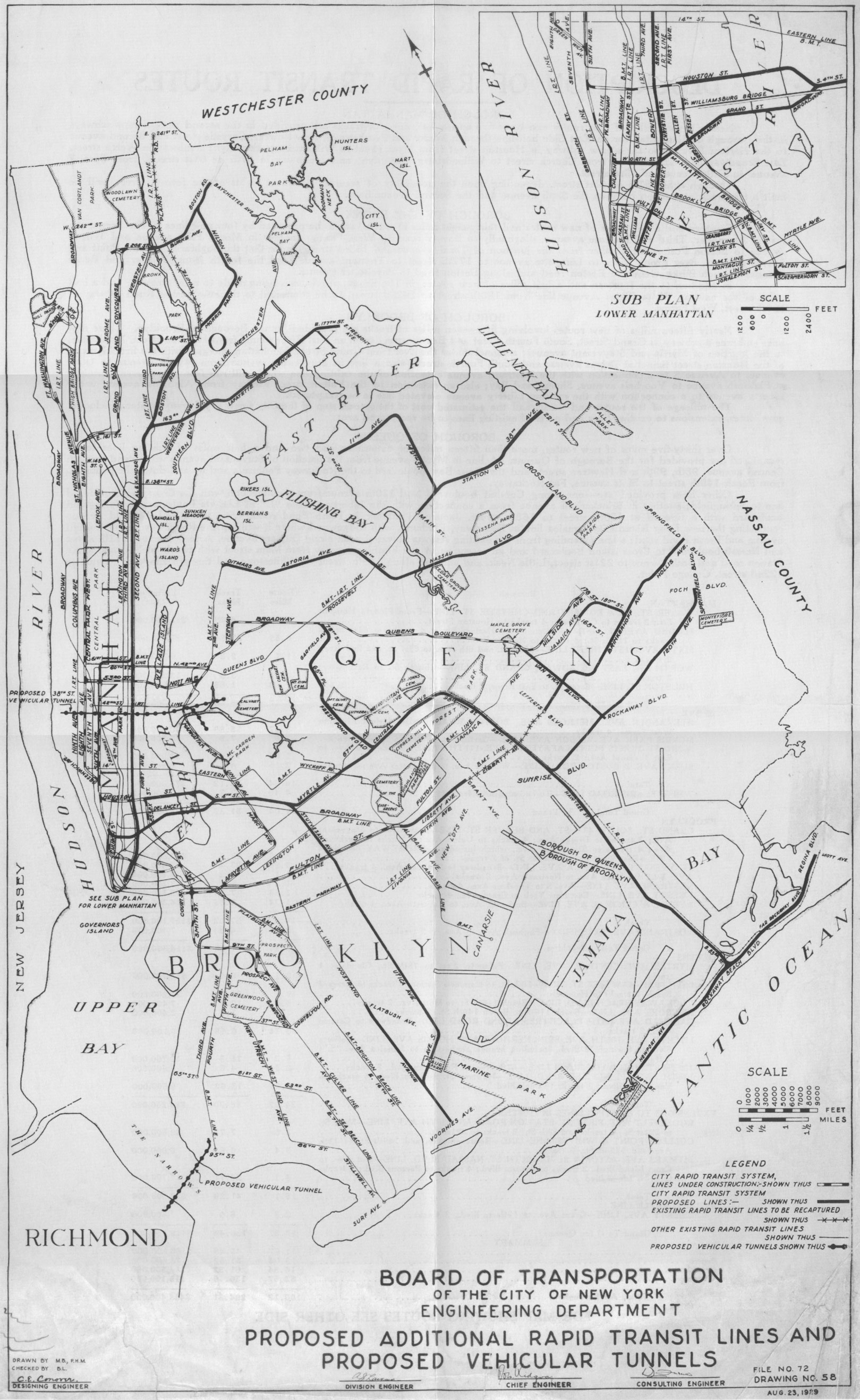
But back in 1929 and again in 1939 when the city was trying to build up its subway system, South 4th Street in South Williamsburg was to be a major intersection. The plans are aggressive: Both the Sixth Ave. and Eighth Ave. lines would have passed through this station, bound for multiple points east, south and north. The Second System, which I explored in depth in 2008, which have reimagined New York City, and the Second System’s Big Apple would be a more accessible one than ours is today.
The 1929 expansion plans included three spurs from the six-track South 4th Street station. Click here for a full view.
According to proposals from the era, the city considered a variety of routes into Brooklyn and Queens, but the Manhattan connections were the same. The Sixth Ave. local would have run the route we know today, but from Second Ave., the trains would have continued east. In fact, the stub tunnels on the two middle tracks that extend eastward past the Second Ave. stop are a provision for the route that would have led through South 6th St. The other part would have swung the Eighth Ave. local up Worth St., past the current Essex St. East Broadway stop, across the East River and to South 4th Street.
Eastward out of South 4th Street, the possibilities were twofold. In the 1929 plan, one set of tracks would have led down Stuyvesant Ave., crossing the IND Fulton St. Line at Utica Ave. — where another shell station and some unused mezzanines live — and continuing down Utica Ave. and to Marine Park. The other spur would have led up Myrtle Ave. where the line would split again. This time, one route would have allowed the Queens Boulevard line to connect to the Rockaways via Fresh Pond Road, 65th Place and 78th St. while the other branch would head out to the Rockaways, a branch eventually realized by a more modest extension of the Fulton St. Line. We used to dream big.
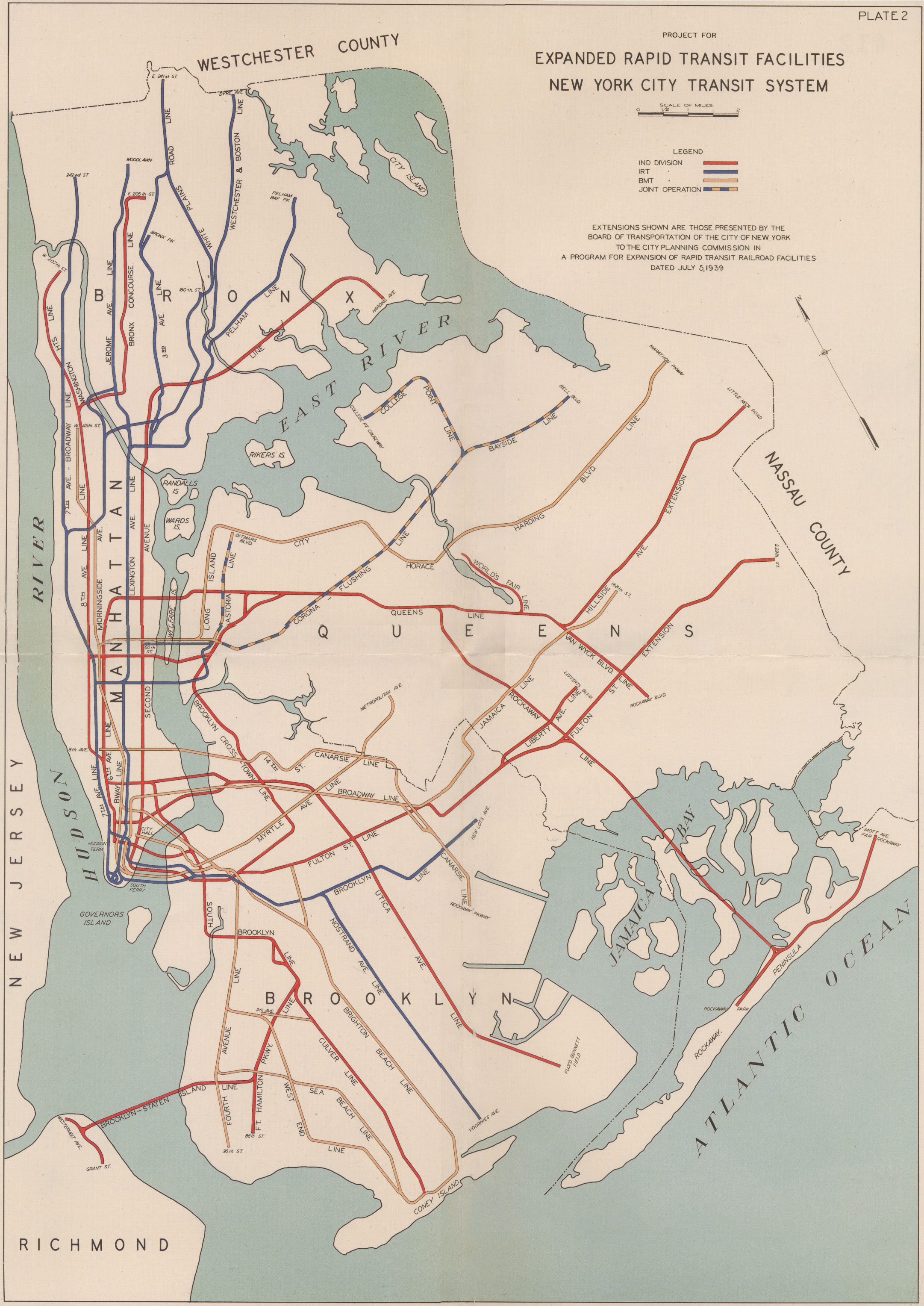
The subway expansion plans from 1939 show where the shell station at South 4th Street crosses over the G line. Click here for a full view.
When the Great Depression hit, the city had to shelve the 1929 expansion plan, and ten years later with a six-track shell provision built along South 4th St., the latest iteration of the Second System was far more modest. The Manhattan plans remained the same, but the line east from South 4th Street would continue on only to Marine Park via Utica Ave. Even before revenue service — or full tunnels were dug — the six-track station was a relic of another era. (Plans for a Utica Ave. subway in 1969 involved extending the IRT instead of the IND.)
Today, we think small and build small. Once upon a time, New York left stations unbuilt as shells for future expansion. It was cheaper and easier to build a shell at the South 4th Street transfer point than it was to build around a preexisting subway station. Now, we build just a two-track extension along Second Ave. and scoff at the notion of a Second System-like expansion in the 2010s. Imagine this part of Williamsburg as a major transfer point from the G to Manhattan, from Queens and Brooklyn into Manhattan. It’s what could have been and never was, and all that’s left is an abandoned shell of a subway station and some crazy photos of the remnants of an era when we tried to plan ahead.
Works by Emile Souris and Jeff Soto are just two of the pieces that adorn an unused Brooklyn subway station. (Credit: Workhorse/New York Times)
Once upon a time, in the late 1970s, the subways were covered with graffiti that many considered art. This wasn’t the sloppy graffiti tags of today that involve a scrawled name or an uncreative expletive. These were full-car murals, sometimes with messages, that took time, skill and a certain willingness to spit in the face of authority. Today, even as we are commemorating early-1980s graffiti, we still debate whether these markings are art, vandalism or some mixture of the two.
Over the weekend, a story of subway graffiti and abandoned stations took the Internet by storm, and today’s Times Arts section has The Underbelly Project splashed across the front page. Per the project’s website, the concept is simple:
In early 2009, a project began four stories underneath the skin of New York. For nearly 100 years, a massive subway station sat unfinished, unused, and undiscovered. Over the course the last year, artists have been secretly escorted into this station to leave their creative mark. Unobstructed by the pressures of commercial sales, phone calls, or daily routines, each artist painted for one full night. The Underbelly Project is the result of the past year. At the close of the project, the entrance was removed and darkness reclaimed the space once again.
Jasper Rees’ piece in The Times goes more in depth. Workhorse and PAC, two street artists, came up with the idea a few years ago after seeing the abandoned subway stop, and the two took Rees on a secret tour recently. Rees can’t say where it is — more on that later — and he can’t say how they got into the station. The two artists, he says, are “seriously concerned about the threat of prosecution.” The two picked this station because, said PAC, they loved “the solitude of being underground.”
Rees talks more about the secret and hidden art show:
A vast new exhibition space opened in New York City this summer, with a show 18 months in the making. On view are works by 103 street artists from around the world, mostly big murals painted directly onto the gallery’s walls. It is one of the largest shows of such pieces ever mounted in one place, and many of the contributors are significant figures in both the street-art world and the commercial trade that now revolves around it. Its debut might have been expected to draw critics, art dealers and auction-house representatives, not to mention hordes of young fans. But none of them were invited.
In the weeks since, almost no one has seen the show. The gallery, whose existence has been a closely guarded secret, closed on the same night it opened. Known to its creators and participating artists as the Underbelly Project, the space, where all the show’s artworks remain, defies every norm of the gallery scene. Collectors can’t buy the art. The public can’t see it. And the only people with a chance of stumbling across it are the urban explorers who prowl the city’s hidden infrastructure or employees of the Metropolitan Transportation Authority.
That’s because the exhibition has been mounted, illegally, in a long-abandoned subway station. The dank, cavernous hall feels a lot farther than it actually is from the bright white rooms of Chelsea’s gallery district. Which is more or less the point: This is an art exhibition that goes to extremes to avoid being part of the art world, and even the world in general.
The piece goes on to talk about the artists who agreed to participate. Some came from as far as Europe while many were New Yorkers who jumped at the chance to explore this subway station. Rees also details, in broad strokes, how the artists accessed the spot, how they turned this dark and dank walls into a canvas and why Workhorse and PAC chose this site and had this image of it. Some time soon, the two curators will unleash on the world a list of the artists and pictures of the work. For now, we’re left with an extensive gallery on Luna Park’s blog and The Times’ own gallery. It’s quite a glimpse into a part of New York City few, if anyone, will ever seen, but it’s enough to tell those of us familiar with the subway system where it is.
One of the Underbelly Project's curators offered up this wide shot of the never-used shell station. (Credit: Workhorse/The New York Times)
Based on the visual evidence, it is in the never-used, once-built shell of a subway station at South 4th St. and Broadway in Brooklyn. I traced the unique origins of this long, lost part of the Second System two years ago, and Subway & Rail has a full gallery of this station online. Built in an age when the city built shell stations for cheap with an eye toward future expansion, this shell has set empty since the day the concrete was poured. Rumor has it that one can access the station via the G train stop at Broadway with the appropriate key.
The stories Rees tells bears out my guess:
The Metropolitan Transit Authority would occasionally shut down the nearby subway line. The artists, working through the night, would hear workers on the tracks and go silent, turning out any lights. The members of Faile were among several participants stuck that way for hours after their work (in their case, a woozy, zigzagging version of the Stars and Stripes) was done. “We were getting crazy,” Mr. McNeil recalled. “We were like, ‘We’ve got to get the hell out of this dusty blackness.’ You couldn’t see your hand in front of your face.”
Finally at 4 a.m., Mr. McNeil said, the coast seemed clear, and “we walked out there with our gear”; but the workers were still there. “We just walked by them and they’re like, ‘Where the hell did these guys come from?’ ”
The scariest moment came around 1:30 one morning, just after Workhorse had left the site with a Moscow-based Australian artist known as Strafe (who spoke on condition that her real name not be used). They heard workers nearby and sprinted back in the dark, but once back on their platform, Strafe said, “I swung round and stepped into thin air, and literally fell onto my back on the track bed.” Too stunned to move, she looked at Workhorse, who had jumped down to join her with a flashlight. She said she saw a look of horror that said, “ ‘What are we going to do if she’s seriously injured?’ ” Eventually she was able to sit up, but they still had to wait until after 5 a.m. to leave.
For its part, the MTA seems none too pleased with this revelation. Transit spokesman Charles Seaton said to The Times only that what the artists did constitutes trespassing, punishable by law. Anyone caught defacing M.T.A. property is subject to arrest and fine.”
The artists too understand both the insanity and inanity of what they’ve done. After taking Rees and a reporter from London’s Sunday Times on a tour, they destroyed the equipment they used to access the station. “We’re not under the illusion that no one will ever see it,” Workhorse said. “But what we are trying to do is to discourage it as much as possible… If you go in there and break your neck, nobody’s going to hear you scream. You’re just going to have to hope that someone is going to find you before you die.”
It is a dangerous thought about a morbid project that somehow captures both the recklessness of a bygone era, the foolhardiness of this undertaking and the mystery of an abandoned aspect of the New York City subway system. I don’t think Arts for Transit will approve.


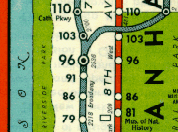 As a kid of New York growing up near Broadway on the Upper West Side, I knew about the 91st St. subway station, which closed 34 years before I was even born, long before I had a sense of the subway system as a whole. My parents told me how there used to be a 1 train stop — then the IRT local — on the same corner as my childhood apartment building. I knew that if you peered hard enough into the dark, you could see this graffiti-covered, trash-strewn relic of another era, and my parents told me that when the 96th St. station finally reached 94th St., the 200-foot stop was deemed unnecessary. It shut with little public fanfare.